Russell Crowe on Gladiator's no-sex rule: 'It would destroy the journey'
Synopsis
Russell Crowe says he repeatedly blocked studio demands for sex scenes in Gladiator, arguing they would undermine Maximus's grief-driven arc — and he now believes Gladiator II failed at the box office precisely because it abandoned that same moral foundation. His Taormina remarks reframe a two-decade-old blockbuster in a strikingly different light.
Key Takeaways
Russell Crowe revealed at the Taormina Film Festival that he repeatedly refused studio and producer pressure to include intimate scenes in Gladiator ( 2000 ).
Crowe argued that a sex scene would 'destroy the journey' of Maximus , whose arc is defined by grief over his murdered wife and child.
Director Ridley Scott ultimately backed Crowe's position, despite personally favouring a scene with Connie Nielsen .
Crowe noted that from the second week of global release , women outnumbered men in cinemas — reframing Gladiator as a film about vengeance rather than revenge.
He said Gladiator II ( 2024 ) 'failed' commercially because it 'destroyed that moral centre,' with its box office, adjusted for inflation, falling short of the original.
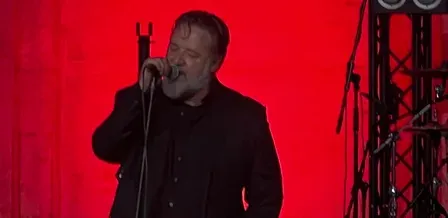
Hollywood actor Russell Crowe has revealed that he faced sustained pressure from the studio and producers to include intimate scenes between his character Maximus and actress Connie Nielsen during the making of Ridley Scott's Gladiator — and that he refused every time. Crowe made the disclosure at the Taormina Film Festival, offering a rare behind-the-scenes account of the creative battles that shaped the 2000 Oscar-winning epic.
The Pressure from the Studio
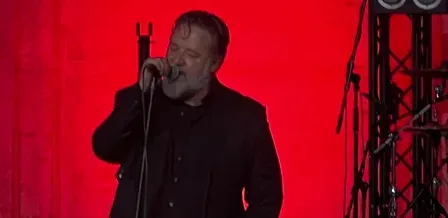
Speaking at the festival, Crowe recalled that the demand for a sex scene was persistent. 'When we were shooting that film, there was a lot of pressure. The studio, the producers (thought) there should be sex between Maximus and the female characters. I kept pushing back,' he said.
His reasoning was rooted in character logic. 'This is the story of a man avenging the death of his wife and his child. There cannot be a moment in that journey where he stops and has sex with somebody. It doesn't make any sense because that destroys the journey,' Crowe explained.
How Ridley Scott Backed Him
Crowe credited director Ridley Scott with ultimately siding with him, even though Scott was not opposed to the idea in principle. 'Luckily for me, Ridley, even though he'd love a sex scene between me and Connie Nielsen, agreed with me back then that that was the emotional core of the film,' he said. The studio, Crowe noted, did not fully grasp the reasoning at the time.
Crowe then offered a striking observation about the film's audience: 'From the second week of release globally, there were always more women in the theaters than men.' He argued that Gladiator, despite its surface appearance as a male-oriented action film, was fundamentally a film for women. 'You think that on the surface Gladiator is a movie for men, but if it was a movie for men, it would be about revenge, but it's not about revenge. It is a movie for women because it is about vengeance,' he said.
His Verdict on Gladiator II
While Crowe sidestepped direct questions about Gladiator II — the 2024 sequel directed by Scott and starring Paul Mescal — he was pointed in his assessment of where it went wrong. According to reports from Variety, Crowe said the sequel 'failed' because it abandoned the moral core that made the original resonate.
'For them, in a second movie to destroy that moral centre. It's very interesting because the second movie barely took the same box office that the first movie took. That's 20 years later. When you apply how much of a change there's been on the value of a dollar, they failed. They failed because they didn't understand why it was successful, it had a moral core,' he said.
Notably, Gladiator won five Academy Awards in 2001, including Best Picture and Best Actor for Crowe — a benchmark the sequel has not approached. Crowe's comments suggest that the franchise's original success was less about spectacle and more about emotional coherence, a lesson he believes the sequel's makers did not internalise.
What This Reveals About Gladiator's Legacy
The disclosure adds a new dimension to how Gladiator is understood as a cultural artifact. For over two decades, the film has been categorised as a swords-and-sandals action epic; Crowe's account reframes it as a film whose commercial and critical success was built on a deliberate moral architecture. His insistence on Maximus's fidelity — even under studio pressure — was, by his telling, a creative decision that defined the film's identity and its audience.
Whether the franchise can recapture that emotional core in future instalments remains an open question.
Point of View
Not production value, that made it endure. The box-office comparison he draws for Gladiator II is legitimate: a sequel arriving 24 years later, with a built-in audience and franchise recognition, matching but not exceeding the original's nominal gross represents an inflation-adjusted disappointment. The deeper question his comments raise is structural — Hollywood sequels routinely diagnose what made the original work and then systematically dismantle it in the name of 'expanding' the story.
NationPress
26 Sept 2026
Frequently Asked Questions
Why did Russell Crowe refuse intimate scenes in Gladiator?
Russell Crowe refused because he believed a sex scene would undermine the emotional logic of Maximus's character, whose entire arc is driven by grief over the murder of his wife and child. He argued it would 'destroy the journey' and pushed back against the studio and producers repeatedly until director Ridley Scott sided with him.
What did Russell Crowe say about Gladiator II's failure?
Crowe said Gladiator II 'failed' because it abandoned the moral core that made the original successful. He noted that the sequel's box office, when adjusted for inflation over 20-plus years, represented an underperformance relative to the 2000 film.
Did Ridley Scott agree with Russell Crowe on the no-sex-scene policy?
Yes, though reportedly not immediately. Crowe said Scott 'would love a sex scene' between him and Connie Nielsen but ultimately agreed that the emotional core of the film required Maximus to remain faithful to his murdered wife throughout.
Where did Russell Crowe make these remarks?
Crowe made these comments at the Taormina Film Festival, where he was asked about his attitude toward the Gladiator sequel. He used the question to elaborate on the creative decisions behind the original 2000 film.
What was Gladiator's audience demographic according to Russell Crowe?
Crowe said that from the second week of global release, women consistently outnumbered men in cinemas. He argued the film was fundamentally 'a movie for women' because it centred on vengeance — a deeper emotional reckoning — rather than straightforward revenge.