Subhash Ghai reflects on 20-film legacy, signals fresh chapter for Mukta Arts
Synopsis
Subhash Ghai's Thursday social media post was more than nostalgia — it was a quiet declaration. By invoking 'new passion' and 'new grounds,' the director of Karz, Khalnayak, and Taal is signalling that Mukta Arts is preparing for a fresh chapter, more than a decade after his last directorial outing.
Key Takeaways
Subhash Ghai shared a career-spanning collage on social media on 30 July , covering 20 films from 1976 to 2014 .
His post hinted at a creative and organisational reset at his banner Mukta Arts , with the phrase 'new passion indicates new direction.' Landmark films in the collage include 'Karz' ( 1980 ), 'Khalnayak' ( 1993 ), 'Pardes' ( 1997 ), and 'Taal' ( 1999 ). 'Saudagar' ( 1991 ) reunited Dilip Kumar and Raaj Kumar on screen after more than three decades .
Ghai's last directorial release was 'Kaanchi' in 2014 ; no new project has been announced yet.
Veteran filmmaker Subhash Ghai marked a reflective milestone on Thursday, 30 July, sharing a sweeping look at his five-decade directorial career while hinting at a renewed creative direction for his production banner, Mukta Arts. The post, shared on his social media account, paired a collage of his iconic films with a note that blended nostalgia and forward momentum.
The Message Behind the Post
In his accompanying note — originally penned in Hindi and translated into English — Ghai wrote: 'Every morning evening comes. Again comes a new dawn. Soldiers change. The command changes. New grounds take to war. New passion indicates new direction. Mukta Arts gets young again. My blessings to everyone at Mukta Arts with a fresh step today.' The statement is widely being read as a signal of leadership renewal and a creative reset at Mukta Arts.
A Career Chronicled in One Collage
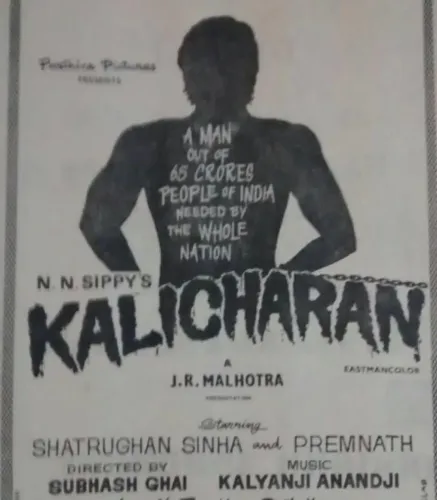
The collage traced Ghai's directorial arc across 20 films spanning nearly four decades — from his debut 'Kalicharan' (1976), starring Shatrughan Sinha, through 'Vishwanath' (1978), 'Gautam Govinda' (1979), 'Karz' (1980), 'Krodhi' (1981), 'Vidhaata' (1982), 'Hero' (1983), 'Meri Jung' (1985), 'Karma' (1986), 'Ram Lakhan' (1989), 'Saudagar' (1991), 'Khalnayak' (1993), 'Trimurti' (1995), 'Pardes' (1997), 'Taal' (1999), 'Yaadein' (2001), 'Kisna' (2005), 'Black & White' (2008), 'Yuvvraaj' (2008), and 'Kaanchi' (2014).
The Films That Defined Hindi Cinema
'Karz' earned cult status for its reincarnation-driven narrative and an enduring soundtrack. 'Hero' launched Jackie Shroff as a leading man and ranked among the biggest box-office hits of 1983. 'Meri Jung' cemented Anil Kapoor as a powerhouse performer, while 'Karma' became one of the highest-grossing Hindi films of 1986.
The back-to-back success of 'Ram Lakhan' — featuring Anil Kapoor and Jackie Shroff — and 'Saudagar', which reunited screen legends Dilip Kumar and Raaj Kumar after more than three decades, underscored Ghai's command over mainstream commercial cinema. 'Khalnayak', starring Sanjay Dutt, Madhuri Dixit, and Jackie Shroff, became one of the defining films of the 1990s.
'Pardes' (1997) introduced Mahima Chaudhry to audiences and remains one of Shah Rukh Khan's most recalled performances. 'Taal' (1999) is remembered for its music by A.R. Rahman and performances by Aishwarya Rai Bachchan, Anil Kapoor, and Akshaye Khanna.
The Later Years
Films including 'Yaadein', 'Kisna', 'Yuvvraaj', 'Black & White', and 'Kaanchi' received mixed critical and commercial responses, marking a more uneven phase in Ghai's otherwise prolific career. Notably, the gap between 'Kaanchi' in 2014 and the present day suggests a deliberate pause — making Thursday's post all the more significant as a public statement of intent.
What Comes Next for Mukta Arts
Ghai did not announce a specific project, but the language of his post — 'new passion indicates new direction' — points to an organisational and creative shift at Mukta Arts. Industry observers will watch closely for what the banner's next production slate reveals about the direction Ghai has in mind.
Point of View
' which reads less like a personal comeback and more like a generational handover at Mukta Arts. That framing is significant: it may signal that Ghai is repositioning himself as a creative overseer rather than a director-for-hire, letting younger talent carry the banner forward. A decade without a directorial outing, combined with this public statement, suggests the pause was deliberate. Whether Mukta Arts can recapture commercial relevance in a streaming-first era — where the mass-masala formula Ghai perfected has been disrupted — is the real question this post leaves unanswered.
NationPress
13 Sept 2026
Frequently Asked Questions
What did Subhash Ghai post on social media on 30 July?
Subhash Ghai shared a collage of his 20 directorial films alongside a reflective note signalling a fresh creative direction for his production banner Mukta Arts. The note included the line 'New passion indicates new direction' and extended blessings to the Mukta Arts team.
Which films are included in Subhash Ghai's career collage?
The collage spans 20 films from 'Kalicharan' (1976) to 'Kaanchi' (2014), including iconic titles such as 'Karz' (1980), 'Hero' (1983), 'Ram Lakhan' (1989), 'Khalnayak' (1993), 'Pardes' (1997), and 'Taal' (1999).
What is Mukta Arts and what is its significance?
Mukta Arts is Subhash Ghai's production banner, responsible for several landmark Hindi films over four decades. Ghai's post suggests the banner is entering a renewed phase, though no specific upcoming project has been announced.
What was Subhash Ghai's last directorial film?
'Kaanchi', released in 2014, was Subhash Ghai's most recent directorial outing. It received a mixed response, and Thursday's social media post marks his most prominent public statement since then.
Which Subhash Ghai films are considered the biggest blockbusters?
Among his most celebrated works are 'Karz' (1980) for its cult soundtrack, 'Karma' (1986) as one of the highest-grossing Hindi films of that year, 'Khalnayak' (1993) as a defining film of the decade, and 'Taal' (1999) for A.R. Rahman's acclaimed music.