Gondhal director Santosh Davakhar: India's Oscar entry aims beyond poverty, casteism tropes

Synopsis
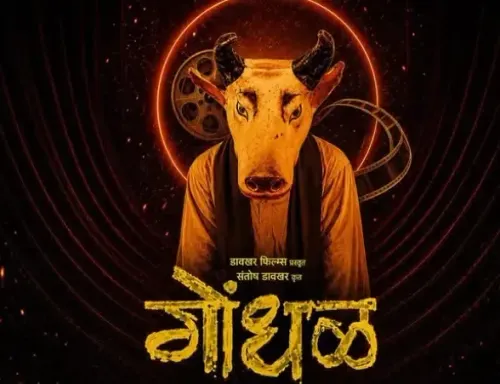
Gondhal director Santosh Davakhar didn't just want to make a thriller — he wanted to challenge the default image of Indian cinema abroad. After watching over 40 films in 15 days at Cannes and diving deep into screenplay research, he built a film that fuses mystery with the richness of Indian rituals. Now, as India's official Oscar entry, it carries a pointed cultural argument with it.
Key Takeaways
Santosh Davakhar's Marathi film 'Gondhal' has been selected as India's official Oscar entry .
Davakhar said he wanted to move beyond the international perception that Indian cinema is defined by poverty and casteism .
He watched more than 40 films in 15 days at Cannes while studying international cinema for the project.
The film blends a thriller-mystery with the richness of Indian rituals and cultural traditions .
The cast includes Kishor Kadam , Ishita Deshmukh , Yogesh Sohoni , and others.
Marathi filmmaker Santosh Davakhar, whose thriller 'Gondhal' has been selected as India's official entry for the Oscars, says his overriding ambition while making the film was to reframe how international audiences perceive Indian cinema — moving past the familiar lens of poverty and casteism and toward the country's rich cultural heritage.
The Vision Behind Gondhal
Davakhar admitted to considerable uncertainty during the film's development. 'To be honest, I didn't know if people will like this film or not. My first priority was that I have to make this film internationally,' he said. The decision to target a global audience from the outset shaped every creative and structural choice the director made.
The impulse, he explained, grew directly from his experiences at international film festivals. 'When I was in Cannes and other festivals internationally, that time I got to know about the representation of Indian films, and how people think that the films here are about poverty and casteism,' Davakhar said. While acknowledging these as legitimate social concerns, he was clear about the gap he saw: 'This is an important issue in India. But apart from that, India has a rich heritage, a proud culture. And I wanted to represent that culture in a cinematic way.'
An Education in International Cinema
To bridge that gap, Davakhar undertook an intensive study of world cinema — particularly during his time at Cannes. 'When I was in Cannes, I used to watch three-four films a day. In 15 days, I have watched more than 40 films. So that page automatically develops. And if you want to make an international film, your making should also be according to that,' he said.
The preparation extended well beyond viewing habits. Davakhar invested heavily in screenplay research, with a deliberate aim to deliver complex material accessibly. 'I have done a lot of research on that. I have also done a lot of research on screenplay. And I have given people a thriller mystery in a very simple way. And along with that, I have also given a richness of rituals,' he said.
What the Film Offers
'Gondhal' blends mystery and thriller elements with the texture of Indian rituals and cultural traditions — a combination the director clearly sees as a corrective to the dominant image of Indian storytelling abroad. The film stars Kishor Kadam, Ishita Deshmukh, Yogesh Sohoni, Nishad Bhoir, Anuj Prabhu, Suresh Vishwakarma, and Vitthal Kale.
India's Oscar Representation
The selection of a Marathi-language film as India's official Oscar submission is itself notable, underscoring the growing visibility of regional-language cinema on the global stage — a trend accelerated by the international success of films like RRR and The Kerala Story in recent years. With 'Gondhal' now carrying the country's flag at the Academy Awards, Davakhar's bet on cultural richness over social realism will be tested before the most scrutinising audience in world cinema.
Point of View
Or whether global awards juries still respond more readily to social urgency. The selection of a Marathi film is itself a statement about the decentralisation of Indian cinema, yet the real proof will be in whether 'Gondhal' earns a Best International Film nomination — something no Indian film has managed since 'Mother India' in 1958. Davakhar's 40-films-in-15-days Cannes education is an unusual origin story, but the question is whether craft preparation translates into the kind of awards-circuit word-of-mouth that shortlisting demands.
NationPress
19 Sept 2026
Frequently Asked Questions
What is 'Gondhal' and why is it significant?
'Gondhal' is a Marathi thriller-mystery film directed by Santosh Davakhar that has been selected as India's official entry for the Academy Awards (Oscars). It is significant because it blends Indian cultural rituals with a thriller narrative, and its director deliberately designed it to appeal to international audiences beyond the familiar themes of poverty and casteism.
Who is Santosh Davakhar?
Santosh Davakhar is the Marathi filmmaker who directed 'Gondhal', India's official Oscar submission. He drew on extensive international film-watching, including over 40 films in 15 days at the Cannes Film Festival, and deep screenplay research to develop the film.
Why did Davakhar want to move beyond themes of poverty and casteism?
Davakhar said he noticed at international festivals, including Cannes, that Indian films were widely perceived as being about poverty and casteism. While acknowledging these as important issues, he felt India's rich cultural heritage and traditions were underrepresented, and set out to fill that gap with 'Gondhal'.
Who stars in 'Gondhal'?
The film features Kishor Kadam, Ishita Deshmukh, Yogesh Sohoni, Nishad Bhoir, Anuj Prabhu, Suresh Vishwakarma, and Vitthal Kale.
What makes 'Gondhal' stand out as an Oscar entry?
'Gondhal' stands out for its fusion of mystery-thriller storytelling with the texture of Indian rituals and cultural traditions — an approach its director crafted after intensive study of international cinema. It is also notable as a Marathi-language film, reflecting the growing global visibility of India's regional-language cinema.