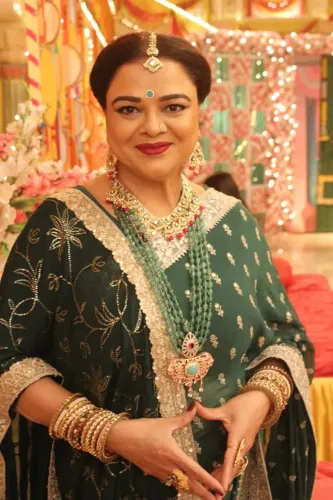
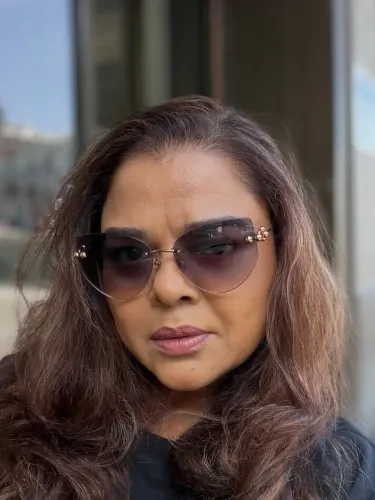
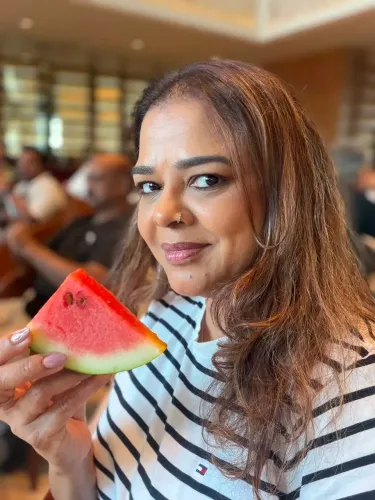
Gulfam Khan on TV's shifting trends: 'Every genre has its own audience'
Synopsis
Gulfam Khan, a two-decade veteran of Indian television, challenges the industry's old assumption that audiences want only one kind of show. From Balika Vadhu to Kumkum Bhagya to Aladdin, she argues every genre commands its own loyal viewership — and creators who ignore that are leaving audiences behind.
Key Takeaways
Gulfam Khan has been active in Indian television for over two decades , debuting in 2003 with the show Lipstick .
She is best known for playing Nazneen in Aladdin – Naam Toh Suna Hoga ( 2018–2020 ) and for her role in Diya Aur Baati Hum .
Khan says rural dramas like Balika Vadhu and urban hits like Kumkum Bhagya both found loyal audiences, disproving the 'one genre fits all' theory.
She argues that universal stories — mythology, Ramayana , Aladdin — cut across age, religion, and background.
Her key message to creators: 'Every genre has its own audience — keep making diverse shows.'
Veteran actress Gulfam Khan, with over two decades in Indian television, has spoken candidly about how the medium has transformed — and why she believes the era of one-size-fits-all content is firmly behind us. In a recent interview, the Mumbai-based actress reflected on the sweeping changes in viewer tastes and the growing appetite for diverse storytelling on Indian TV.
From Rural Narratives to Urban Dramas
Khan recalled a time when producers operated on a narrow assumption about what audiences wanted. Shows rooted in rural India — Balika Vadhu, Agle Janam Mohe Bitiya Hi Kijo, and Pratigya — dominated primetime and were seen as the template for success. That calculus, she noted, gradually shifted.
'Earlier, we believed that audiences preferred only a certain type of content. There were shows like Balika Vadhu, Agle Janam Mohe Bitiya Hi Kijo, and Pratigya, which were rooted in rural India. Later, urban shows like Kumkum Bhagya and Kundali Bhagya also became popular,' Khan said.
The success of urban family dramas such as Kumkum Bhagya and Kundali Bhagya signalled that Indian viewers were not bound by a single narrative preference — a realisation Khan says reshaped how she thinks about the industry.
What Audiences Actually Want
According to Khan, the defining insight of her career has been recognising the plurality of the Indian viewership. 'What I have realized is that audiences do not prefer just one genre — they enjoy all kinds of stories. Every show has its own audience. Some people enjoy urban narratives, some connect with rural stories, while others relate to middle-class families from cities like Delhi, Punjab or Mumbai,' she said.
This fragmentation, she argues, is not a challenge but an opportunity. Creators who chase a single dominant genre risk leaving large segments of viewers underserved.
Universal Stories and Mythological Appeal
Khan also highlighted the enduring pull of mythology and timeless tales. 'Then there are universal stories like Aladdin, mythological shows, and Ramayana, which appeal to people across age groups, irrespective of their religion or background. Therefore, creators should continue making different kinds of shows because every genre has its own audience,' she added.
This observation carries personal weight for Khan, who is best known for playing Nazneen in the fantasy drama Aladdin – Naam Toh Suna Hoga, which aired from 2018 to 2020. The show's cross-demographic appeal mirrored precisely the trend she describes.
A Career That Spans Generations of Television
Khan made her acting debut in 2003 with the television show Lipstick, where she played the character Guddi. Over the following two decades, she witnessed firsthand the medium's evolution — from single-channel dominance to a fragmented, multi-genre landscape shaped by both satellite television and, more recently, streaming competition.
Her role as Nazneen in Diya Aur Baati Hum further cemented her standing as a versatile performer capable of navigating both grounded domestic dramas and fantastical narratives. As Indian television continues to diversify, voices like Khan's — shaped by lived experience across eras — offer a rare longitudinal view of where the medium has been, and where it is headed.
Point of View
But from streaming platforms that have aggressively colonised the time slots once owned by primetime soaps. Her call for genre diversity is sound, but it sidesteps the harder question: whether traditional TV's production model can sustain the kind of creative risk that diverse storytelling actually demands. The shows she cites as proof of diversity — Balika Vadhu, Kumkum Bhagya, Kundali Bhagya — were all long-running, advertiser-safe formats. True genre expansion on Indian TV remains constrained by advertiser conservatism and TRP mechanics that still reward familiarity over experimentation.
NationPress
20 Sept 2026
Frequently Asked Questions
Who is Gulfam Khan and what is she known for?
Gulfam Khan is a veteran Indian television actress with over two decades of experience. She is best known for playing Nazneen in the fantasy drama Aladdin – Naam Toh Suna Hoga (2018–2020) and for her role in Diya Aur Baati Hum. She made her acting debut in 2003 with the TV show Lipstick.
What did Gulfam Khan say about changing TV trends?
Khan said the old belief that Indian audiences prefer only one type of content has been proven wrong. She pointed to the success of both rural dramas like Balika Vadhu and urban shows like Kumkum Bhagya as evidence that every genre commands its own loyal audience.
Which TV shows did Gulfam Khan mention as examples of diverse content?
She cited rural-rooted shows — Balika Vadhu, Agle Janam Mohe Bitiya Hi Kijo, and Pratigya — alongside urban dramas like Kumkum Bhagya and Kundali Bhagya, and universal narratives such as Aladdin and Ramayana.
What is Gulfam Khan's advice to television creators?
Khan urged creators to keep producing content across all genres rather than chasing a single dominant format. She argued that every genre — rural, urban, mythological, or fantasy — has a dedicated viewership waiting for it.
When did Gulfam Khan start her acting career?
Gulfam Khan began her acting career in 2003 with the television show Lipstick, where she played the character Guddi. She has since worked continuously in the industry for over two decades.