Randeep Hooda on International Tiger Day: Save habitats, save ourselves

Synopsis
Randeep Hooda flipped the script on India's tiger conservation success story — arguing that a rising headcount is meaningless if mining and infrastructure projects keep severing the corridors and habitats tigers depend on. His International Tiger Day message lands at a moment when the tension between development and wildlife preservation is sharper than ever.
Key Takeaways
Randeep Hooda posted a conservation message on International Tiger Day, 29 July , warning against habitat and corridor destruction in the name of mining and infrastructure.
His Instagram post stated: 'Save the tiger simply means, Save their habitats, and in turn, save ourselves.' Actress Shriya Pilgaonkar noted that India holds nearly 70% of the world's wild tiger population.
International Tiger Day was established at the Saint Petersburg Tiger Summit to raise awareness about habitat loss, poaching, and corridor fragmentation.
Conservationists warn that India's rising tiger headcount masks growing corridor severance from road, rail, and mining projects.
Actor and wildlife advocate Randeep Hooda used International Tiger Day on 29 July to sound an alarm about the accelerating destruction of tiger habitats and wildlife corridors across India, urging the public to look beyond population counts and confront the infrastructure and mining pressures eroding the forests that tigers depend on.
Hooda's Warning on Habitats and Corridors
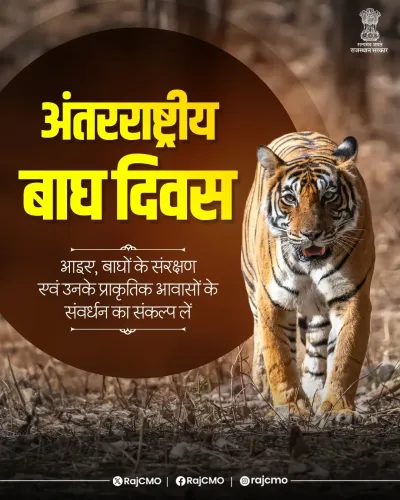
Taking to Instagram, Hooda shared a photograph of a tiger alongside a pointed message: 'As we take pride in the growing population of tigers, we continue to destroy the very habitats and corridors they depend on in the name of mining and infrastructure. Save the tiger simply means, Save their habitats, and in turn, save ourselves.'
The actor, known for his long-standing interest in wildlife causes, framed the issue not merely as one of species preservation but of ecological self-interest — arguing that the forests sustaining tigers are the same ecosystems that regulate water, air, and climate for human populations.
Celebrities Join the Conversation
Hooda was not alone. Actress Shriya Pilgaonkar also marked the occasion, writing: 'Seeing tigers in the wild for the first time was one of the most surreal experiences. There's something incredibly humbling about seeing them in their natural habitat. Today, India is home to the world's largest wild tiger population, accounting for nearly 70% of all wild tigers globally.'
Pilgaonkar added: 'A reminder that conservation matters and that protecting our forests means protecting so much more than just one species. Happy World Tiger Day.'
Several other public figures shared similar messages across social media platforms, amplifying conservation messaging on the occasion.
What International Tiger Day Stands For
International Tiger Day, observed every year on 29 July, was established at the Saint Petersburg Tiger Summit in Russia following studies that documented a steep decline in wild tiger numbers over the preceding century. The day is designed to build global awareness around three interconnected threats: habitat loss, poaching, and the fragmentation of wildlife corridors.
India's tiger population has grown in recent years — a conservation success story frequently cited by government and wildlife bodies. However, critics and ecologists argue that raw numbers mask a more complex picture: corridors connecting protected reserves are being severed by road and rail projects, and buffer zones face mounting encroachment from mining activity.
Why the Habitat Question Is Central
Notably, Hooda's message cuts to what many conservationists consider the core contradiction in India's tiger story — celebrating a rising headcount while simultaneously approving projects that fragment the landscapes those tigers inhabit. Wildlife corridors are critical not only for individual movement but for genetic diversity across isolated populations.
This is not the first time the tension between development and conservation has surfaced around tiger reserves. Several infrastructure projects in central and western India have drawn sustained opposition from ecologists who warn that corridor severance poses a longer-term threat than poaching. As India's tiger numbers continue to be a point of national pride, the debate over how much habitat is enough is likely to intensify.
Point of View
But the celebratory narrative increasingly obscures an uncomfortable parallel: the same policy regime approving new tiger census pride is also clearing corridors for highways and mines. Hooda's post, however briefly, forces that contradiction into public view. The real metric to watch is not tiger headcount but connected forest area — and on that measure, the trend is less flattering. Celebrity amplification on a single day has limited policy impact; what the habitat debate needs is sustained scrutiny of project clearances in and around buffer zones, not annual social media cycles.
NationPress
28 Oct 2026
Frequently Asked Questions
What did Randeep Hooda say on International Tiger Day?
Randeep Hooda posted on Instagram urging people to focus on protecting tiger habitats and corridors, not just celebrating rising tiger numbers. He wrote that saving the tiger means saving their habitats — and, by extension, saving ourselves from ecological damage caused by mining and infrastructure expansion.
When is International Tiger Day and why is it observed?
International Tiger Day is observed every year on 29 July. It was established at the Saint Petersburg Tiger Summit in Russia after studies revealed a dramatic decline in wild tiger populations over the previous century, with the aim of raising global awareness about habitat loss, poaching, and corridor fragmentation.
What did Shriya Pilgaonkar say about tigers on this occasion?
Shriya Pilgaonkar shared a message noting that India is home to nearly 70% of the world's wild tiger population. She called the experience of seeing tigers in the wild 'surreal' and stressed that protecting forests means protecting far more than a single species.
Why are tiger habitats and corridors under threat in India?
Wildlife corridors and buffer zones around tiger reserves face pressure from road and rail infrastructure projects, as well as mining activity. Ecologists warn that severing these corridors fragments tiger populations, reduces genetic diversity, and poses a long-term threat that a rising headcount alone does not reflect.
What is the significance of India's tiger population figure?
India accounts for nearly 70% of all wild tigers globally, making it the world's largest habitat for the species. While this is widely cited as a conservation success, critics argue the figure must be read alongside data on connected forest cover and corridor integrity to give a full picture of the species' long-term viability.