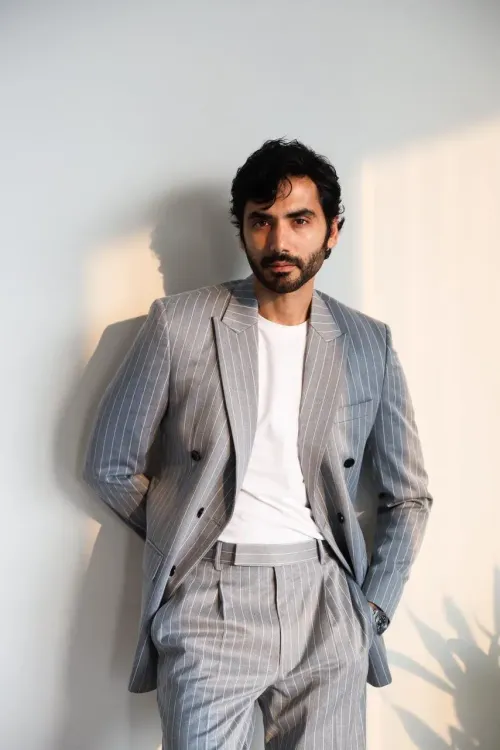
Ishwak Singh on 80th Independence Day: 'Debate and dialogue make a nation stronger'
Synopsis
On India's 80th Independence Day, actor Ishwak Singh made an understated but pointed argument: a nation that stops debating stops growing. Drawing on Gandhi, Nehru, and Ambedkar — figures he studied for 'Rocket Boys' — Singh framed open dialogue not as a sign of division, but as the very thing that holds a diverse democracy together.
Key Takeaways
Ishwak Singh spoke on India's 80th Independence Day about the importance of debate and dialogue in a democratic society.
He called India's diversity of ideas, cultures, and perspectives 'our strength,' urging citizens to work together despite differences.
Singh credited his research for 'Rocket Boys' — studying Gandhi, Nehru, and Ambedkar — with shaping his personal beliefs, particularly Gandhi's concept of truth force.
He defined true independence as the freedom to educate oneself, think independently, and stand up for one's beliefs, paired with a responsibility to serve society.
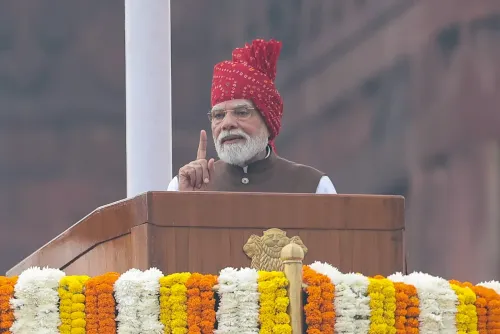
Prime Minister Narendra Modi addressed the nation from the Red Fort , centring his speech on Viksit Bharat 2047 and the Sapta Dhara framework.
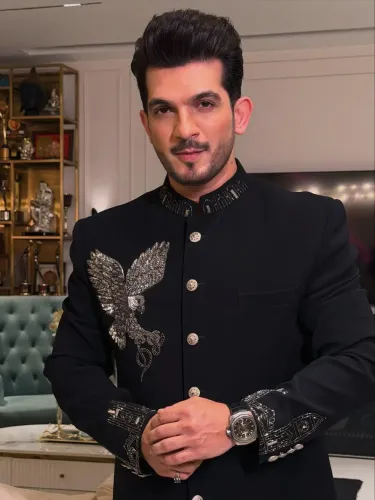
Actor Ishwak Singh, best known for his roles in 'Rocket Boys' and 'Paatal Lok', used the occasion of India's 80th Independence Day on 15 August 2025 to make a case for preserving open debate and dialogue as foundational values of a democratic society. Speaking from Mumbai, Singh argued that ideological diversity, far from being a threat, is one of India's core strengths.
On Debate and National Unity
When asked which value he considers most vital for nation-building, Singh was direct. “We need to remain a society that debates, engages in dialogue and supports one another despite our differences,” he said. “Our diversity of ideas, cultures and perspectives is our strength. If we can work together towards the greater good while respecting our differences, that is what will make our nation stronger.”
The statement carries particular resonance at a time when public discourse in India is frequently polarised along political and cultural lines. Singh's emphasis on disagreement as a democratic virtue — rather than a fracture — reflects a broader anxiety among artists and intellectuals about the health of civic conversation.
How 'Rocket Boys' Shaped His Understanding of India
Singh said that preparing for his role in 'Rocket Boys' — the acclaimed series depicting the lives of scientists Homi J. Bhabha and Vikram Sarabhai — gave him a visceral connection to India's post-independence idealism. “I remember Gandhi's ideas on social justice, Nehru's emphasis on scientific temper, and Ambedkar's powerful speeches on equality,” he said. “Reading them while preparing for Rocket Boys helped me understand my character, but also inspired me personally. Gandhi's idea of truth force has become one of my core beliefs.”
Notably, the series has been credited with reintroducing younger Indian audiences to the intellectual and scientific ambitions that defined the country's early decades — a cultural function that Singh appears to have internalised deeply.
What True Independence Means to Him
On the question of personal freedom, Singh offered a definition rooted in civic responsibility rather than individual liberty alone. “To me, true independence means having the freedom to educate yourself, engage with others, think independently and stand up for what you believe in,” he said.
He added: “With freedom and power also comes responsibility — the responsibility to serve society and those who are less fortunate.”
The Broader Context: India at 80
India's 80th Independence Day marks eight decades since the country gained freedom from British rule in 1947. The milestone is an occasion to reflect on the nation's transformation — from building democratic institutions and expanding access to education, to emerging as a major global economy with a growing presence in science, technology, and defence.
Prime Minister Narendra Modi addressed the nation from the Red Fort, with his speech anchored in the theme of building a self-reliant, developed India by 2047. Key pillars included Viksit Bharat 2047 and the Sapta Dhara framework — seven streams of national strength spanning defence, energy, human capital, youth, self-reliance, and national unity.
As India charts its next chapter, voices from the arts — like Singh's — serve as a reminder that the quality of public discourse is as consequential as economic or military milestones.
Point of View
But they aren't. In an era when public disagreement is increasingly branded as disloyalty, an actor with mainstream reach making the case for structured dissent and dialogue is a meaningful cultural signal. What's worth noting is his source material: Gandhi, Nehru, Ambedkar — a deliberately pluralist intellectual lineage that implicitly pushes back against any single-strand nationalism. The arts have historically been India's early-warning system for civic stress; Singh's Independence Day message fits that tradition.
NationPress
30 Sept 2026
Frequently Asked Questions
What did Ishwak Singh say on India's 80th Independence Day?
Ishwak Singh called for India to remain a society that debates, engages in dialogue, and supports one another despite differences. He described the country's diversity of ideas and cultures as a national strength, and said working together toward the greater good — while respecting differences — is what makes a nation stronger.
How did 'Rocket Boys' influence Ishwak Singh's views on India?
Preparing for his role in 'Rocket Boys' led Singh to study the writings and speeches of Mahatma Gandhi, Jawaharlal Nehru, and B.R. Ambedkar. He said the experience inspired him personally, and that Gandhi's concept of truth force has become one of his core beliefs.
What does Ishwak Singh consider true independence?
Singh defined true independence as the freedom to educate oneself, engage with others, think independently, and stand up for one's beliefs. He also stressed that freedom comes with the responsibility to serve society and those less fortunate.
What is India's 80th Independence Day?
India's 80th Independence Day, observed on 15 August 2025, marks eight decades since the country gained independence from British rule in 1947. It is an occasion to honour freedom fighters and reflect on India's democratic, economic, and scientific journey.
What did PM Modi say on the 80th Independence Day?
Prime Minister Narendra Modi addressed the nation from the Red Fort, focusing on the vision of a self-reliant, developed India by 2047. His speech highlighted the Viksit Bharat 2047 agenda and the Sapta Dhara framework — seven streams of national strength including defence, energy, human capital, youth, and national unity.