Girish Karnad on TV vs theatre: 'It reaches people who couldn't afford it'
Synopsis
Girish Karnad's old Doordarshan interview resurfaces a counterintuitive argument: television isn't theatre's enemy — it's its democratic extension. For Karnad, every new medium that reached a woman, a servant, or a bedridden person was a win for art, not a loss for the stage.
Key Takeaways
Girish Karnad argued in a Doordarshan interview that television and video expand art's reach rather than threaten theatre.
He traced Indian performing arts from 19th-century folk theatre through company theatre, cinema in the 1930s , and then television and video.
Karnad stressed that television reaches audiences — including women, domestic workers, and the bedridden — who could never afford or access theatre.
His plays, including 'Tughlaq' , 'Hayavadana' , and 'Nagamandala' , are considered landmarks of contemporary Indian drama.
Karnad received the Jnanpith Award , Padma Shri , and Padma Bhushan , and passed away in June 2019 at age 81 .
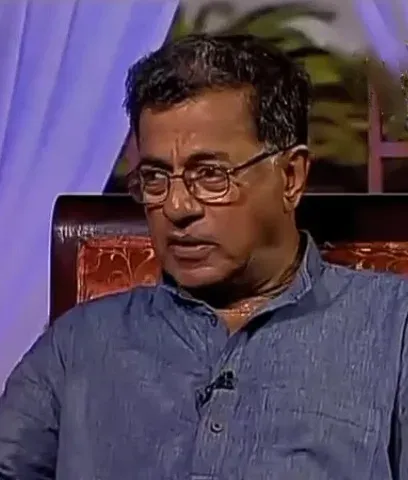
Celebrated playwright, actor and filmmaker Girish Karnad once offered a remarkably forward-looking view on the relationship between theatre and newer entertainment mediums — arguing that the rise of television and video was not a threat to theatre but an expansion of art's reach to those who had never had access to it.
What Karnad Said About Television and Theatre
In an old interview with Doordarshan, Karnad traced the evolution of Indian performing arts across centuries, noting that each new medium had built upon the last rather than displaced it. He observed that folk theatre dominated the 19th century, followed by company theatre, then cinema in the 1930s, and subsequently television and video.
'How to make theatre prosper is another question, you know, we have to go into the mechanics of it. But the point is, in the 19th century there was only folk theatre, then we got company theatres, then in the 30s we got films. Then came television, then there's video, and so the number of art forms is proliferating, and it's available, it's reaching further,' he said.
Television as a Social Equaliser
Karnad's most striking argument was social rather than artistic. He stressed that television served audiences — women, domestic workers, the bedridden, and daily-wage earners — who could never realistically attend a theatre performance, whether due to cost, mobility, or social circumstance.
'I don't regret that, because I think television and video go to people who could never dream of coming to theatre, who couldn't afford theatre, women, servants, people who are bedridden, menials. I wouldn't regret television at all, because they entertain people who had no entertainment before,' he said.
This perspective was notably at odds with the prevailing anxiety among theatre practitioners of his era, who often viewed the spread of broadcast media as an existential threat to live performance.
Karnad's Legacy in Indian Theatre and Cinema
Widely regarded as one of India's most influential literary and cultural figures, Girish Karnad was a playwright, actor, director, and public intellectual whose work fundamentally reshaped modern Indian theatre. His plays — including 'Tughlaq', 'Hayavadana', 'Nagamandala', 'Yayati', and 'Taledanda' — remain landmarks of contemporary Indian drama.
His film career was equally distinguished. As an actor, he appeared in 'Manthan', 'Nishant', 'Swami', 'Iqbal', 'Dor', 'Ek Tha Tiger', and 'Tiger Zinda Hai', his final screen appearance. He also directed and wrote several acclaimed films.
Honours and Passing
Karnad was the recipient of some of India's highest civilian and artistic distinctions, including the Jnanpith Award, Padma Shri, and Padma Bhushan. He passed away in June 2019 at the age of 81.
His remarks on television's democratic reach remain as relevant today — in the era of streaming and short-form video — as they were when first delivered, a reminder that art's value lies as much in who it reaches as in what it says.
Point of View
He reframed the debate entirely — access over aesthetics. That instinct, rooted in a democratic view of culture, is precisely what mainstream obituaries of Karnad tend to underplay in favour of his literary awards. In an age of algorithmic streaming, his point deserves revisiting: the question is not whether a medium is 'worthy' of art, but whether it carries art to those the old mediums left behind.
NationPress
26 Oct 2026
Frequently Asked Questions
What did Girish Karnad say about television and theatre?
Karnad argued that television does not threaten theatre but instead extends art's reach to people — including the poor, women, domestic workers, and the bedridden — who could never access or afford live performance. He made these remarks in an interview with Doordarshan.
Why did Girish Karnad support television as an art medium?
He viewed television as a social equaliser, noting it entertained people who previously had no access to any form of cultural experience. For Karnad, the proliferation of art forms was a positive development, not a dilution of theatre.
What are Girish Karnad's most famous plays?
Karnad's most celebrated plays include 'Tughlaq', 'Hayavadana', 'Nagamandala', 'Yayati', and 'Taledanda', all of which are considered landmarks of contemporary Indian drama and are still widely studied and performed.
What awards did Girish Karnad receive?
Karnad was honoured with the Jnanpith Award — India's highest literary honour — along with the Padma Shri and Padma Bhushan, among other distinctions across his career in theatre, film, and literature.
When did Girish Karnad pass away?
Girish Karnad passed away in June 2019 at the age of 81, leaving behind a body of work that spans theatre, cinema, and public intellectual life.