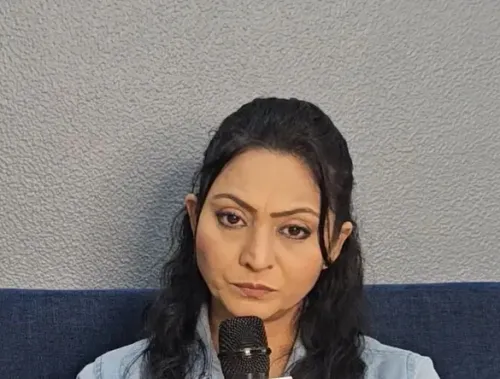
Kishori Shahane on delayed payments in TV industry and its toll on actors

Synopsis
Kishori Shahane, a veteran of Indian television, has put a spotlight on one of the industry's most persistent but least-discussed problems: delayed and irregular payment cycles. Her candid remarks — backed by decades of firsthand experience across daily, monthly, and longer pay structures — add a credible voice to a debate that affects thousands of TV artists across the country.
Key Takeaways
Veteran actress Kishori Shahane described delayed payments in Indian television as a 'vicious cycle' that creates financial hardship for artists.
She noted that while some production houses extend payment cycles significantly, others maintain prompt and structured schedules .
Shahane has personally worked under daily, monthly, and longer payment structures across her career, emphasising the need for financial planning.
The actress also highlighted the rising workload driven by the shift to daily broadcast schedules from the earlier once-a-week format.
She stressed that commitment to long working hours is a prerequisite for anyone choosing to work in the television industry.
Veteran actress Kishori Shahane has spoken candidly about the persistent issue of delayed payments in the Indian television industry, describing it as a 'vicious cycle' that creates real financial hardship for artists at every level of the profession.
The Payment Cycle Problem
Shahane, best known to current audiences for her role in 'Ghum Hai Kisikey Pyaar Meiin', explained that payment schedules in television are far from uniform. 'Payment cycles that are supposed to be shorter sometimes get extended significantly. Naturally, that creates difficulties,' she said. The actress was careful to acknowledge, however, that not all production houses operate this way — many maintain prompt and structured payment timelines that make working conditions considerably more manageable.
A Career Spent Navigating Multiple Payment Structures
Drawing on her long tenure in the industry, Shahane revealed she has experienced daily, monthly, and even longer payment cycles over the course of her career. She stressed that financial discipline becomes a professional necessity under such conditions. 'Over the years, I have worked under different payment structures, including daily, monthly, and longer cycles. It requires careful financial planning. I believe professionals in many industries face similar challenges today, so budgeting and planning become essential,' she noted.
Notably, the issue of delayed payments in Indian television is not new — industry bodies and actors' associations have periodically raised it, with smaller and mid-tier artists often bearing the greatest burden when cash flows tighten on a production.
Long Working Hours Add to the Pressure
Shahane also addressed the demanding work schedules that have become standard in the television ecosystem. She pointed to the evolution of broadcast frequency — from once-a-week telecasts to five days a week and now daily episodes — as a key driver of the increased workload actors face. 'Television has always demanded hard work. Earlier, shows were telecast once a week, then five days a week, and now many are broadcast daily. Naturally, the workload increases. If you want to be part of this industry, you have to accept that commitment,' said the 'Ishq Mein Marjawan' actress.
What This Means for the Industry
The combination of stretched payment timelines and long shooting hours places a compounding strain on television artists, particularly those without the financial cushion of film work or brand endorsements. Critics argue that without standardised contracts and enforceable payment schedules, the structural vulnerability of TV actors — especially those in smaller roles — will persist. As Indian television continues to expand its daily content output, the conversation around fair compensation and working conditions is likely to grow louder.
Point of View
Partly because artists fear being seen as difficult to work with. What her comments surface is a deeper asymmetry: production houses hold the cash-flow leverage, while actors — particularly those without parallel income streams — absorb the financial risk. The shift to daily broadcasting has amplified this imbalance, adding hours to shooting schedules without a commensurate improvement in pay discipline. Until industry bodies or regulators mandate enforceable payment timelines, the 'vicious cycle' Shahane describes will remain a feature, not a bug, of Indian TV production.
NationPress
22 Oct 2026
Frequently Asked Questions
What did Kishori Shahane say about delayed payments in the TV industry?
Kishori Shahane described delayed payments as a 'vicious cycle,' explaining that payment cycles meant to be short often get extended significantly, creating financial difficulties for artists. She acknowledged that some production houses do maintain prompt payment schedules.
Which TV shows is Kishori Shahane known for?
Kishori Shahane is currently associated with 'Ghum Hai Kisikey Pyaar Meiin' and has previously appeared in 'Ishq Mein Marjawan,' among other productions across her long television career.
How has Kishori Shahane managed different payment structures in her career?
She has worked under daily, monthly, and longer payment cycles over the years and says careful financial planning and budgeting are essential for navigating such variability. She noted that professionals in many other industries face similar challenges.
Why are working hours in Indian television so demanding?
Shahane attributed the long hours to the shift from weekly to daily broadcast schedules, which has significantly increased the volume of content actors must shoot. She said anyone entering the industry must be prepared to accept that level of commitment.
Is delayed payment a widespread problem in Indian television?
According to Shahane, it is a persistent and well-known issue, though its severity varies by production house. Industry observers note that smaller and mid-tier artists are typically most affected when payment cycles are delayed.