Prem Keetanu review: Veer Pahariya shines in 4-star coming-of-age rom-com

Synopsis
Prem Keetanu is not quite the breezy rom-com its poster sells. Beneath the crushes, banter and catchy songs is a quietly perceptive film about the confusion of early adulthood — first love tangled up with parental estrangement, the pull of an overseas opportunity, and the uncomfortable realisation that growing up means questioning more than just who you love. Veer Pahariya's confident debut and a sharp screenplay make it one of the better Hindi theatrical outings of the season.
Key Takeaways
Prem Keetanu is directed by Apoorv Singh Karki and stars Veer Pahariya , Aafiya Sayed , and Aparshakti Khurana .
The film runs 2 hours 18 minutes and has been rated 4 stars .
Veer Pahariya makes a confident screen debut as the carefree backbencher Vishal , praised for natural comic timing and emotional depth.
Debutant Aafiya Sayed is described as a 'genuine discovery', bringing warmth and credible chemistry to her role as Suhani .
The screenplay by Deepak Kingrani distinguishes itself through its treatment of parental estrangement and the pressure of an overseas opportunity alongside the central romance.
Produced by Gaurav Verma and Avanika Films in association with Bhavana Studios and Phars Film Company .
Prem Keetanu, directed by Apoorv Singh Karki and starring Veer Pahariya, Aafiya Sayed, and Aparshakti Khurana, is a 4-star youthful romantic comedy that works because it refuses to stay only on the surface of young love. Running at 2 hours 18 minutes, the film weaves first romance, friendship, parental estrangement, and the disorienting freedom of early adulthood into a package that is both consistently entertaining and quietly affecting.
The Setup and Central Performances
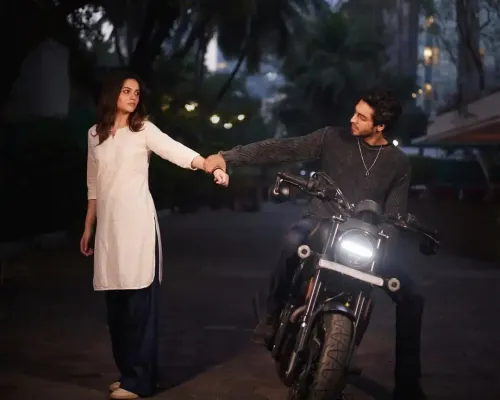
Veer Pahariya plays Vishal, a carefree backbencher coasting through college life until he falls for Suhani, played by debutant Aafiya Sayed. Where Vishal drifts, Suhani is focused and decisive — a contrast that gives their dynamic an honest tension. Pahariya makes a confident screen debut; his comic timing lands without effort, and he handles Vishal's emotional confusion with a naturalism that grows more compelling as the film deepens. Sayed is a genuine discovery — warm, grounded, and convincing in a role that could easily have been passive. Their chemistry reads as the nervous, uncertain energy of actual first love rather than choreographed movie romance.
Aparshakti Khurana enters as Ranjeet, completing the love triangle. Khurana brings his signature comic energy, but the screenplay wisely gives Ranjeet his own emotional logic rather than simply casting him as the obstacle. His scenes with Suhani's father, played with well-judged warmth by Rakesh Bedi, provide some of the film's most amusingly relatable moments.
Where the Film Goes Deeper
The real surprise in Prem Keetanu is how firmly it ties the romance to the messier business of growing up. Vishal's fractured relationship with his parents becomes one of the film's most unexpectedly moving threads. He begins to question whether his shortcomings are entirely his own — or whether the way he was raised shaped them. It is an uncomfortable line of enquiry, and the film does not flinch from it.
One scene captures this with particular economy: Vishal calls his father, only to be greeted with a flat 'What do you want?' No confrontation, no speech — just a few words carrying the weight of years of unexpressed feeling. That particular estrangement, familiar to many middle-class Indian households, is rendered with painful accuracy. The need for connection persists even when the language for it has been lost.
The Comedy and the Friendships
The film's humour is one of its most reliable pleasures, much of it routed through Vishal's bond with his roommate. In one standout exchange, the roommate delivers a cynical thesis on relationships — give her time and she wants money; give her money and she wants time; give her both and she wants space. It is exaggerated enough to be funny and just grounded enough to sting. The friendship itself feels lived-in rather than functional, giving the film an emotional safety valve whenever the heavier themes press in.
The screenplay, written by Deepak Kingrani, keeps the comic and emotional registers balanced, and the tone never tips into melodrama. Director Karki demonstrates a clear feel for how to let a scene breathe — a quality that becomes essential when the script moves into its more reflective second half.
Music, Visuals and the US Visa Turn
The film's musical identity is well-suited to its world. Tracks including 'Kaho Toh', 'Tu Mera Raiyyo', and 'Ishq Ka Ghulaam' embed naturally into the narrative rather than interrupting it. The colourful visual treatment and lively choreography reinforce the film's youthful, energetic personality without overwhelming the quieter character moments.
The plot sharpens considerably when Vishal's US visa is approved. Suddenly, leaving is not a hypothetical — it is a decision with a deadline. Does Suhani love him? Is an uncertain relationship worth sacrificing a concrete opportunity? These questions give the film's second half an emotional weight that its breezy opening act does not fully telegraph, making the tonal shift feel earned rather than jarring.
Verdict
Prem Keetanu, produced by Gaurav Verma and Avanika Films in association with Bhavana Studios and Phars Film Company, is a film that earns its emotional moments by doing the groundwork in the funny ones. It understands that growing up means being old enough to make your own choices and still young enough to doubt every single one. Funny, warm, colourful, and more reflective than its premise suggests, it is among the more satisfying Hindi theatrical releases of the season.
Point of View
Which makes Karki's restraint quietly radical. The film's willingness to let a single flat phone call between a son and his father do more work than any confrontation scene is the kind of directorial confidence that is rare in the genre. Veer Pahariya's debut is creditable, but the more interesting long-term signal here is whether debutant Aafiya Sayed gets the follow-up roles this performance warrants — first impressions in Hindi cinema are fleeting, and the industry's track record with female newcomers in rom-coms is uneven at best.
NationPress
2 Oct 2026
Frequently Asked Questions
What is Prem Keetanu about?
Prem Keetanu is a Hindi coming-of-age romantic comedy about a carefree college student named Vishal who falls for the focused and clear-headed Suhani, only to find a love triangle forming when a rival enters the picture. Beyond the romance, the film explores parental estrangement, male friendship, and the pressure of choosing between an overseas opportunity and a relationship with an uncertain future.
Who stars in Prem Keetanu and how are the performances?
The film stars Veer Pahariya, Aafiya Sayed, Aparshakti Khurana, and Rakesh Bedi. Pahariya makes a confident debut with natural comic timing and emotional range; Sayed is a pleasant discovery with genuine warmth; and Khurana brings his trademark humour to a role that is given more emotional dimension than a typical rival character.
Who directed Prem Keetanu and who wrote the screenplay?
Prem Keetanu is directed by Apoorv Singh Karki. The screenplay is written by Deepak Kingrani. The film is produced by Gaurav Verma and Avanika Films in association with Bhavana Studios and Phars Film Company.
What is the rating and runtime of Prem Keetanu?
Prem Keetanu has been rated 4 stars and runs for 2 hours 18 minutes. Critics have highlighted its balance of humour, music, and emotional depth as the key reasons for the strong rating.
What are the standout songs in Prem Keetanu?
The film features three notable tracks — 'Kaho Toh', 'Tu Mera Raiyyo', and 'Ishq Ka Ghulaam' — which are praised for integrating naturally into the narrative and reinforcing the film's youthful, energetic tone.