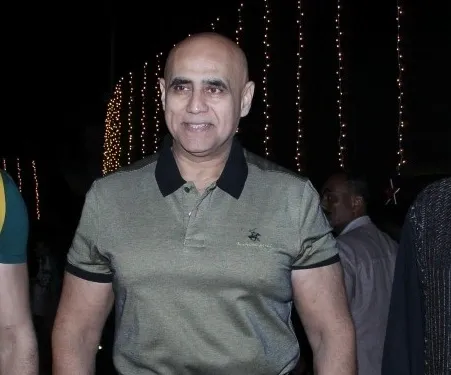
Puneet Issar on Swara Bhasker's 'Ashamed as a Hindu' remark: Don't speak for personal gain
Synopsis
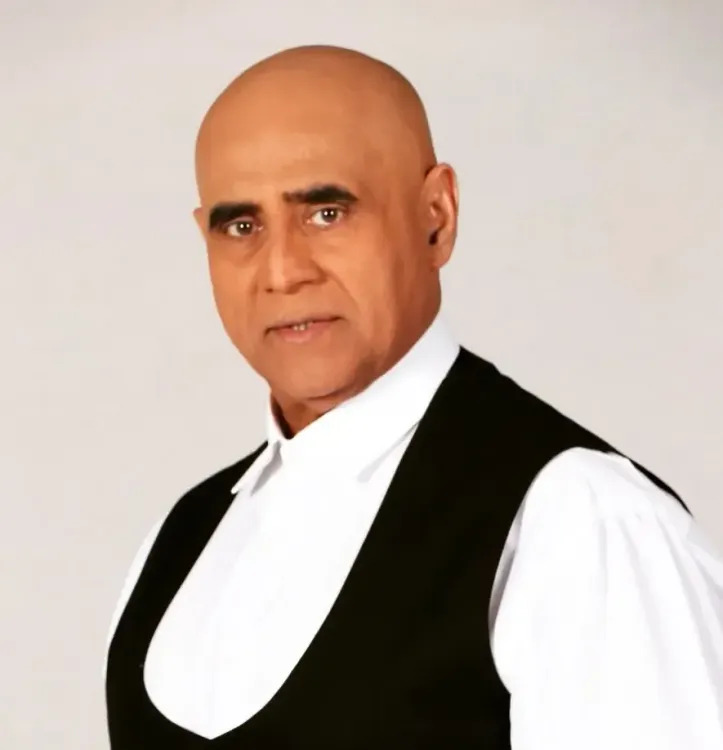
Veteran actor Puneet Issar has taken a pointed swipe at Swara Bhasker's 'ashamed as a Hindu' remark about the 2019 Ayodhya verdict, suggesting the actress may have been motivated by external funding or support. His comments reopen the recurring Bollywood debate: where does an artist's right to speak end and the risk of fanning societal divisions begin?
Key Takeaways
Puneet Issar publicly criticised Swara Bhasker's remark that she felt 'ashamed as a Hindu' after the 2019 Ayodhya verdict .
Issar urged artists to entertain rather than engage in political controversies, citing responsibility toward 140 crore Indians .
He implied Bhasker's statement may have been driven by personal gain or external funding, calling it 'in very bad taste.' Swara Bhasker had said on a podcast that she messaged Aamir Khan , Shah Rukh Khan , and Salman Khan to apologise following the Supreme Court verdict.
The 2019 Supreme Court verdict on the Ayodhya Ram Janmabhoomi title dispute led to the construction of the Ram Mandir , inaugurated in January 2024 .
Veteran Bollywood actor Puneet Issar has weighed in on the controversy surrounding actress Swara Bhasker's remarks in which she described feeling 'ashamed as a Hindu' following the 2019 Ayodhya Ram Janmabhoomi verdict. Issar, speaking to reporters on 21 September, urged artists to stay out of political controversies and focus on their craft.
What Puneet Issar Said
The actor, widely known for his role in the iconic television epic Mahabharat, said that artists bear a responsibility toward the country's 140 crore people and their primary duty is to entertain. He cautioned against making inflammatory public statements for the sake of media attention or personal benefit.
'First of all, one should not get involved in such controversies. We are artists. We should take care of our 140 crore people. Your job is to entertain. You just entertain. You just perform. If you want to be a social activist, if you want to go into politics, then you should do that,' Issar said.
He went further, implying that external funding or support could be motivating certain remarks: 'Just to get into news, or if someone is supporting you, or if someone is funding you, and you follow someone for your personal gain, and give such a shocking statement, I think that is in very bad taste. That should not be done.'
What Swara Bhasker Had Said
The controversy stems from a recent podcast appearance by actress Swara Bhasker, best known for Tanu Weds Manu, in which she stated that she felt 'really ashamed as a Hindu' after the Supreme Court's 2019 Ayodhya verdict. She described the ruling as unfair and said she reached out to several Muslim acquaintances — including Bollywood stars Aamir Khan, Shah Rukh Khan, and Salman Khan — to apologise and express her disagreement with the court's decision.
The Broader Debate
Bhasker's comments have reignited a long-running debate in Bollywood over the role of artists as public voices on sensitive political and religious matters. Critics argue that celebrities who take strong positions on divisive religious issues risk deepening societal fault lines, while supporters contend that public figures have a democratic right — and even an obligation — to speak their conscience.
This is not the first time Bhasker has courted controversy with political commentary. She has previously been vocal on a range of issues related to civil liberties and minority rights, drawing both praise and sharp criticism from different sections of the public.
Context and Significance
The 2019 Supreme Court verdict on the Ayodhya Ram Janmabhoomi-Babri Masjid title dispute was a landmark ruling that paved the way for the construction of the Ram Mandir in Ayodhya. The temple was subsequently inaugurated in January 2024. The judgment remains a deeply emotive subject, with strong opinions across religious and political lines. Celebrity reactions to it — particularly from the Hindi film industry — continue to generate significant public attention.
As the debate over artistic responsibility and free expression persists, both Issar's remarks and Bhasker's original comments are likely to remain talking points in the ongoing conversation about where the line between personal opinion and public influence should be drawn.
Point of View
And the politics of Bollywood's relationship with religion. The 'funding' insinuation is the sharpest edge here: it stops short of naming anyone but is clearly designed to delegitimise Bhasker's stated sentiment rather than engage with it substantively. What is notable is the asymmetry: Issar, too, is making a political statement, yet frames his intervention as an apolitical appeal to professionalism. The Ayodhya verdict has become a recurring litmus test for public figures, and Bollywood's fractured, hesitant responses to it reveal an industry still unable to reconcile commercial imperatives with civic voice.
NationPress
21 Sept 2026
Frequently Asked Questions
What did Swara Bhasker say that sparked the controversy?
Swara Bhasker said on a recent podcast that she felt 'really ashamed as a Hindu' after the Supreme Court's 2019 Ayodhya Ram Janmabhoomi verdict, which she described as unfair. She also revealed that she messaged Aamir Khan, Shah Rukh Khan, and Salman Khan to apologise and express her disagreement with the ruling.
What was Puneet Issar's reaction to Swara Bhasker's remark?
Puneet Issar said artists should stay out of controversies and focus on entertaining the country's 140 crore people. He suggested that making such statements to gain media attention or for personal benefit — potentially linked to external funding or support — is in 'very bad taste.'
What was the 2019 Ayodhya verdict that Swara Bhasker referenced?
The 2019 Supreme Court verdict resolved the decades-long Ayodhya Ram Janmabhoomi-Babri Masjid title dispute, ruling in favour of the construction of a Ram Mandir at the contested site. The Ram Mandir was subsequently inaugurated in January 2024.
Why do Bollywood celebrities' remarks on the Ayodhya verdict attract so much attention?
The Ayodhya verdict remains one of the most emotionally charged legal and religious outcomes in recent Indian history, touching on Hindu and Muslim community sentiments alike. When high-profile film stars comment on it, their large public platforms amplify the remarks far beyond typical political commentary, generating intense reactions across the political spectrum.
Is this the first time Swara Bhasker has been controversial for political remarks?
No. Swara Bhasker has a history of vocal public commentary on civil liberties, minority rights, and political issues, which has previously drawn both significant support and sharp criticism. Her latest remarks about the Ayodhya verdict are consistent with a pattern of outspoken engagement with contentious national debates.