Swara Bhaskar's 'Padmaavat jauhar' remark sparks political row
Synopsis
A remark by actress Swara Bhaskar — linking the cinematic depiction of 'jauhar' in 'Padmaavat' to how rape survivors might be perceived today — has reignited a long-running culture war around the film. The backlash cuts across party lines, with the BJP, the UP Women Commission, a Congress MP, and a religious leader all pushing back, exposing deep fault lines over how medieval history should be read through a modern gender lens.
Key Takeaways
Swara Bhaskar drew criticism on 2 September for remarks linking 'jauhar' in 'Padmaavat' to the perception of rape survivors today.
BJP leader Shazia Ilmi called Bhaskar 'ignorant and lacking an understanding of history and its essence.' UP Women Commission President Babita Singh Chauhan said linking 'jauhar' to rape is 'absolutely wrong.' Congress MP Tariq Anwar acknowledged 'jauhar' was historically accepted but said evolving understanding has led society to view it differently.
Maulana Sajid Rashidi argued the film's message is 'hurtful' to rape survivors and questioned whether the censor board should have cleared it.
The row revisits Bhaskar's eight-year-old open letter to director Sanjay Leela Bhansali , which had itself sparked debate at the time of the film's release.
Actress Swara Bhaskar came under sharp political fire on Wednesday, 2 September after remarks she made at a recent public event — in which she drew a parallel between the depiction of 'jauhar' in the film 'Padmaavat' and the experiences of rape survivors today — triggered a swift backlash from across the political spectrum. The Bharatiya Janata Party (BJP) led the criticism, accusing Bhaskar of being 'ignorant' and lacking an understanding of history.
What Bhaskar Said
Revisiting an open letter she had written eight years ago to 'Padmaavat' director Sanjay Leela Bhansali, Bhaskar argued that the film's portrayal of thousands of women committing 'jauhar' — self-immolation to protect their 'honour' — risked making rape survivors of the present day appear to be 'cowards' for choosing to live. The remarks, made at a recent public event, quickly circulated and drew responses from politicians and public figures.
BJP's Rebuttal
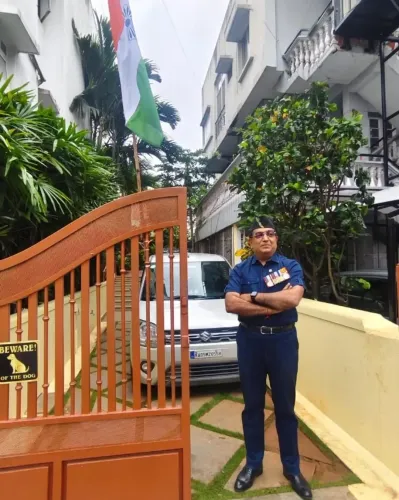
BJP leader Shazia Ilmi was among the first to respond, calling Bhaskar 'ignorant and lacking an understanding of history and its essence.' She said it was 'clearly evident that Swara Bhasker ji can neither grasp historical context, nor understand how women are viewed or how they view themselves across societies in our country, nor comprehend our country's constitutional values.'
Ilmi further argued that Bhaskar was conflating two fundamentally different historical and social contexts. 'She is linking a medieval historical context — the context of 'Jauhar' — to that of rape survivors...in a way saying that they should not have performed 'Jauhar',' Ilmi said. She also referenced the treatment of Yazidi women by ISIS, contending that the Rajput women's act was 'a matter of pride' and a means of avoiding captivity, torture, and mass rape.
Reactions From Other Voices
Uttar Pradesh Women Commission President Babita Singh Chauhan said: 'We respect Swara Bhaskar's choice of marrying into another religion, but she should refrain from harbouring grudges against the Sanatan Dharma.' Chauhan maintained that the practice of 'jauhar' was a personal decision made by queens of that era in the absence of male protectors, and declined to pass judgement on whether it was right or wrong. 'Linking it to rapes is absolutely wrong,' she said.
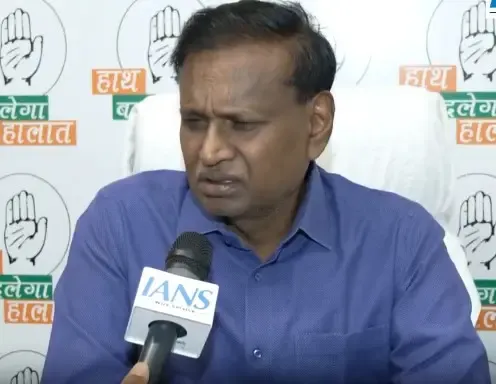
Congress MP Tariq Anwar offered a more nuanced view, acknowledging that 'jauhar' was an accepted tradition of its time but that evolving social understanding had led people to view such practices differently. 'As people's understanding has increased, their thinking has evolved, and their horizons have broadened, people have considered this thing wrong,' he said.
Rajasthan Finance Commission Chairman Arun Chaturvedi echoed a similar position, saying that 'judging a decision based on a certain situation in history would be wrong,' while noting that such practices are not supported today.
Religious figure Maulana Sajid Rashidi also weighed in, questioning the film's underlying message. 'Somewhere this film has conveyed the message that rape survivors are cowards and instead should have died, which I think is very hurtful for the latter and such films should not be allowed by the censor board,' he said.
The Broader Debate
The controversy is not new — 'Padmaavat' has been a flashpoint since its release, drawing protests from Rajput community groups over its historical depictions. Bhaskar's original open letter to Bhansali had itself generated significant debate at the time. This latest episode resurfaces those fault lines, with the added dimension of how historical practices are interpreted through a contemporary lens on gender and survival. Notably, critics across party lines — while disagreeing on the framing — largely converged on the view that equating 'jauhar' with the experience of modern rape survivors is historically and contextually problematic.
Point of View
If clumsily framed, question: how does the glorification of self-immolation as 'honour' in popular cinema shape the social imagination around women's survival choices? Critics from the BJP and the UP Women Commission were quick to invoke historical context, yet several of them simultaneously said they would not judge whether 'jauhar' was right or wrong — a contradiction that went largely unexamined. The fact that a Congress MP and a Muslim cleric broadly agreed with the BJP's conclusion, albeit from different premises, suggests the discomfort with Bhaskar's framing runs deeper than partisan politics. What the debate has not produced is a serious reckoning with how mainstream Hindi cinema narrativises female agency in extremis.
NationPress
18 Oct 2026
Frequently Asked Questions
What did Swara Bhaskar say about 'Padmaavat' and rape survivors?
Bhaskar argued at a recent public event that the film's depiction of thousands of women committing 'jauhar' to protect their 'honour' could make rape survivors of today appear to be 'cowards' for choosing to live. She was revisiting an open letter she had written eight years ago to director Sanjay Leela Bhansali.
How did the BJP respond to Swara Bhaskar's remarks?
BJP leader Shazia Ilmi called Bhaskar 'ignorant and lacking an understanding of history and its essence,' saying she was conflating a medieval historical context with the experiences of modern rape survivors. Ilmi also referenced the treatment of Yazidi women by ISIS to argue that the Rajput women's act was one of pride and self-protection.
What did other political figures say about the controversy?
Congress MP Tariq Anwar said 'jauhar' was an accepted tradition of its time but that evolving social understanding has led people to view it differently. Rajasthan Finance Commission Chairman Arun Chaturvedi said judging historical decisions by present-day standards is wrong. UP Women Commission President Babita Singh Chauhan said linking 'jauhar' to rape is 'absolutely wrong.'
Why has 'Padmaavat' been controversial?
'Padmaavat,' directed by Sanjay Leela Bhansali, has been a flashpoint since its release, with Rajput community groups protesting its historical depictions. Swara Bhaskar's original open letter to Bhansali criticising the film's portrayal of 'jauhar' also generated significant debate at the time.
What did Maulana Sajid Rashidi say about the film?
Maulana Sajid Rashidi argued that the film conveys the message that rape survivors are 'cowards' who should have died instead, which he called 'very hurtful.' He questioned whether the censor board should have approved the film on those grounds.