Rakul Preet Singh on rising AQI: Protecting the planet is everyone's duty

Synopsis
Rakul Preet Singh used an Earthshot event platform to flag India's AQI crisis — citing readings as high as 1000 — and called on every individual to track their carbon footprint and vehicle emissions. The appeal doubles as a moment of cultural crossover: a Bollywood star linking personal responsibility to a worsening national public health emergency.
Key Takeaways
Rakul Preet Singh called pollution control 'the responsibility of all of us' at an Earthshot event on 18 November .
She flagged AQI readings of 600–1000 as a serious threat to current and future generations' health.
She urged individuals to monitor their carbon footprint and ensure regular vehicle emission checks .
Rakul praised the Earthshot initiative as 'a step in the right direction.' She also reflected on her role as Surpanakha in Nitesh Tiwary's 'Ramayana', which released on 5 November starring Ranbir Kapoor and Sai Pallavi .
Actress Rakul Preet Singh has called for collective action to combat worsening air pollution levels, saying it is the responsibility of every individual — not just governments or institutions — to protect the environment for future generations. Her remarks came on 18 November at an event organised by Earthshot, which she described as 'a step in the right direction.'
What Rakul Said on Pollution and AQI
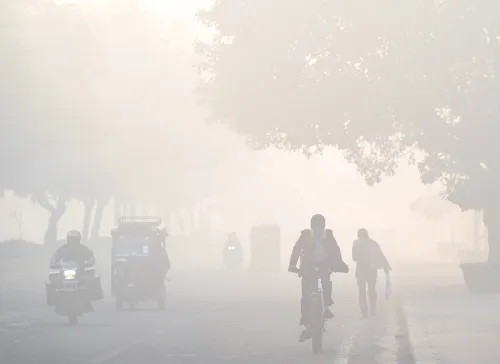
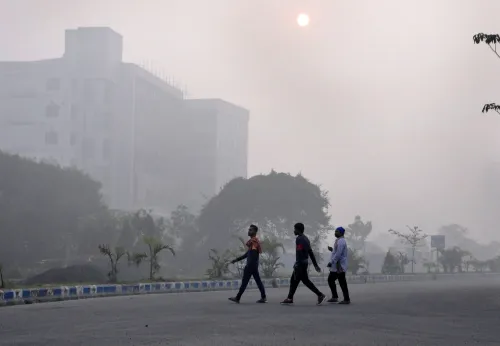
Speaking about the urgency of the environmental crisis, the actress pointed to alarming Air Quality Index (AQI) readings that have made headlines in recent weeks. 'We read that AQI has reached 600, 1000. And this is affecting our health and the future generations,' she said.
Rakul stressed that the concern is not merely about those living today, but about what the current generation leaves behind. 'I mean, we will live, but how are we leaving the planet for the next couple of generations? And I think it is the responsibility of all of us to do whatever we can from our side, as much as we can,' she added.
Small Steps, Big Impact
The actress urged individuals to begin with manageable changes — tracking personal carbon footprints and ensuring vehicle emission checks are carried out regularly. 'How much carbon footprint do we have? How much pollution has been checked from our car? Small, small things, you know. And I think if we all do it, it will be a collective effort,' she said.
This comes amid a broader national conversation about worsening air quality in Indian cities, particularly in the Delhi-NCR region, where AQI levels have repeatedly breached hazardous thresholds during winter months. Experts and health bodies have consistently flagged the severe short- and long-term health consequences of prolonged exposure to particulate matter at such levels.
Rakul on Playing Surpanakha in Ramayana
On the professional front, Rakul recently appeared as Surpanakha in director Nitesh Tiwary's mythological epic 'Ramayana', which released in theatres on 5 November. The film stars Ranbir Kapoor and Sai Pallavi in the lead roles.
The actress described the experience as deeply meaningful. 'It has been such a special journey for me. It's not every day that you get to be a part of a story that has been a part of our lives and culture for generations,' she wrote, sharing her thoughts. She added that seeing the epic brought to life at such a grand scale made the journey even more significant.
Why This Moment Matters
Rakul's remarks at the Earthshot event arrive at a time when urban air quality has emerged as one of India's most pressing public health issues. Celebrity advocacy, while sometimes dismissed as performative, can carry measurable reach in driving awareness — particularly among younger audiences who follow entertainment figures closely. Whether the conversation translates into policy pressure or behavioural shifts at scale remains to be seen, but the platform lent to initiatives like Earthshot signals growing cultural urgency around the climate crisis.
Point of View
While earnest, sidesteps the structural drivers of India's AQI crisis: stubble burning, industrial emissions, and vehicular density at city scale. Individual carbon footprint awareness is valuable, but it cannot substitute for regulatory enforcement. The Earthshot association lends credibility, but the test is whether such platforms produce measurable policy pressure beyond feel-good visibility.
NationPress
18 Nov 2026
Frequently Asked Questions
What did Rakul Preet Singh say about rising AQI levels?
Rakul Preet Singh said that AQI readings reaching 600 and even 1000 are a serious threat to health and future generations, and that it is the collective responsibility of every individual to take small steps — such as monitoring carbon footprints and vehicle emissions — to help protect the planet. She made these remarks at an Earthshot event on 18 November.
What is Earthshot, and why did Rakul praise it?
Earthshot is an environmental initiative that organises events focused on sustainability and climate action. Rakul called the event 'a step in the right direction,' expressing support for the platform's efforts to drive collective environmental responsibility.
How does rising AQI affect public health in India?
AQI levels above 300 are classified as hazardous, and readings in the 600–1000 range — as cited by Rakul — indicate severe pollution that can cause acute respiratory illness, aggravate chronic conditions, and pose long-term health risks, particularly for children and the elderly. Indian cities, especially in the north, have repeatedly breached these thresholds during winter months.
What is Rakul Preet Singh's role in the film Ramayana?
Rakul Preet Singh plays Surpanakha in director Nitesh Tiwary's 'Ramayana', which released in theatres on 5 November. The film stars Ranbir Kapoor and Sai Pallavi in the lead roles, and Rakul described her participation in the mythological epic as 'a special journey.'
What can individuals do to reduce air pollution, according to Rakul?
Rakul suggested that individuals start with small but consistent actions: tracking their personal carbon footprint and ensuring their vehicles undergo regular emission checks. She argued that if enough people take such steps, the cumulative effect becomes a meaningful collective effort.