Roop Kumar Rathod revisits CSMT, rediscovers train travel magic
Synopsis
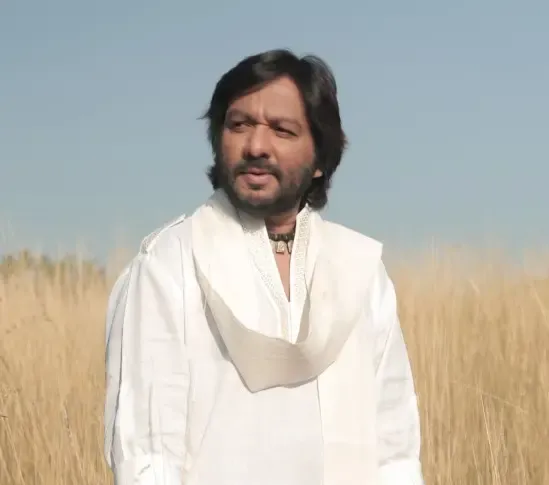
Roop Kumar Rathod, the voice behind 'Sandese Aate Hain' and 'Tujh Mein Rab Dikhta Hai', returned to Mumbai's iconic CSMT after years and shared a video that went nostalgic — reminding fans why train travel in India is a feeling that never quite fades.
Key Takeaways
Roop Kumar Rathod visited Chhatrapati Shivaji Maharaj Terminus (CSMT) in Mumbai recently after years away from train travel.
He shared a video on social media captioned: 'Years later, back at CSMT...
Iska maza hi kuch aur hai!' Rathod's career spans over three decades ; he began as a tabla player before entering Bollywood playback in the early 1990s .
His breakthrough song 'Sandese Aate Hain' from Border (1997) was sung with Sonu Nigam .
He has also built a strong identity as a ghazal and Sufi singer and frequently performs with his wife Sonali Rathod .
Veteran playback singer Roop Kumar Rathod paid a nostalgic visit to Mumbai's Chhatrapati Shivaji Maharaj Terminus (CSMT) recently, rediscovering the simple joy of train travel after years away from the platform. The singer shared a video from the iconic station, capturing the bustling railway atmosphere that brought back a flood of memories.
Back at the Station After Years
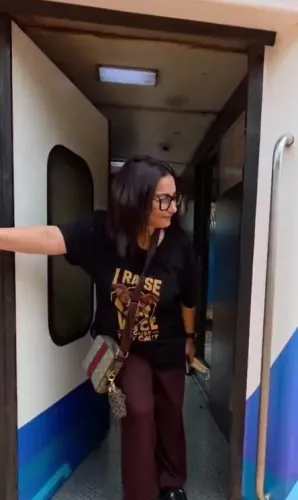
Sharing the video on his social media account, Rathod wrote: 'Years later, back at CSMT... and suddenly, the old train-travel magic feels just the same. Iska maza hi kuch aur hai!' The clip shows him panning the camera across the heritage station premises and the platform, offering followers a glimpse of the everyday hustle of Mumbai's railway system.
A stationary train is visible on the platform as passengers and railway workers move about, while Rathod is seen standing close to the train, visibly soaking in the familiar sights and sounds. The video struck a chord with fans who recognised the universal sentiment of railway nostalgia — particularly in a city where the local train is as much a cultural institution as it is a commuter lifeline.
Three Decades of a Distinguished Career
Roop Kumar Rathod's journey in music stretches back more than three decades and is rooted in a distinguished musical family. Before making his mark as a playback singer, he was a highly accomplished tabla player, accompanying celebrated ghazal artists on stage. He transitioned to singing and entered the Hindi film industry in the early 1990s.
His major breakthrough came with 'Sandese Aate Hain' from the 1997 film Border, which he sang alongside Sonu Nigam. The song remains one of the most emotionally resonant numbers in Indian cinema, particularly on occasions of national significance.
A Voice Behind Iconic Songs
Following that landmark song, Rathod delivered a string of memorable performances across Hindi films. His notable credits include 'Toh Chalun' from Border, 'Zindagi Maut Na Ban Jaaye' from Sarfarosh, 'Tere Liye' from Veer-Zaara, 'Maula Mere Maula' from Anwar, 'Tujh Mein Rab Dikhta Hai' from Rab Ne Bana Di Jodi, and 'O Saiyyan' from Agneepath.
Beyond playback singing, Rathod has built a strong parallel identity as a ghazal and Sufi vocalist, collaborating with prominent musicians across genres. He has frequently performed alongside his wife, singer Sonali Rathod, and the couple have also co-created musical projects, including the Sufi album Kalma.
Why CSMT Matters Beyond the Nostalgia
CSMT, a UNESCO World Heritage Site, is more than a railway terminus — it is a symbol of Mumbai's identity and colonial architectural heritage. For a singer who grew up in the city's music culture, revisiting the station is as much about reconnecting with roots as it is about the simple pleasure of watching trains. Rathod's post resonated widely, with fans across social media echoing his sentiment about the irreplaceable charm of train travel in India.
As Rathod continues to balance live performances, ghazal concerts, and collaborative projects, moments like these offer a reminder of the personal experiences that often feed an artist's creative sensibility.
Point of View
But it taps into something genuinely large: the cultural weight of Indian railway travel as collective memory. CSMT is not just infrastructure — it is one of the country's most photographed and emotionally loaded spaces. For an artist like Rathod, whose voice has soundtracked soldiers, lovers, and mourners in equal measure, the choice to share this moment is also a quiet act of personal branding — authentic, nostalgic, and easily shareable. In an era of curated celebrity content, the simplicity of the gesture is likely what made it resonate.
NationPress
5 Oct 2026
Frequently Asked Questions
Why did Roop Kumar Rathod visit CSMT?
Roop Kumar Rathod visited Mumbai's Chhatrapati Shivaji Maharaj Terminus (CSMT) to revisit the experience of train travel after years away from it. He shared a nostalgic video on social media expressing that the charm of train travel remains unmatched.
What did Roop Kumar Rathod post about his CSMT visit?
He posted a video from CSMT captioned: 'Years later, back at CSMT... and suddenly, the old train-travel magic feels just the same. Iska maza hi kuch aur hai!' The clip shows him at the platform, panning across the station premises and a stationary train.
What are Roop Kumar Rathod's most famous songs?
Roop Kumar Rathod is best known for 'Sandese Aate Hain' from Border (1997), 'Tere Liye' from Veer-Zaara, 'Tujh Mein Rab Dikhta Hai' from Rab Ne Bana Di Jodi, and 'Maula Mere Maula' from Anwar, among several other acclaimed playback performances.
Who is Sonali Rathod?
Sonali Rathod is a singer and the wife of Roop Kumar Rathod. The couple have frequently performed together and co-created musical projects, including the Sufi album Kalma.
What is CSMT known for?
Chhatrapati Shivaji Maharaj Terminus (CSMT) in Mumbai is a UNESCO World Heritage Site and one of India's busiest railway stations. It is also a symbol of the city's identity and is celebrated for its Victorian Gothic architecture.