Sanjana Sanghi at UNGA 2026: India's youth need education and health funds
Synopsis
Actress Sanjana Sanghi took India's youth voice to the UN General Assembly in New York, making a pointed case: redirect even a sliver of global military spending to schools, clinics, and vocational centres, and young people can solve their own problems. Her 'acute poverty of trust' framing cuts to the heart of why youth feel locked out of the decisions that shape their futures.
Key Takeaways
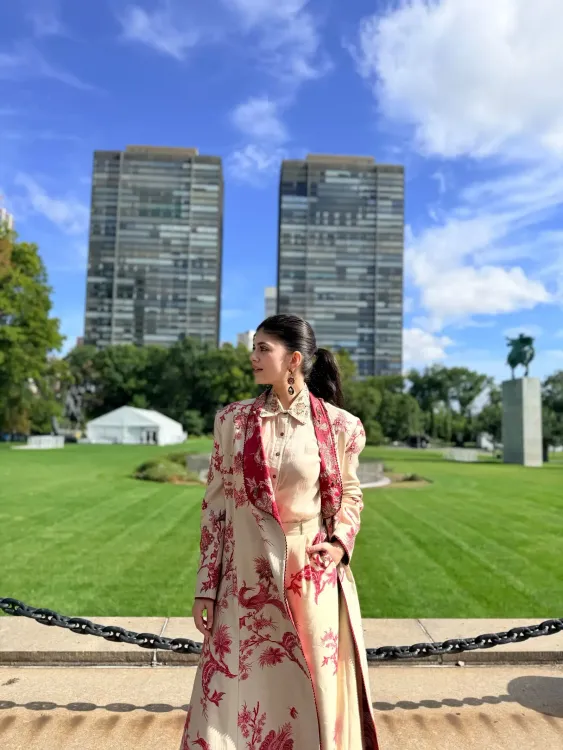
Sanjana Sanghi participated in a high-level engagement at the UN Headquarters, New York on 23 September 2026 .
She called for redirecting a fraction of global military expenditure toward primary schools, healthcare, vocational training, and art centres .
Sanghi cited India's status as the world's largest youth demographic as central to her address.
She described an 'acute poverty of trust' , arguing young people are excluded from decisions whose consequences they will inherit.
She has previously addressed the UN General Assembly Hall , making her one of the youngest speakers to do so.
Her address touched on progress toward Sustainable Development Goals (SDGs) , youth participation, and innovative philanthropy.
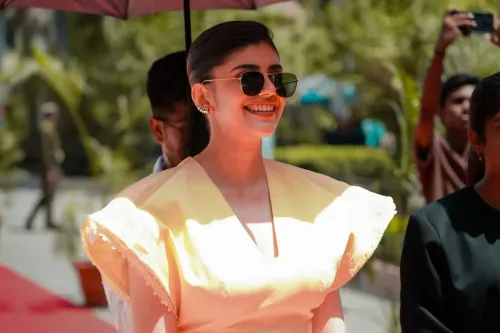
Actress Sanjana Sanghi carried India's youth voice to the world's foremost diplomatic forum on 23 September 2026, participating in an official high-level engagement at the United Nations Headquarters in New York. The Dil Bechara star called for greater investment in education and healthcare, urging global leaders to redirect even a fraction of military spending toward grassroots development.
What Sanjana Said at the UN
Reflecting on over a decade of youth-led work, Sanghi said: 'In my journey over the last 12 years since I was a teenager believing that education was transforming my life, everything felt unclear and unsure. I didn't wait for anyone to tell me to lead or to tell me that education is the answer — I just felt that within. In India, we have the largest youth demographic in the world.'
She pressed delegates on whether current systems are truly equipping young people: 'Are we preparing our generations in a way that they deserve to be prepared? When I see those military expenditure tickers roaming on news headlines, I think — just give us a fraction of that, and if we go back to our communities to build primary schools, medical sectors, vocational training centres, and art centres, we will be able to solve so many things within ourselves.'
The Poverty of Trust Argument
Sanghi's most pointed remark centred on what she described as an 'acute poverty of trust' between policymakers and young people. 'We don't just want to be mere beneficiaries at the end of long policies and decisions made by people who aren't going to inherit the consequences of those decisions,' she said. Her appeal was direct: solve the fundamentals of education and health through collective action before youth are compelled to take to the streets.
Her Role at the UN Gathering
Sanghi was selected as one of the prominent female voices from India to represent young people at the United Nations. She joined international delegates, changemakers, and influential figures at high-level discussions centred on youth participation, innovative philanthropy, and progress toward the Sustainable Development Goals (SDGs). She has previously made headlines as one of the youngest speakers to address the UN General Assembly Hall.
Why This Matters for India
India holds the distinction of having the world's largest youth demographic, making Sanghi's platform at the UN particularly significant. Her remarks arrive at a moment when global discourse on SDG progress is intensifying, with the international community widely acknowledged to be behind schedule on education and health targets. Notably, this is not Sanghi's first foray into youth advocacy — she has spent over a decade working at the intersection of entertainment and grassroots development, giving her address a credibility beyond celebrity representation.
All eyes now turn to whether her call for redirected resources translates into any concrete multilateral commitments in the weeks following the high-level session.
Point of View
Not just a funding gap. But the real question is whether her presence translates into policy traction or remains a compelling headline. India's youth bulge is both an asset and a ticking clock: without measurable SDG progress on education and primary healthcare, the demographic dividend curdles into a demographic burden. Using a film actress as the messenger may broaden reach, but it also allows governments to applaud without acting — exactly the dynamic she was critiquing.
NationPress
23 Sept 2026
Frequently Asked Questions
Why did Sanjana Sanghi speak at the United Nations in 2026?
Sanjana Sanghi was selected as one of the prominent female voices from India to represent young people at a high-level UN engagement focused on youth participation, innovative philanthropy, and the Sustainable Development Goals. She addressed issues of education, healthcare, and grassroots development on 23 September 2026.
What did Sanjana Sanghi say at the UN General Assembly?
Sanghi called for redirecting a fraction of global military spending toward building primary schools, medical facilities, vocational training centres, and art centres at the community level. She also spoke about an 'acute poverty of trust,' arguing that young people do not want to be passive beneficiaries of policies made by those who will not bear their consequences.
What is Sanjana Sanghi's background in youth advocacy?
Sanghi has spent over 12 years working in youth-led development, beginning when she was a teenager. She has previously addressed the UN General Assembly Hall and is known for combining her acting career with sustained grassroots advocacy on education and youth empowerment.
How does India's youth demographic connect to Sanghi's UN speech?
India has the world's largest youth demographic, which Sanghi cited as a key reason why decisions about education and healthcare investments are especially consequential for the country. She argued that adequately equipping this demographic could solve many development challenges from within communities.
What are the Sustainable Development Goals Sanghi referenced?
The Sustainable Development Goals (SDGs) are a set of 17 global targets established by the United Nations, covering areas including quality education, good health and well-being, and reduced inequalities. Sanghi's address was delivered in the context of high-level UN discussions on progress toward these goals, which the international community is broadly considered behind schedule in achieving.