What Makes Shatak a Century of Conviction, Courage, and Nation-Building?
Synopsis
Dive into the profound narrative of Shatak, a film that transforms historical discussions into an immersive cinematic experience. It highlights the unwavering commitment and courage behind one of India's most influential movements, the RSS, while showcasing the personal stories that shaped a nation's destiny. A must-watch for those seeking insight into India's journey.
Key Takeaways
Transformative storytelling of historical events.
Human narratives make history relatable.
Focus on conviction and courage behind movements.
Artistic authenticity over sensationalism.
Insight into India's nation-building moments.
Director: Aashish Mall, Writers: Anil Agarwal, Nitin Sawant, Rohit Gehlot, Utsav Dan, Duration: 112 Minutes, Rating: 4.5
A significant amount of dialogue has surrounded the Rashtriya Swayamsevak Sangh over the years. Shatak accomplishes a remarkable feat—it turns conversations into immersive experiences, debates into meaningful insights, and history into vibrant, relatable moments.
This film goes beyond mere events; it encapsulates the individuals, their bravery, and the steadfast belief that underpins one of India’s most pivotal movements. It ambitiously chronicles the first 50 years of the RSS, while hinting at the unfolding of the next 50 years—a cinematic experience that leaves viewers eager for what lies ahead.
From its opening scene, Shatak asserts itself as a landmark in historical narrative. As one of India’s trailblazing films to merge live-action with state-of-the-art technology, it employs advanced techniques not merely as visual spectacles but as an elegant conduit to breathe life into historical figures and events with breathtaking authenticity.
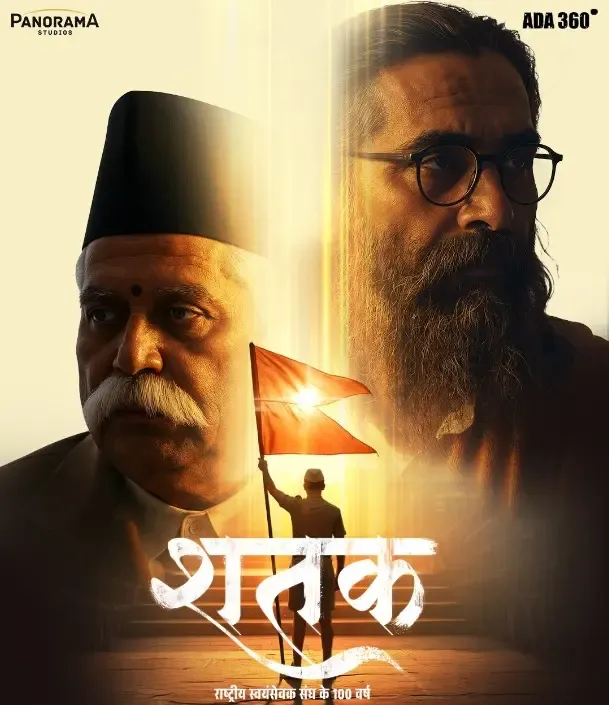
The portrayal of Dr. Keshav Baliram Hedgewar is profoundly impactful. He stands as a largely unrecognized hero whose principles of discipline, character, and selfless service laid the groundwork for a century-long mission. Observing his formative years, humble origins, and the sacrifices he made during the freedom struggle transforms him into not just a founder but a visionary whose quiet determination sculpted a movement surpassing his own legacy. The simplicity of those early days—the open fields, modest gatherings, and the tentative inception of an idea—feels genuine, lived-in, and uplifting. These moments serve as a reminder that significant movements often emerge from the humblest beginnings, nurtured by dedication over showiness.
As the story transitions to Guruji Madhav Sadasiva Golwalkar’s leadership, the film’s tone deepens, encapsulating introspection, tension, and resilience. It thoughtfully reveals the various bans on the RSS during the freedom struggle and the aftermath of Mahatma Gandhi’s assassination, approached with quiet seriousness rather than dramatics. The portrayal of the organization’s revival during this time, meticulously detailed, highlights strategic insight, ethical bravery, and unwavering dedication. The film allows these historical chapters to unfold naturally, providing the audience the chance to fully comprehend the magnitude and importance of the obstacles encountered.
Shatak transcends mere organizational history—it delves into India’s pivotal nation-building episodes. The liberation of Dadra and Nagar Haveli is depicted with dignity and restraint, symbolizing a powerful yet understated celebration of freedom. The efforts to ensure peace in Kashmir and the guidance provided during chaotic times are addressed with sensitivity and accuracy, reminding viewers of the RSS’s significant, albeit behind-the-scenes, role in shaping India’s future. These sequences serve as a tribute to valor, vision, and the essence of service, resonating long after the credits roll.
What sets Shatak apart is its emphasis on human narratives within history. Young swayamsevaks departing from home, families confronting uncertainty, and volunteers quietly shouldering massive responsibilities—all captured with emotional depth. Each frame allows the audience to feel the burden of commitment and the nobility of purpose, making history both personal and deeply touching.
The creative team behind Shatak deserves immense acclaim. Conceptualized by Anil D. Agarwal, skillfully directed by Aashish Mall, and produced by Vir Kapur alongside co-producer Aashish Tiwari under Ada 360 Degree LLP, the film stands as a testament to passion, integrity, and faith. Each artistic choice reflects a profound respect for history, the organization, and the individuals whose narratives are being portrayed. The filmmakers chose authenticity, subtlety, and depth over sensationalism.
Shatak is not merely a recounting of history; it is an emotional, enlightening exploration of conviction, bravery, and service. It shifts discussions about the RSS into realms of understanding and empathy, illustrating that behind every movement are individuals willing to devote their lives to a cause greater than themselves. By the film's conclusion, audiences depart with a deep respect for the RSS’s century-long journey, its contributions to nation-building, and the steadfast commitment of its members.
Ultimately, Shatak is a cinematic tribute to belief, resilience, and dedication. It is moving, inspiring, and unforgettable—a film that not only depicts history but compels you to feel, experience, and admire the men and women who shaped it. The portrayal of the first 50 years is masterfully executed; the next 50 evoke eager anticipation. Shatak is more than just a film—it is a heartfelt homage to an idea that steadfastly refuses to yield.
Shatak stands as an exemplary instance of storytelling, historical insight, and emotional depth. It is a stirring, inspiring, and commendable tribute to the RSS and the ordinary individuals whose extraordinary commitment has helped forge the nation.
Point of View
The portrayal of the RSS in Shatak offers a balanced perspective, recognizing the organization's influence in India's history while emphasizing the human stories intertwined with significant national events. This film fosters a deeper understanding of the complex narratives that have shaped our nation, encouraging thoughtful dialogue and reflection.
NationPress
3 Oct 2026
Frequently Asked Questions
What is the film Shatak about?
Shatak is a cinematic exploration of the RSS, documenting its history, key figures, and contributions to India's nation-building efforts, emphasizing personal narratives that resonate with audiences.
Who directed Shatak?
Shatak is directed by Aashish Mall, known for his nuanced storytelling and attention to historical detail.
What is the duration of the film?
The film has a runtime of 112 minutes.
What rating has Shatak received?
Shatak has received a rating of 4.5, reflecting its critical acclaim and audience appreciation.
What themes are explored in Shatak?
The film explores themes of conviction, courage, service, and the human stories behind significant historical events related to the RSS.