Shiny Doshi calls out TV's 'helpless girl' trope, urges audiences to demand change
Synopsis
Shiny Doshi isn't just critiquing Indian TV writers — she's pointing the finger at audiences too. The actress argues that the 'bechari' heroine has survived because viewers keep rewarding it, and that real change requires accountability on both sides of the screen.
Key Takeaways
Shiny Doshi says Indian television has long pushed a 'soft' and 'helpless' female character template that no longer reflects modern women.
She argues audiences must 'take accountability and stop accepting helpless heroine roles' to drive content change.
Doshi acknowledged TV is a business and producers greenlight what sells — making viewer demand the key lever.
She noted television undergoes a content upgrade roughly 'every four or five years' but says it is currently falling behind.
Doshi is known for Saraswatichandra , Pandya Store , and Jamai Raja , and was last seen on reality show The 50 .
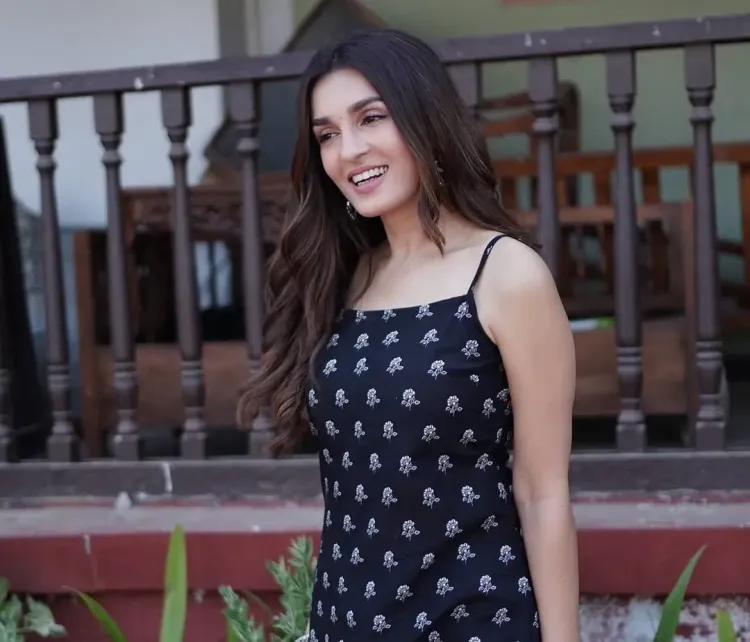
Actress Shiny Doshi has called on Indian television to shed its long-running obsession with 'soft' and helpless female characters, arguing that the medium is lagging behind the realities of modern Indian women. Speaking candidly about her career experiences, Doshi said the industry's reluctance to evolve its heroines is partly a reflection of what audiences have been willing to accept.
What Doshi Said About TV's Female Portrayals
'Television, I feel that all the shows that have been offered to me and all the shows that I have done so far, they wanted to see a very soft, very positive girl. A girl who is very relatable to the audiences also because an audience of our television likes to see helpless and 'bechari' girls,' she said.
Doshi was clear that this image no longer mirrors the lives of contemporary Indian women. 'I feel that now girls are way more stronger. Digitally, the world has advanced so much now. We have so many platforms to watch shows. Now, television especially, I feel, they really need to work on the content that they are making,' she added.
Audiences Must Share Accountability, Says Doshi
Acknowledging that television is ultimately a commercial enterprise, Shiny Doshi stopped short of placing all blame on producers and creators. She argued that viewers themselves must take responsibility for the content that thrives on screen.
'I understand when it comes to business, people only want to produce what is being seen, which is what is being sold the most, what people like to see. So, as an audience, we need to take accountability and stop accepting helpless heroine roles,' she said.
This is a pointed observation: the 'bechari' heroine archetype has remained commercially viable on Indian general entertainment channels for decades, surviving multiple waves of content reform. Doshi's remarks suggest the cycle can only be broken from the demand side.
TV Is Evolving — But Not Fast Enough
Doshi was careful not to dismiss the medium entirely. She acknowledged that stories of women navigating hardship in smaller towns and villages remain socially relevant. However, she argued that television's pace of narrative evolution has been too slow.
'I know it does happen with a lot of women in small villages, it happens with girls. But I believe television is also going through a transformation. Every four or five years, there is a small dip where, content-wise, we grow a little ahead. I feel that's where television is lacking right now,' she said.
She concluded on an optimistic note, pointing to untapped storytelling potential: 'There are such amazing concepts and such amazing stories still to be told on television.'
About Shiny Doshi
Shiny Doshi is known for her roles in popular television productions including Saraswatichandra, Jamai Raja, Pandya Store, Bahu Hamari Rajni Kant, and Laal Ishq. She was most recently seen as a challenger on the reality show The 50. Her remarks carry weight given her firsthand experience navigating the kinds of roles she is now critiquing.
Frequently Asked Questions
What did Shiny Doshi say about Indian television's portrayal of women?
Shiny Doshi said Indian television has consistently pushed a 'soft' and 'helpless' female character image — what she called the 'bechari' heroine — and argued the medium needs to move toward stronger, more contemporary portrayals that reflect how women actually live today.
Why does Shiny Doshi hold audiences responsible for the 'helpless heroine' trend?
Doshi noted that television is a business and producers only greenlight content that sells. She argued that because audiences have continued to watch and reward 'helpless heroine' narratives, they share accountability for the trope's persistence and must actively stop accepting such roles.
Does Shiny Doshi think Indian television is improving?
Doshi said television does evolve, but slowly — roughly every four or five years there is a 'small dip' after which content moves forward. She believes the medium is currently in a lag phase and needs to accelerate that evolution, while also noting there are 'amazing stories still to be told on television.'
What shows is Shiny Doshi known for?
Shiny Doshi is known for television roles in Saraswatichandra, Jamai Raja, Pandya Store, Bahu Hamari Rajni Kant, and Laal Ishq. She was most recently seen as a challenger on the reality show The 50.
What kind of roles has Shiny Doshi been offered in her career?
Doshi said the majority of roles offered to her over the years have revolved around the same 'ideal' television heroine image — a very soft, positive, and relatable girl. She used this personal experience as the basis for her broader critique of the industry's storytelling choices.