Pallavi Joshi: Daily soaps turned TV into a 'monster' fed every day
Synopsis
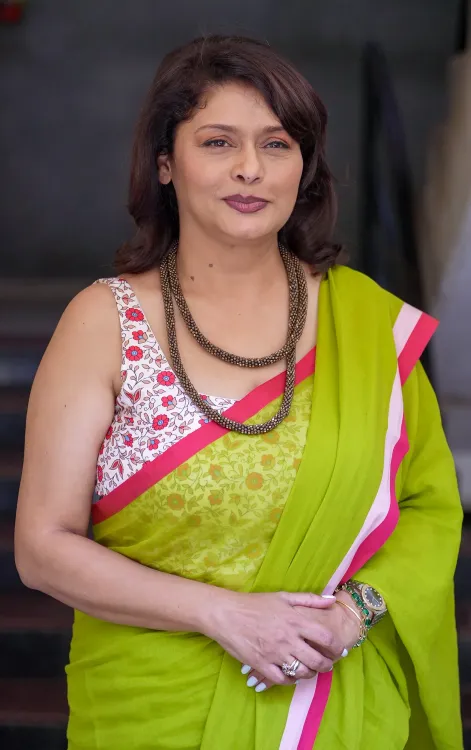
Veteran actress Pallavi Joshi hasn't minced words: daily soaps turned Indian television into a creativity-killing machine, forcing teams to shoot 1.5 episodes a day and writers into a loop of 'tried and tested formulas.' Her sharpest observation — that the Kyunki Saas Bhi Kabhi Bahu Thi boom actually set back women's representation by inviting male producers back into control — is the kind of industry critique that rarely gets said this plainly.
Key Takeaways
Pallavi Joshi says daily soaps transformed Indian TV into a 'monster' that must be fed content every single day.
Production teams were required to shoot 1.5 episodes per day , with only 24 days allocated for a 28-day schedule.
She argues that Kyunki Saas Bhi Kabhi Bahu Thi 's success spawned 10 similar shows that ultimately harmed women's representation on screen.
Pallavi contends that male producers regained creative control as commercial pressures mounted, distorting female narratives.
OTT platforms , she warns, are beginning to show signs of the same creative decline that plagued daily soaps.
Pallavi was recently seen in the web series Margao Files .
Actress and filmmaker Pallavi Joshi has said that the rise of daily soap operas fundamentally transformed Indian television — converting a creative medium into a content assembly line governed by relentless production pressure and shrinking artistic space.
How Daily Soaps Changed the Game
Speaking in a recent interview, Pallavi reflected on the seismic shift that occurred when Indian television moved from weekly programming to daily broadcasts. The transition, she argued, placed impossible demands on writers and production teams alike.
'When the daily soap started, television became a monster which had to be fed every day,' she said.
She explained the arithmetic of the problem bluntly: 'For a creative industry which is used to making weekly shows, we are shooting for four episodes in 15-16 days a month. You give them a 28-day show and you give them 24 days to shoot. So, you have to shoot 1.5 episodes in a day.'
The Toll on Writers and Creativity
According to Pallavi, the burden on writers was particularly severe. 'For writers to write those many episodes, it's impossible. You know, there's something called a writer's block. What will you do? So, keep writing, keep writing, keep writing, keep writing,' she said.
The inevitable outcome, she argued, was creative stagnation. 'It didn't work. Tried and tested formulas started,' she remarked. The industry, unable to sustain originality under such pressure, defaulted to repetitive storytelling — a pattern that audiences eventually grew weary of.
The Kyunki Effect and Women's Representation
Pallavi cited the landmark show Kyunki Saas Bhi Kabhi Bahu Thi as a case study in how a breakthrough can paradoxically damage the medium it elevates. The show, she noted, initially resonated because it offered something genuinely fresh. But its success triggered a wave of imitation that had unintended consequences.
'When Kyunki Saas Bhi Kabhi Bahu Thi came, as one show it worked wonderfully because it came as a very different experience. But when 10 other shows followed, which were the same, then that started bringing the role of women down because by then, again, the men had started coming in as producers,' she said.
She argued that as commercial considerations took over, male producers reasserted control over narratives, reversing earlier gains in how women were depicted on screen. 'Suddenly, it again became a medium where men had started to rule again. They had their say. So, when the economics comes in, then everything starts to go wrong,' Pallavi said.
OTT Faces a Similar Reckoning
Pallavi extended her critique to streaming platforms, suggesting that OTT — once celebrated as a creative alternative to mainstream television — is now showing early signs of the same malaise. 'OTT again started off very well, but right now, I don't know where it is going, frankly,' she said.
This comes amid growing industry debate about content quality on streaming platforms, where subscriber-driven volume pressures are increasingly drawing comparisons to the daily soap model of the early 2000s. Pallavi's remarks add a seasoned insider's voice to that conversation.
On the work front, Pallavi was recently seen in the web series Margao Files. Whether her candid critique of the industry's structural flaws sparks a wider conversation — or quietly fades — may itself be a test of how much the medium has changed.
Point of View
And craft vacuums get filled by whoever holds the money — in this case, male producers who reshaped female-led narratives to suit commercial instincts. The Kyunki observation is particularly pointed; it argues that representation gains on Indian TV were fragile precisely because they were hitched to a ratings boom rather than an industry-wide shift in power. Her OTT warning deserves attention: streaming platforms are now chasing the same subscriber-volume logic that broke broadcast television, and without deliberate creative guardrails, the cycle is likely to repeat.
NationPress
7 Oct 2026
Frequently Asked Questions
What did Pallavi Joshi say about daily soaps and Indian television?
Pallavi Joshi said that the arrival of daily soaps turned Indian television into a 'monster' that needed to be fed content every single day, creating unsustainable production schedules and forcing writers into repetitive, formulaic storytelling. She argued this fundamentally degraded the creative quality of the medium.
How did the daily soap format affect writers and production teams?
According to Pallavi Joshi, production teams were expected to shoot 1.5 episodes per day, with only 24 days given for a 28-day schedule. Writers faced similar pressure, with the relentless pace making genuine creativity nearly impossible and leading to what she called 'tried and tested formulas.'
What did Pallavi Joshi say about Kyunki Saas Bhi Kabhi Bahu Thi?
She said the show initially succeeded because it offered audiences a fresh experience, but its popularity triggered around 10 similar shows that collectively harmed women's representation on television. She argued that as male producers entered the space commercially, they reasserted control over narratives at the expense of nuanced female portrayals.
What is Pallavi Joshi's view on OTT platforms?
Pallavi Joshi expressed concern that OTT platforms, which began as a creative alternative to mainstream television, are now losing direction. She said, 'OTT again started off very well, but right now, I don't know where it is going, frankly,' suggesting streaming may be repeating the mistakes of daily soap television.
What has Pallavi Joshi worked on recently?
Pallavi Joshi was recently seen in the web series Margao Files, her latest project as an actress.