Abhijit Vaghani on commercial vs indie music: 27 years of creative insight

Synopsis
With 27 years in Bollywood, Abhijit Vaghani knows exactly what a 'travel song' sounds like before a single note is played — and that is precisely the creative constraint he says indie music dismantles entirely. His candid take on the two worlds reveals how commercial training can become both a compass and a cage.
Key Takeaways
Abhijit Vaghani has worked as a music composer and producer in Bollywood for 27 years .
He describes independent music as having 'zero situations' — composers are free to draw from any personal experience.
Film music, he says, revolves around 5-6 recurring emotional situations — love, sadness, party, wedding, and travel songs.
Vaghani argues that long industry experience embeds situational instincts that help decode even vague indie briefs.
His remarks reflect a broader conversation about creative freedom as India's independent music ecosystem expands on streaming platforms.
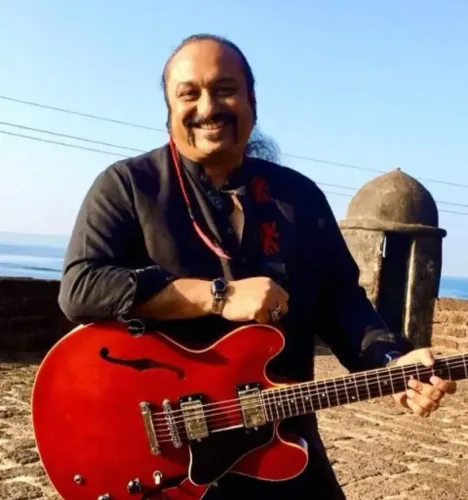
Veteran music composer and producer Abhijit Vaghani, whose 27-year career has shaped some of Bollywood's most recognisable soundscapes, has offered a candid breakdown of what separates mainstream commercial music from independent music — and why both demand entirely different creative mindsets.
The Core Difference
Speaking from his studio in Mumbai, Vaghani explained that the distinction is not about quality or ambition, but about creative latitude. While film music operates within defined situational frameworks, independent music places the composer entirely in the driver's seat.
'In independent music, if I woke up this morning and saw a bird, I would write a song about it. If I saw a yellow car yesterday, I would write a song about it. If I'm sad, I wrote a sad song. Independent music is very free, with zero situations, the situations you create,' he said.
How Bollywood Shapes a Composer's Instincts
Vaghani noted that commercial film music, while seemingly restrictive, builds a deep situational vocabulary in a composer over time. 'Movies have very different situations, but they almost have common 5-6 situations which are there. Sometimes it's sad, it's love, it's a party song, it's a wedding song or a travel song. If you are in the industry for a long time, these situations are well-embedded in you,' he explained.
This embedded knowledge, he argued, is not a limitation — it is a professional asset. 'If you're told even one word, that it's a travel song, then you understand what you're doing,' he added.
Bridging the Two Worlds
Vaghani also highlighted how his film music instincts inform his work with independent artists. When an indie artist approaches him with a vague brief — such as wanting to 'make a song in the mountains' — his Bollywood training allows him to decode the emotional intent immediately. 'Their words might be different, but I know that they have a travel song,' he said.
This cross-pollination of sensibilities is increasingly relevant as India's independent music ecosystem grows alongside the streaming economy, with platforms giving non-film music unprecedented reach.
A Career Built Across Both Worlds
With nearly three decades in the industry, Vaghani's perspective carries the weight of someone who has navigated both studio briefs from major production houses and the open-ended creative conversations that define indie collaborations. His remarks reflect a broader shift in how Indian composers are rethinking the boundaries — or the absence of them — in their craft.
As the line between commercial and independent music continues to blur in the streaming era, voices like Vaghani's offer a grounded, practitioner's view of what creative freedom actually looks like in practice.
Point of View
Not a creative prison. What mainstream coverage misses is the implication: as independent music scales on streaming, composers with film training may have a structural edge in decoding what listeners emotionally want, even when artists themselves cannot articulate it. The more interesting question his remarks raise is whether that same embedded grammar could also limit how far indie compositions actually deviate from Bollywood conventions — a tension the industry has yet to openly address.
NationPress
22 Oct 2026
Frequently Asked Questions
What is the main difference between commercial film music and independent music according to Abhijit Vaghani?
According to Vaghani, the key difference is creative latitude. Film music operates within recurring situational templates — love, sadness, party, wedding, travel — while independent music allows a composer to draw inspiration from anything, with no predetermined emotional brief.
Who is Abhijit Vaghani?
Abhijit Vaghani is a Mumbai-based music composer and producer with 27 years of experience in Bollywood. He has been the creative force behind numerous Hindi film songs across his career.
Does Vaghani see film music's restrictions as a disadvantage?
No. Vaghani views the situational framework of film music as a professional asset rather than a restriction. He says that long industry experience embeds these situations deeply enough that even a single descriptive word — such as 'travel song' — is sufficient to guide a composer's creative direction.
How does Vaghani's Bollywood background influence his indie music work?
Vaghani says his film training helps him interpret vague indie briefs quickly. When an independent artist describes wanting 'a song in the mountains,' his Bollywood instincts tell him it is essentially a travel song — allowing him to bridge the gap between an artist's emotional intent and a concrete musical direction.
Why is this conversation relevant to India's music industry today?
India's independent music sector is growing rapidly on streaming platforms, giving non-film compositions wider reach than ever before. As more composers work across both commercial and indie spaces, understanding the creative differences — and how skills transfer between them — is increasingly important for the industry.