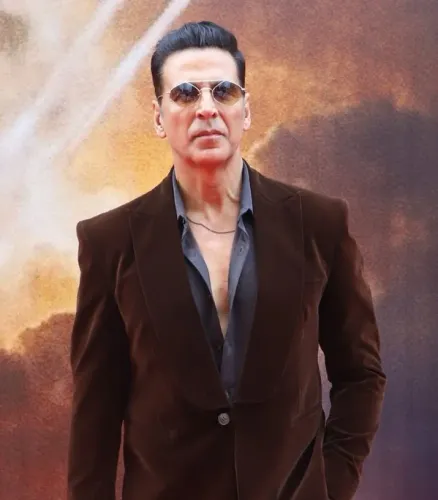
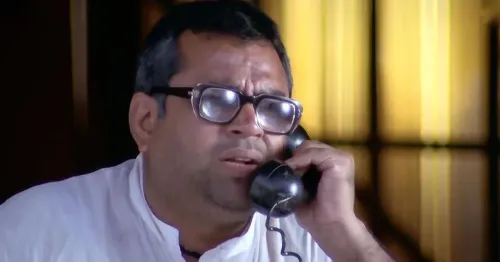
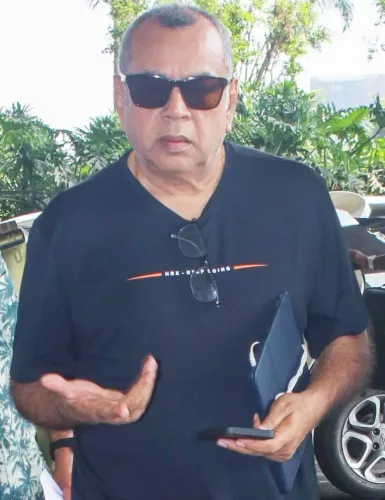
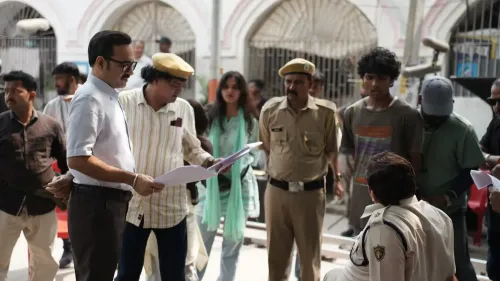
OMG-2 producer Ashwin Varde refutes Paresh Rawal, says actor tried to sideline Akshay Kumar
Synopsis
Producer Ashwin Varde has gone on record to counter Paresh Rawal's podcast claims about OMG-2, alleging that Rawal tried to produce a franchise film without Akshay Kumar — the IP owner — and was still given unearned producer credit and paid for the film. The statement lays bare a behind-the-scenes battle over creative ownership, franchise rights, and attribution that Bollywood rarely exposes so publicly.
Key Takeaways
Ashwin Varde issued a detailed statement on 17 July calling Paresh Rawal 's claims about OMG-2 'shocking, untrue and unsubstantiated.' Varde alleged Rawal tried to produce an OMG-format film under a different title without the knowledge or consent of Akshay Kumar , who holds the franchise's IP rights.
The script of OMG-2 is registered solely under writer-director Amit Rai 's name; Varde said Rawal's claim to writing credit is 'completely unfair and unwarranted.' Varde claimed Rawal was given producer credit on OMG-2 despite 'zero contribution' and was also paid a stipulated fee — neither of which Rawal mentioned in his podcast.
Rawal was the first actor approached for the film; Akshay Kumar personally tried to convince him to participate, but Rawal refused and Pankaj Tripathi eventually came on board.
Producer Ashwin Varde has publicly and strongly refuted actor Paresh Rawal's recent claims about the making of OMG-2, alleging that Rawal had actively sought to keep Akshay Kumar out of the project — despite the franchise's intellectual property belonging to the superstar. Varde issued a detailed statement on 17 July, calling Rawal's allegations 'shocking, untrue and unsubstantiated.'
How OMG-2 Came Together
According to Varde, it was senior actor Pavan Malhotra — his collaborator on Mubarakan — who first recommended writer-director Amit Rai to him. The two met for a different project but stayed in touch, and during a casual conversation at Rai's office in Bandra, Mumbai, Rai briefly narrated a subject that eventually became OMG-2.
Varde recalled that when he first heard the concept, his immediate reaction was that it closely resembled the format of the original OMG. Rai reportedly confirmed this, explaining that Paresh Rawal had instructed him to stay 'as close to OMG as possible in terms of the narrative.' The two shared a working relationship from Rai's earlier film Road To Sangam.
The IP Dispute and Akshay Kumar's Ownership
Varde said his primary concern from the outset was the ownership of the franchise. 'OMG cannot be made without Akshay Kumar or his approval, since I was aware that the IP rights of the film belonged to him,' he stated. He alleged that when Rai raised the same question with Rawal, the actor claimed the intellectual property belonged to him and assured the director there was 'nothing to worry about.'
Varde further alleged that Rawal went so far as to tell Rai that 'even if OMG Part 100 had to be made, only you will write and direct it' — implying Rawal considered himself the franchise's rightful owner. In the original script, the character of God — later played by Akshay Kumar — was written as a fakir.
Varde's Allegation: An Attempt to Sideline Akshay Kumar
Varde alleged that Rawal's intent was to produce an OMG-like film under a different title, bypassing Kumar entirely. 'He was trying to make a version of OMG under a different name, which is unethical and unprofessional. It was trying to steal someone else's creation and property… For me, that is nothing short of a theft,' Varde said in his statement.
He also addressed Rawal's claim that multiple actors had rejected the script. According to Varde, those actors turned the project down precisely because they recognised it as Akshay Kumar's franchise and refused to proceed without his approval. It was at this point that Varde's company, Wakaoo Films, acquired the script to protect it. He maintained that the script remains solely registered under Amit Rai's name, and that Rawal's expectation of writing credit was 'completely unfair and unwarranted.'
The Meetings and Rawal's Refusal
Varde said he subsequently met Rawal on three occasions — at the Willingdon Club in Mahalaxmi, at Mangii Ferra restaurant in Juhu, and at Soho House in Juhu — initially to discuss casting him in the film. It was at the third meeting that Varde told Rawal he would need to take the script to Akshay Kumar first, given its similarity to OMG. He said Rawal's reaction was emphatic: 'His was emphatic that this film cannot be OMG, he kept repeating that without giving any plausible reason.'
Despite the dispute, Varde said Rawal remained the first actor approached for the film, and that Akshay Kumar personally spoke to Rawal to convince him to participate. Rawal refused to change his stance, and after nearly two months, the production moved on — with Pankaj Tripathi eventually coming on board.
Credits, Payment, and Rawal's Counter-Claims
Varde further claimed that Rawal was given producer credit on OMG-2 despite making 'zero contribution,' and that Rawal chose to route those credits to his wife, Swaroop Paresh Rawal, and his business partner, Hemal Thakkar. He also stated that Rawal was paid a 'stipulated amount of money' for the film — a detail Rawal had not mentioned in his recent podcast interview.
The dispute follows Rawal's public claim that the original concept of a film addressing sex education and parent-child relationships was his idea, and that he was denied story and concept credit after OMG-2 was made. Rawal has said creative differences — specifically over the inclusion of the God character — led him to exit the project. With both sides now on record, the controversy is likely to draw further scrutiny over creative ownership norms in Bollywood.
Point of View
While claiming creative origination, cuts to the heart of how credits and rights are negotiated informally in the industry. What is striking is not just the dispute itself, but that Rawal reportedly received both producer credit and payment despite Varde's claim of zero contribution — suggesting the production chose accommodation over confrontation, at least initially. The fact that this has now spilled into public statements signals that accommodation has run its course.
NationPress
16 Oct 2026
Frequently Asked Questions
What is the OMG-2 controversy between Ashwin Varde and Paresh Rawal about?
Producer Ashwin Varde has publicly refuted actor Paresh Rawal's claims that the original concept behind OMG-2 was his idea. Varde alleges that Rawal tried to produce an OMG-format film without involving Akshay Kumar, who owns the franchise's IP rights, and that Rawal's involvement was solely as an actor.
Why did Paresh Rawal exit OMG-2?
According to Rawal's own account, he left the project due to creative differences, particularly over the inclusion of the God character. Varde's version, however, alleges that Rawal refused to accept Akshay Kumar's involvement in the film and would not change his stance despite direct appeals from Kumar himself.
Who owns the IP rights to the OMG franchise?
According to producer Ashwin Varde, the intellectual property rights of the OMG franchise belong to Akshay Kumar. Varde stated that any sequel could not ethically or legally be made without Kumar's approval or involvement.
Did Paresh Rawal receive credit or payment for OMG-2?
Varde claims that Rawal was given producer credit on OMG-2 despite making 'zero contribution,' with those credits routed to his wife Swaroop Paresh Rawal and business partner Hemal Thakkar. Varde also states that Rawal was paid a stipulated fee for the film — a detail Rawal did not mention in his podcast interview.
Who is Amit Rai and what is his role in OMG-2?
Amit Rai is the writer-director of OMG-2. Varde states that the script is registered solely under Rai's name and that he is the film's sole writer. Rai had previously worked with Paresh Rawal on the film Road To Sangam, which is how the initial collaboration began.