Russell Crowe's acting method: 'I have no idea what Stanislavski is'
Synopsis
Russell Crowe has no idea what the Stanislavski method is — and proudly says so. In a resurfaced clip, the Oscar-winning Gladiator star dismisses formal acting theory entirely, swearing by instinct, experience since age 6, and a vintage Laurence Olivier one-liner. It is a rare, unfiltered window into how one of Hollywood's most decorated performers actually thinks about his craft.
Key Takeaways
Russell Crowe says he follows the 'Russell Crowe method' — built on instinct, not formal training.
He has been acting since age 6 and attended acting school for only three weeks of classical text study.
Crowe says he has 'no idea' what the Stanislavski method is and does not wish to know.
He cited a Laurence Olivier quote — 'Learn your dialogue and don’t bump into the furniture' — as his guiding philosophy.
Crowe won the Academy Award for Best Actor for Gladiator and is also known for A Beautiful Mind , The Insider , and L.A.
Earlier this month, he revealed he repeatedly refused studio pressure to film intimate scenes with Connie Nielsen in Gladiator .
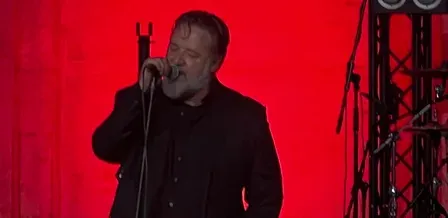
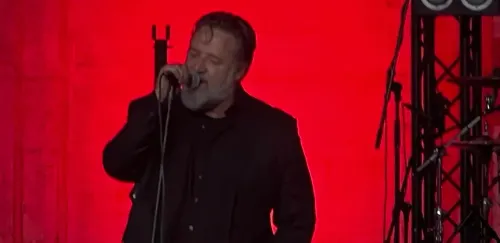
Hollywood actor Russell Crowe, whose screen career stretches across more than five decades, has long maintained that acting is an instinctive craft — not an academic one. A resurfaced video clip in which Crowe dismisses formal acting theory has reignited conversation about self-taught performance versus conservatoire training.
The Russell Crowe Method
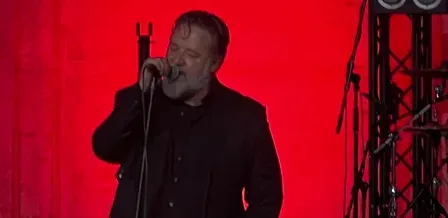
In the clip, Crowe is characteristically direct about his approach. 'I use the Russell Crowe method,' he said. 'I've never been to drama school, man. I've never been to acting school. The only time I did any formal lessons, I studied classical texts for about three weeks. But I've been acting since I was 6 years old. I don't even know what the Stanislavski method may be. I have no f** idea.'
He went further, dismissing the need for any such framework altogether. 'And I don't care to know. Seriously, it's not that complicated. If you want to be an actor, work it out yourself. I actually like the old Olivier quote, ‘Learn your dialogue and don’t bump into the furniture’.'
A Career Built on Instinct
Crowe transitioned from Australian cinema to Hollywood in the 1990s, quickly establishing himself as one of the most physically and emotionally commanding performers of his generation. His breakthrough came with the neo-noir thriller L.A. Confidential, which announced him to international audiences.
The role that defined his global stature, however, was Maximus in Ridley Scott's Gladiator — a performance that earned him the Academy Award for Best Actor. He subsequently delivered acclaimed work in A Beautiful Mind, The Insider, and Master and Commander: The Far Side of the World, cementing a legacy built entirely outside the walls of any acting conservatoire.
Gladiator and the Rejected Intimate Scenes
Crowe's convictions about his craft have extended beyond theory into on-set decisions. Earlier this month, he recalled how he resisted pressure from the studio and producers to include intimate scenes between his character Maximus and actress Connie Nielsen in Gladiator. He reportedly pushed back repeatedly, and the scenes were ultimately not filmed.
The anecdote underlines a consistent thread in Crowe's career: a willingness to defend creative instinct against institutional pressure, whether that institution is a drama school or a Hollywood studio.
Self-Taught vs. Method: A Broader Debate
Crowe's remarks place him in a long tradition of actors who bypassed formal training — among them Marlon Brando in his early years and Anthony Hopkins, who has similarly expressed scepticism about over-intellectualising performance. The contrast with the Stanislavski method — which underpins much of Western acting pedagogy through its emphasis on psychological realism and emotional memory — is pointed. Notably, Crowe does not argue the method is wrong; he simply has no use for it. His results, including an Oscar and multiple BAFTA nominations, make the argument for him. Whether the clip resurfaces as inspiration or provocation likely depends on which side of the drama-school debate the viewer sits.
Point of View
And the results are difficult to argue with. What the resurfaced clip really exposes is the gap between how acting is taught and how it is actually practised at the highest level. The conservatoire system produces excellent actors, but it has never had a monopoly on great ones. The more interesting question the clip raises — and mainstream coverage tends to skip — is whether Crowe's 'work it out yourself' advice is transferable, or whether it only works when you have been working it out since you were 6 years old.
NationPress
21 Jun 2026
Frequently Asked Questions
What is the 'Russell Crowe method' of acting?
The Russell Crowe method is Crowe's own term for his instinct-driven approach to performance. He has never attended drama school and says he began acting at age 6, relying on experience and spontaneity rather than any formal system.
Does Russell Crowe know the Stanislavski method?
No. Crowe has stated explicitly that he has 'no idea' what the Stanislavski method is and does not wish to learn it. He views acting as straightforward and self-taught, not academic.
What acting philosophy does Russell Crowe follow?
Crowe has cited a quote attributed to Sir Laurence Olivier — 'Learn your dialogue and don’t bump into the furniture' — as the closest thing to a guiding principle in his work.
What are Russell Crowe's most acclaimed films?
Crowe is best known for Gladiator , for which he won the Academy Award for Best Actor, as well as L.A. Confidential , A Beautiful Mind , The Insider , and Master and Commander: The Far Side of the World .
Why did Russell Crowe refuse intimate scenes in Gladiator?
Crowe reportedly pushed back against studio and producer pressure to include intimate scenes between his character Maximus and Connie Nielsen in Gladiator . He has not detailed his full reasoning publicly, but the scenes were ultimately dropped.