Zeenat Aman on women in Bollywood: '90% play ornamental roles'

Synopsis
Zeenat Aman's verdict on Bollywood is blunt: nine in ten women are still decorative props around the male lead. But the veteran star — who broke moulds herself in the 1970s — sees a generational shift, with actresses now refusing films that don't give them something real to do. Her words carry the weight of lived experience across five decades of Hindi cinema.
Key Takeaways
Zeenat Aman stated that 90% of women in Bollywood are cast in 'purely ornamental' roles with no substantive participation.
She made the remarks during an interaction with makers of the documentary 'Journey Into India' .
Aman noted a positive shift, with actresses increasingly refusing roles unless given meaningful screen presence.
She debuted in Bollywood in 1971 after winning Femina Miss India and the Miss Asia Pacific International pageant in 1970 .
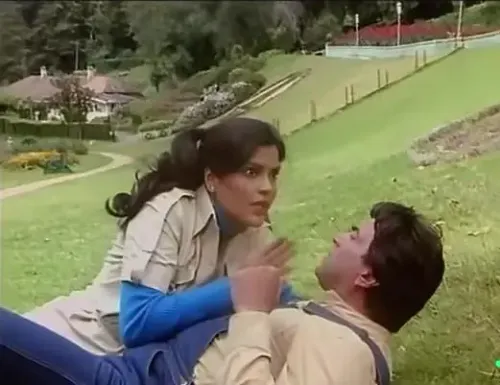
Her career includes landmark films such as 'Haré Rama Haré Krishna' , 'Yaadon Ki Baaraat' , and 'Roti Kapada Aur Makaan' .
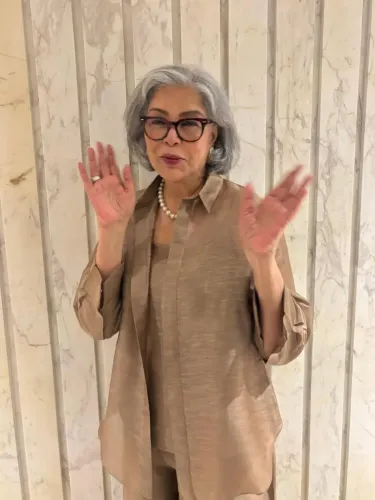
Veteran actress Zeenat Aman has spoken candidly about the limited and largely decorative roles assigned to women in Bollywood, making the remarks during an interaction with the makers of the documentary 'Journey Into India'. The 'Yaadon Ki Baaraat' star's observations cut to the heart of a debate that has long simmered in the Hindi film industry.
The Ornamental Role Problem
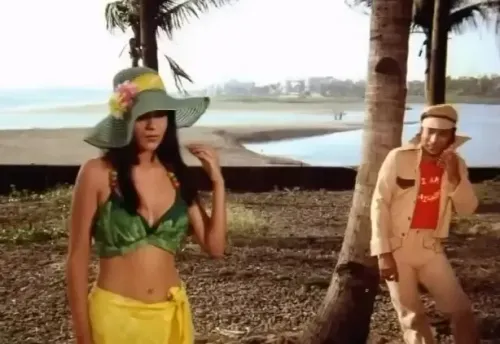
Aman did not mince words when describing the status quo. '90% of the time, most of the women here are just playing ornamental roles, purely ornamental. They sing, and dance, and sort of prance around the leading man, and that's about it,' she said. The assessment, coming from an actress who herself broke several stereotypes in the 1970s, carries particular weight — she was among the first mainstream Hindi film stars to take on unconventional, bold characterisations at a time when the industry was far more conservative.
Signs of Change, According to Aman
Despite her sharp critique, Aman acknowledged that a shift is underway. She noted that leading actresses are now actively pushing back against token parts and demanding substantive screen presence. 'What I feel is happening now is that there are changes coming about. There are women demanding, you know, good roles and refusing to work in films unless they have participation. They want to do something, they demand something, and they are getting something to do,' she said. She described this as an exciting development, adding that 'the women in India should have something to identify with other than, you know, just ornamentation.'
A Career That Defied Convention
Aman's authority on the subject is rooted in a career that spanned some of Hindi cinema's most defining decades. After winning the Femina Miss India title and the Miss Asia Pacific International pageant in 1970, she made her Bollywood debut with the 1971 film 'Hulchul'. Her breakthrough came with Dev Anand's cult classic 'Haré Rama Haré Krishna', which established her as a distinct screen presence rather than a conventional leading lady.
She went on to appear in a string of major commercial successes through the decade, including 'Yaadon Ki Baaraat' (1973), 'Roti Kapada Aur Makaan' (1974), 'Ajanabee' (1974), 'Warrant' (1975), 'Chori Mera Kaam' (1975), 'Dharam Veer' (1977), 'Chhailla Babu' (1977), 'Hum Kisise Kum Naheen' (1977), and 'The Great Gambler' (1979).
Why This Conversation Still Matters
Aman's remarks arrive amid a broader industry reckoning. A growing number of female-led Hindi films have delivered strong box-office returns in recent years, lending commercial credibility to the argument that audiences are ready for women in central, complex roles. Critics and industry observers note, however, that progress remains uneven — top-line pay parity and equal screen time are still outliers rather than norms. Aman's framing — that women must demand participation rather than wait for it to be offered — reflects a structural reality the industry has yet to fully resolve.
Point of View
But it lands because it matches what audiences have watched for decades — women written as accessories to male storylines. The more pointed observation is her prescription: that change comes from actresses refusing, not requesting. That is a structural argument, not a nostalgic lament. The industry's response has been selective — a handful of female-led hits does not rewrite the grammar of mainstream Hindi cinema, where the hero's journey still overwhelmingly organises the narrative. Aman's credibility on this is hard to dismiss; she navigated exactly this system at its most rigid.
NationPress
6 Jul 2026
Frequently Asked Questions
What did Zeenat Aman say about women's roles in Bollywood?
Zeenat Aman said that 90% of women in Bollywood are cast in 'purely ornamental' roles, singing and dancing around the male lead with little narrative purpose. She made these remarks during an interaction with the makers of the documentary 'Journey Into India'.
Did Zeenat Aman see any positive change for women in Bollywood?
Yes. Aman acknowledged that things are beginning to change, with actresses now demanding better roles and refusing to work in films that do not offer them meaningful participation. She described this trend as 'exciting'.
What is the documentary 'Journey Into India'?
'Journey Into India' is a documentary whose makers interviewed Zeenat Aman, among others, about her experiences and perspectives on Hindi cinema and the role of women in the industry.
What is Zeenat Aman's background in Bollywood?
Zeenat Aman won the Femina Miss India title and the Miss Asia Pacific International pageant in 1970 before debuting in Bollywood with 'Hulchul' in 1971. She rose to prominence with 'Haré Rama Haré Krishna' and went on to star in numerous blockbusters through the 1970s.
Which films is Zeenat Aman best known for?
Zeenat Aman is best known for films including 'Haré Rama Haré Krishna', 'Yaadon Ki Baaraat' (1973), 'Roti Kapada Aur Makaan' (1974), 'Dharam Veer' (1977), 'Hum Kisise Kum Naheen' (1977), and 'The Great Gambler' (1979), among others.