Should AI Systems Be Tested on Diverse Population-Scale Datasets Before Deployment?

Synopsis
Discover why AI models in healthcare must be rigorously tested on diverse datasets before deployment. NHA CEO Dr. Sunil Kumar Barnwal addresses crucial elements of trust, accuracy, and inclusion at a recent hackathon, emphasizing the importance of context-aware AI solutions for India's unique demographics.
Key Takeaways
AI models in healthcare must be tested on diverse datasets.
Trust and accuracy are essential for effective deployment.
Federated AI systems protect patient privacy.
Solutions should reflect India’s demographic diversity.
Indigenous, open-source AI models are necessary for local sovereignty.
New Delhi, Jan 25 (NationPress) Artificial intelligence models utilized in the healthcare sector must undergo testing on extensive and varied population datasets prior to their deployment, as emphasized by Dr. Sunil Kumar Barnwal, the Chief Executive Officer of the National Health Authority (NHA), during a recent address on Sunday.
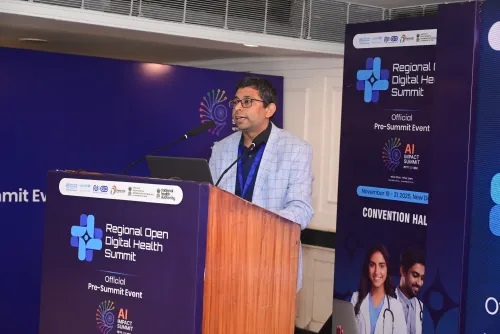
At the Federated Intelligence Hackathon on Health AI, a precursor event to the India AI Impact Summit 2026 held at IIT Kanpur, Dr. Barnwal pointed out that India is transitioning from a phase of experimentation to the development of reliable and benchmarked AI models for healthcare.
He highlighted that federated and consent-based AI systems can foster innovation while keeping sensitive health data decentralized, thus enhancing privacy and public trust.
In his remarks regarding the Ayushman Bharat Pradhan Mantri Jan Aarogya Yojana (AB PM-JAY) and the Ayushman Bharat Digital Mission (ABDM), he stressed the necessity for AI solutions to be contextually relevant and representative of India's demographic and regional diversity.
This national-level hackathon, organized by the NHA in partnership with the ICMR–National Institute for Research in Digital Health and Data Science (NIRDHDS) and IIT Kanpur, took place from January 19 to January 24, 2026, focusing on the creation of secure, privacy-respecting, and scalable Digital Public Goods for Health AI.
During the inaugural session, keynotes were delivered by Prof. Sandeep Verma, Head of the Gangwal School of Medical Sciences and Technology, IIT Kanpur Director Manindra Agrawal, and Ritu Maheshwari, Secretary of Medical Health and Family Welfare and State Mission Director of ABDM–Uttar Pradesh.
The speakers underscored the increasing significance of technology, research entities, and governmental bodies in shaping the digital health landscape of India.
Dr. R S Sharma, a Distinguished Visiting Professor at IIT Kanpur and former CEO of the NHA, asserted that Digital Public Infrastructure and interoperable Digital Public Goods are essential for establishing secure, scalable, and citizen-centric health data systems.
He emphasized that such frameworks are pivotal in ensuring both innovation and accountability. Vivek Raghavan, CEO and Co-founder of SarvamAI, discussed the critical role of India’s layered digital health architecture in facilitating AI-driven healthcare at both population and individual levels.
He noted that high-quality data, robust privacy protections, and security measures are fundamental for successful AI deployment. He also highlighted the importance of indigenous, open-source AI models to maintain local AI sovereignty and lessen reliance on external systems.
Point of View
It is vital to recognize the importance of testing AI systems on diverse datasets before deployment. By ensuring these systems are trustworthy and accurate, we not only enhance healthcare delivery but also build public confidence in technology's role in health. This is a step forward in creating an inclusive healthcare system that caters to the unique needs of India's vast population.
NationPress
22 Sept 2026
Frequently Asked Questions
Why is diversity important in AI testing?
Diversity ensures that AI models are accurate and relevant across different demographics, improving trust and inclusivity in healthcare solutions.
What is the role of the National Health Authority?
The NHA oversees the implementation of health programs and initiatives such as the Ayushman Bharat scheme, enhancing healthcare access and quality.
How does federated AI protect health data?
Federated AI allows for decentralized data processing, ensuring that sensitive health information remains secure and private.
What are Digital Public Goods?
Digital Public Goods are open-source technology solutions that are designed to be accessible and beneficial for the public, especially in health sectors.
Why is indigenous AI important?
Indigenous AI promotes local solutions that cater to specific needs, reducing reliance on foreign technology and enhancing local capabilities.