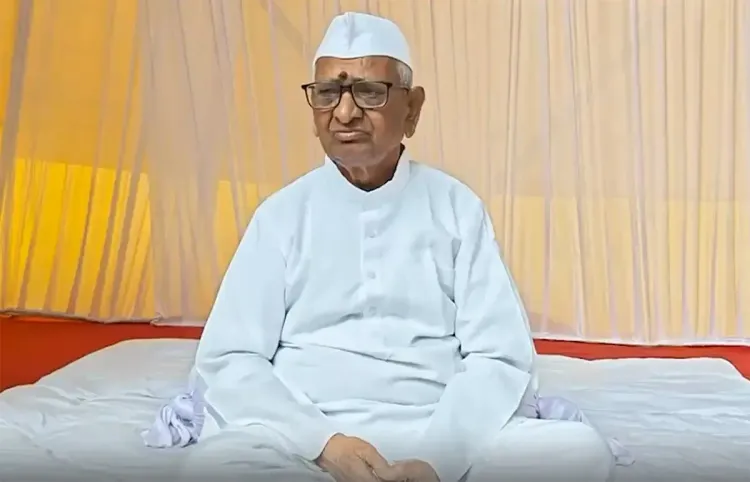
Anna Hazare discharged from Bombay Hospital after 10-day stay, vows to serve till 100
Synopsis
At 90, Anna Hazare walked out of Bombay Hospital after a 10-day battle with a urinary infection and dehydration — and his first words were about service, not health. His pledge to keep working till 100 underscores the singular drive of India's most iconic anti-corruption activist, even as his body signals its limits.
Key Takeaways
Anna Hazare , 90 , was discharged from Bombay Hospital, Mumbai on Thursday after 10 days of treatment.
He was hospitalised for a urinary infection triggered by severe dehydration and elevated creatinine levels .
Hazare declared he wants to continue public service until he turns 100 .
He had initially been treated at a hospital in Shirur before being transferred to Mumbai.
Supporters across India had expressed concern and prayed for his recovery during the hospitalisation.
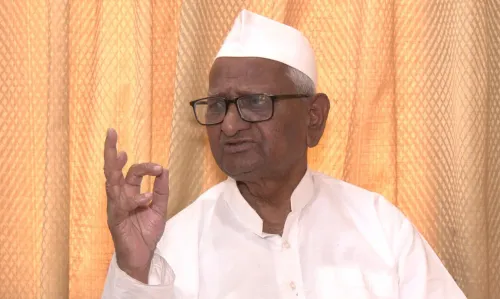
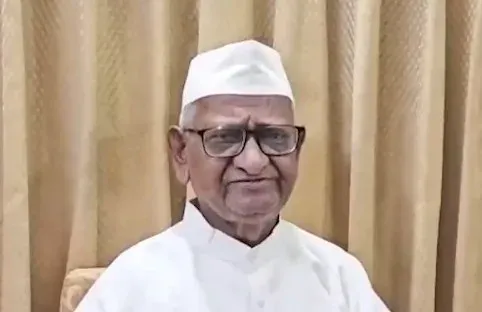
Veteran social activist Anna Hazare was discharged from Bombay Hospital in Mumbai on Thursday, 10 September, after a 10-day hospitalisation for a severe urinary infection and dehydration. The 90-year-old anti-corruption crusader, speaking to reporters outside the hospital, declared that his sole mission remains public service — and that he intends to continue until he turns 100.
What Anna Hazare said after discharge
Addressing the media, Hazare struck an upbeat tone about his recovery. 'Right now, my health is good. My health had deteriorated a bit, but now it has gotten better. I am 90 years old now, want to complete 100 years,' he said.
The activist, who has long been associated with India's anti-corruption movement, underscored his philosophy of selfless action. 'Service means selfless action. Performing actions with a selfless mindset is similar to the worship of God. Worship takes place not only in temples, but also by serving the public; that is the true worship of God,' he asserted.
He added that financial accumulation has never been his goal. 'I have dedicated my entire life to the service. I am not concerned about my bank balance… despite availing schemes, I have not kept any money for myself. Money and wealth are not my aim; only service to people is what matters for me,' Hazare said.
Details of the medical condition
Dr Gautam Bhansali, the physician overseeing Hazare's treatment, explained that the activist had initially been admitted to a hospital in Shirur for viral fever and loose motions. However, severe dehydration led to a significant spike in his creatinine levels, triggering a urinary infection that necessitated his transfer to Bombay Hospital for specialised care.
According to Dr Bhansali, the elevated creatinine — a marker of kidney stress — had risen 'by a huge margin,' prompting the medical team to prioritise renal management alongside the infection treatment.
Nationwide concern and well-wishes
During Hazare's hospitalisation, supporters and well-wishers across India expressed concern and prayed for his speedy recovery. The outpouring reflected the enduring public regard for the activist, who remains one of the country's most recognised anti-corruption figures decades after his landmark campaigns.
Hazare's legacy in public life
Anna Hazare gained national prominence for transforming his native village, Ralegan Siddhi in Maharashtra, into a model settlement through watershed development, afforestation, rural self-reliance programmes, and addiction eradication drives. His 2011 anti-corruption agitation — which galvanised millions and contributed to the eventual passage of the Lokpal and Lokayuktas Act, 2013 — remains a defining moment in India's post-liberalisation civic activism.
Now 90, Hazare continues to champion grassroots governance reform. His discharge and public remarks suggest he has no plans to step back from the causes that have defined his life, even as age and health challenges mount.
Point of View
But the episode is a reminder that India's most iconic anti-corruption voice is 90 and increasingly fragile. The real question his movement faces is institutional, not medical: who carries the Hazare template forward once its founder can no longer? His legacy — Ralegan Siddhi, the 2011 Jan Lokpal movement, the Lokpal Act — is secure, but the grassroots governance reform agenda he championed has visibly lost momentum since 2014. Service until 100 is an inspiring personal goal; building a successor generation is the harder, unfinished task.
NationPress
13 Sept 2026
Frequently Asked Questions
Why was Anna Hazare admitted to Bombay Hospital?
Anna Hazare was admitted after developing a severe urinary infection caused by dehydration and sharply elevated creatinine levels. He had initially been treated for viral fever and loose motions at a hospital in Shirur before being transferred to Mumbai.
How long was Anna Hazare hospitalised?
He was hospitalised for 10 days at Bombay Hospital in Mumbai before being discharged on Thursday, 10 September.
What did Anna Hazare say after his discharge?
Hazare said his health has improved and he wants to complete 100 years. He reiterated his commitment to selfless public service, saying money and wealth are not his aim.
Who is Anna Hazare and why is he well known?
Anna Hazare is a 90-year-old social activist and anti-corruption crusader. He is best known for transforming Ralegan Siddhi in Maharashtra into a model village and for leading the 2011 anti-corruption movement that contributed to the passage of the Lokpal and Lokayuktas Act, 2013.
What is Anna Hazare's current health status?
According to his treating physician Dr Gautam Bhansali, Hazare has recovered well. Hazare himself told reporters that his health is now good and he aims to remain active in public life.