Anurag Thakur: DBT reaches 95 cr citizens under Modi govt
Synopsis
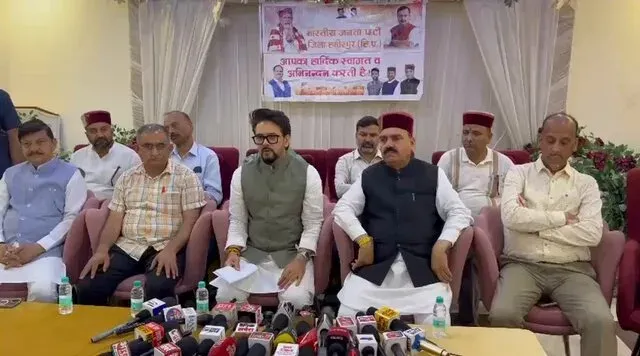
BJP MP Anurag Thakur, posting from Hamirpur on June 8, 2026, said nearly 95 crore Indians are connected to government welfare schemes, crediting the Modi government's DBT mechanism for delivering benefits directly and without corruption under the #12YearsOfGaribKalyan milestone.
Key Takeaways
BJP MP Anurag Thakur posted from Hamirpur on June 8, 2026 under #12YearsOfGaribKalyan .
He claimed nearly 95 crore Indians are directly or indirectly linked to a government welfare scheme.
The Direct Benefit Transfer (DBT) mechanism routes funds straight into beneficiary bank accounts, bypassing intermediaries.
DBT has been extended to over 300 central schemes since being scaled up after 2014 via the JAM trinity.
The Pradhan Mantri Garib Kalyan Anna Yojana , launched in March 2020 , remains one of the flagship Garib Kalyan schemes.
The 95-crore beneficiary figure and zero-corruption claim have not been independently verified from established public records.
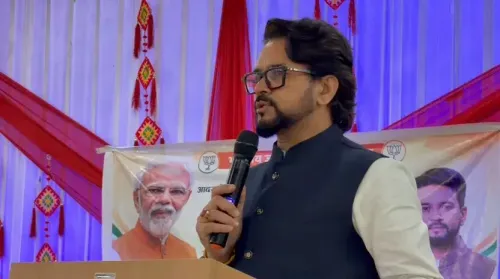
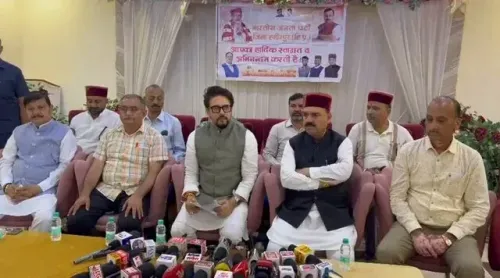
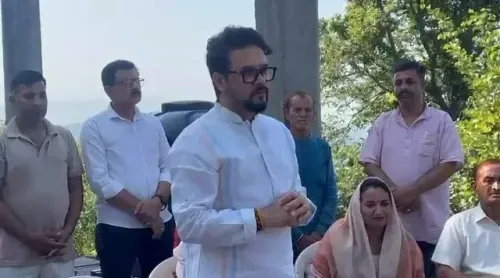
BJP MP Anurag Thakur, speaking from Hamirpur on Monday, June 8, 2026, said that nearly 95 crore people across India are now directly or indirectly connected to some form of government welfare scheme, with the Modi government channelling benefits straight into their bank accounts through the Direct Benefit Transfer (DBT) mechanism — free of corruption.
Posting under the hashtag #12YearsOfGaribKalyan, Thakur wrote in Hindi: 'आज देश की लगभग 95 करोड़ की जनता किसी ना किसी सरकारी लाभ की योजनाओं से प्रत्यक्ष या परोक्ष रूप से जुड़ी हुई है' ('Today, nearly 95 crore people of the country are directly or indirectly connected to some government welfare scheme'). The post, accompanied by a video, was shared from his Lok Sabha constituency of Hamirpur.
Context
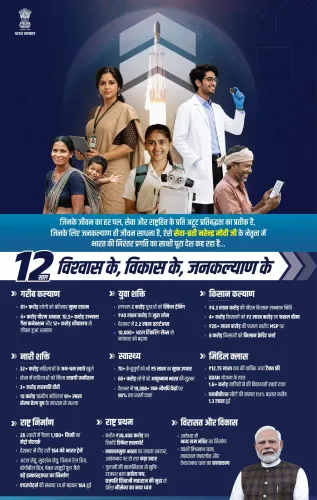
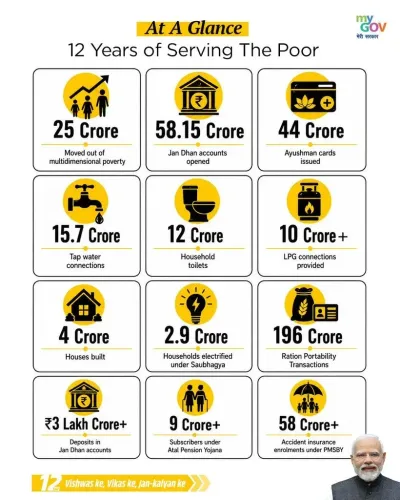
The hashtag #12YearsOfGaribKalyan marks twelve years since the Narendra Modi-led government came to power in May 2014, a period during which the administration has consistently framed its welfare agenda under the 'Garib Kalyan' (welfare of the poor) banner. The phrase has served as an umbrella narrative covering food security, housing, sanitation, insurance, and direct cash transfers.
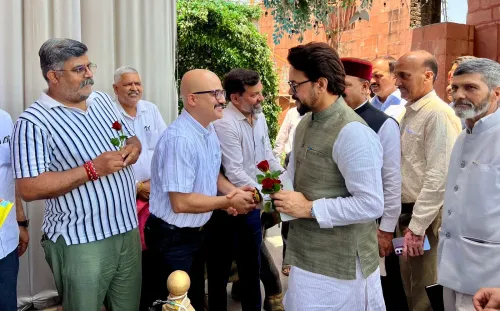
Thakur, a former Union Minister who held the portfolios of Information and Broadcasting and Youth Affairs and Sports, has been a prominent voice amplifying the government's welfare delivery record. His post from Hamirpur signals a coordinated outreach effort by BJP leaders to mark this political milestone at the constituency level.
Policy Backdrop
The Direct Benefit Transfer framework was formally introduced in 2013 and significantly scaled up after 2014 through mandatory Aadhaar seeding across central schemes. The government's 'JAM trinity' — Jan Dhan accounts, Aadhaar biometric authentication, and Mobile verification — became the backbone of this architecture, designed to eliminate intermediaries and reduce leakages.
By the early 2020s, DBT had been extended to over 300 central schemes, spanning food, fertiliser subsidies, scholarships, pensions, and cooking gas. The Pradhan Mantri Garib Kalyan Anna Yojana (PMGKAY), launched in March 2020 during the pandemic to provide free foodgrain to National Food Security Act beneficiaries, was extended multiple times through 2024-25 and remains one of the most visible planks of the Garib Kalyan umbrella.
The government has argued that DBT has saved the exchequer several lakh crore rupees by weeding out ghost beneficiaries and duplicate entries — a claim that has been a recurring talking point in Budget speeches and parliamentary debates.
Stakeholders and Impact
The primary beneficiaries of DBT-linked schemes are rural households, agricultural workers, women self-help groups, senior citizens, and students from economically weaker sections. Jan Dhan account holders — a programme that opened over 50 crore accounts since its launch in 2014 — form the foundational layer through which transfers are routed.
For Himachal Pradesh, a hill state with dispersed rural populations and historically high dependence on central government transfers, direct bank credit has particular significance. Hamirpur district, like much of the state, has a large share of households enrolled in NFSA, pension schemes, and agricultural input subsidies.
Opposition parties have periodically questioned the scale of claimed beneficiary numbers and the definition of 'connected to welfare schemes,' arguing that indirect linkages inflate headline figures. The research underlying this report flags that the specific claim of 95 crore beneficiaries and assertions of zero corruption cannot be independently verified from established public records at the time of publication.
What's Next
Parliamentary discussions on DBT savings and the next phase of scheme extensions are expected to feature in debates around the 2026-27 Union Budget. Watchers of social policy will also track whether any new directives emerge on mandatory Aadhaar linkage for remaining state-administered schemes, which could further expand the DBT footprint.
As the BJP marks twelve years of the Modi government's welfare agenda, posts like Thakur's from constituency ground zero suggest the party intends to keep Garib Kalyan at the centre of its political messaging — both in Parliament and on the campaign trail ahead of future state elections.
Point of View
Timed to reinforce the 'Garib Kalyan' brand ahead of potential electoral cycles. The DBT narrative has been central to the party's governance record since 2014, serving as a rebuttal to decades-old accusations of leaky subsidy delivery. By anchoring the message in Hamirpur — a BJP stronghold — the party signals it is converting welfare delivery into durable political capital at the grassroots. The unverified scale of the 95-crore claim, however, will likely draw scrutiny in parliamentary debates and from policy analysts seeking disaggregated data.
NationPress
22 Oct 2026
Frequently Asked Questions
What is the #12YearsOfGaribKalyan hashtag about?
#12YearsOfGaribKalyan marks twelve years since the Modi government took office in May 2014, celebrating its welfare delivery record under the 'Garib Kalyan' (welfare of the poor) umbrella, which spans food security, housing, insurance, and direct cash transfers.
What is Direct Benefit Transfer (DBT) in India?
Direct Benefit Transfer is a government platform that electronically routes welfare subsidies and scheme benefits directly into beneficiaries' bank accounts, using Aadhaar biometric authentication and Jan Dhan accounts to reduce leakages and eliminate intermediaries.
How many schemes are covered under DBT in India?
By the early 2020s, DBT had been extended to over 300 central government schemes, covering areas such as food subsidies, fertilisers, scholarships, pensions, and cooking gas support.
Who is Anurag Thakur and which constituency does he represent?
Anurag Thakur is a BJP Lok Sabha MP from Hamirpur in Himachal Pradesh. He is a former Union Minister who held the portfolios of Information and Broadcasting and Youth Affairs and Sports.
What is the Pradhan Mantri Garib Kalyan Anna Yojana?
Pradhan Mantri Garib Kalyan Anna Yojana (PMGKAY) is a food security scheme launched in March 2020 during the COVID-19 pandemic to provide free foodgrain to National Food Security Act beneficiaries; it was extended multiple times through 2024-25.