Bangladesh dengue death toll hits 107 as five more die in 24 hours
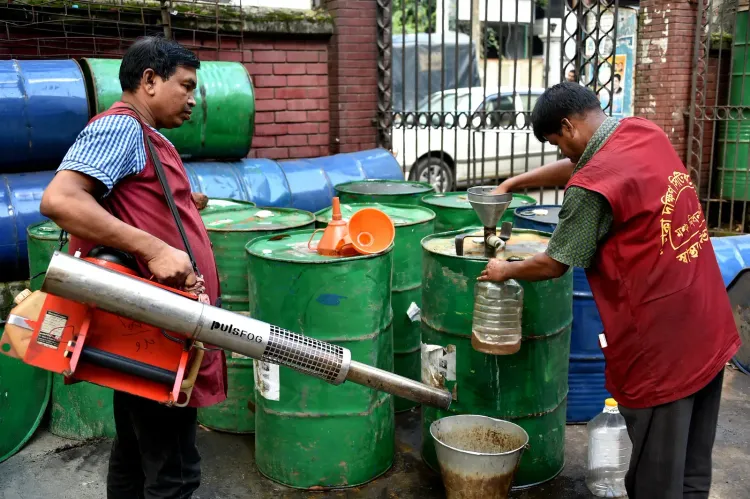
Synopsis
Bangladesh's dengue crisis is deepening fast — 107 dead this year, five in a single day, and experts warning the worst may still be ahead. August was already the third-deadliest month since 2000, and with peak season running through October, inadequate mosquito control and hours-long travel delays to hospitals are turning a manageable outbreak into a mounting catastrophe.
Key Takeaways
Bangladesh's dengue death toll rose to 107 after five new fatalities were recorded in a single 24-hour period up to Wednesday morning.
1,110 new patients were hospitalised nationwide in the same period, according to the DGHS .
Latest deaths were spread across Dhaka North City Corporation (DNCC) , Mymensingh , and Barishal divisions.
August 2023 recorded 43 deaths and 20,536 hospitalisations — the third-highest monthly toll since Bangladesh's first major outbreak in 2000 .
Experts warn case numbers could continue to rise through October , citing inadequate anti-mosquito drives and treatment access delays in rural areas.
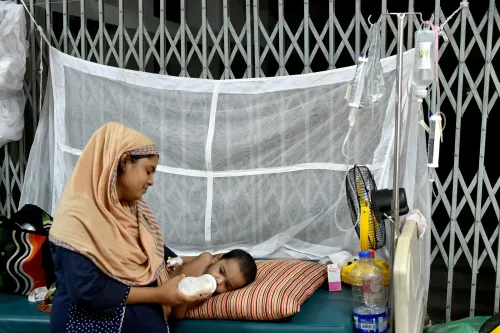
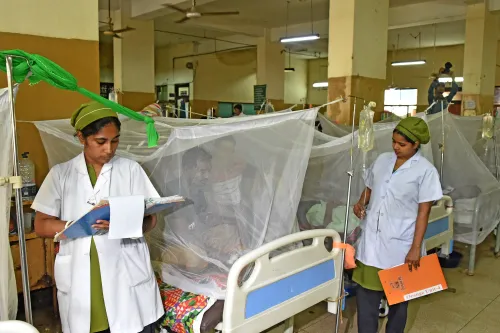
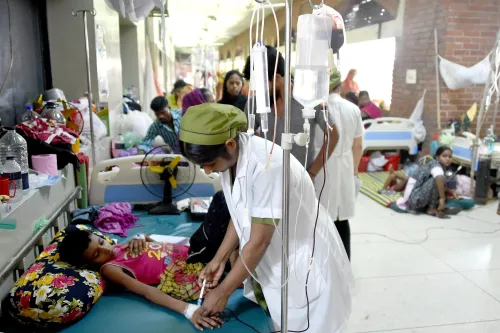
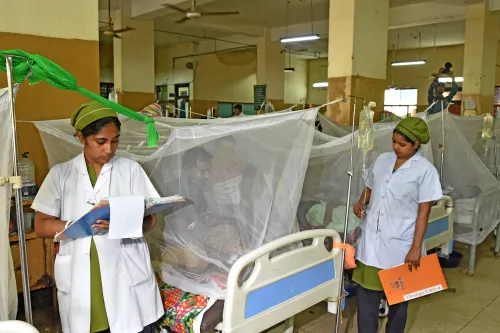
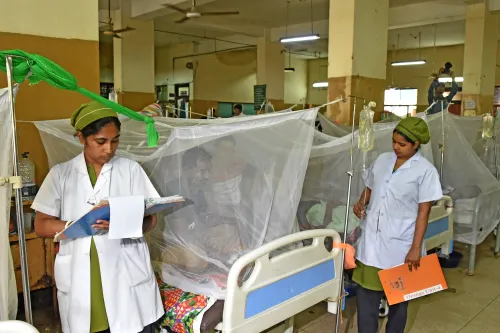
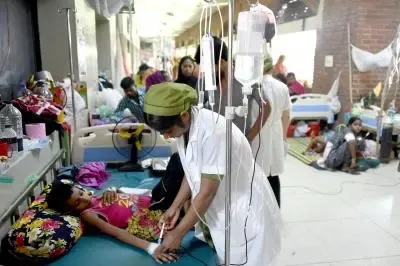
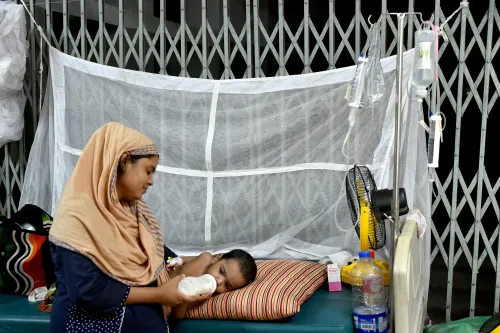
Bangladesh's dengue outbreak claimed at least five more lives in the 24 hours leading up to Wednesday morning, pushing the country's total fatalities from the mosquito-borne disease to 107 in 2023, according to the Directorate General of Health Services (DGHS). A further 1,110 new patients were hospitalised nationwide during the same period, underscoring the scale of the public health emergency gripping the country.
Where the Latest Deaths Were Recorded
The five fresh fatalities were reported across Dhaka North City Corporation (DNCC), Mymensingh, and Barishal divisions, according to the DGHS. The geographic spread of deaths signals that the outbreak is no longer confined to the capital and has taken firm hold in divisional cities beyond Dhaka.
August Was the Third-Worst Month in 26 Years
The crisis deepened sharply through August, which recorded 43 dengue-related deaths and 20,536 hospitalisations — making it the third-highest month for both cases and fatalities since Bangladesh's first major dengue outbreak in 2000, according to The Daily Star. This comes amid a continuing surge that health experts warn may not peak until October.
Dengue is primarily transmitted by the Aedes aegypti mosquito and has emerged as one of Bangladesh's most persistent public health threats over the past two decades.
Experts Warn of Further Rise Through October
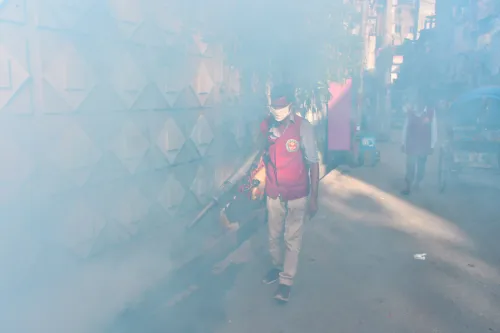
Kabirul Bashar, professor of Zoology at Jahangirnagar University, cautioned that case numbers could continue climbing through October. He urged authorities to map neighbourhood-level hotspots and respond with intensified mosquito control drives, community mobilisation, and sustained awareness campaigns.
Entomologist GM Saifur Rahman of National University in Dhaka attributed part of the risk to inadequate anti-mosquito operations across the country. 'The situation could deteriorate further unless the authorities take the necessary measures immediately,' Rahman was quoted as saying by The Daily Star.
Delays in Treatment Raising the Death Risk
HM Nazmul Ahsan, associate professor at Shaheed Suhrawardy Medical College Hospital, noted that dengue fatalities result from a combination of the patient's condition, the virus strain, and the quality of medical management. He highlighted that patients from remote areas often spend five to six hours travelling to government hospitals without proper fluid management — a dangerous gap that can prove fatal.
'By the time they reach a government emergency department, some have extremely low or undetectable blood pressure,' Ahsan said. The observation points to a systemic challenge: even where treatment capacity exists, access barriers in rural Bangladesh are costing lives.
What Authorities Must Do Next
With the outbreak showing no sign of abating, health experts are pressing for an immediate escalation in mosquito control operations and a coordinated government response at the district and ward levels. The coming weeks — historically the peak of Bangladesh's dengue season — will be critical in determining whether the 2023 toll surpasses previous records.
Point of View
But the more troubling signal is structural: patients from remote areas are arriving at emergency wards with undetectable blood pressure after hours of travel without fluid management, suggesting that Bangladesh's dengue response has a last-mile failure that mosquito drives alone cannot fix. August being the third-worst month in 26 years — yet the outbreak is not expected to peak until October — means the headline toll will almost certainly worsen before it improves. Authorities face a narrow window to act, and the experts quoted are not hedging: the word used is 'deteriorate'.
NationPress
2 Sept 2026
Frequently Asked Questions
What is the current dengue death toll in Bangladesh in 2023?
As of Wednesday, 2 September 2023 , Bangladesh's dengue death toll for the year has reached 107 , after five new fatalities were confirmed by the Directorate General of Health Services (DGHS) in a single 24-hour period. The outbreak has also resulted in over 1,110 fresh hospitalisations on the same day.
Which areas in Bangladesh have been worst affected by dengue?
The latest deaths were recorded in Dhaka North City Corporation (DNCC) , Mymensingh , and Barishal divisions, indicating the outbreak has spread well beyond Dhaka. Experts note that inadequate mosquito control operations across the country are contributing to the widening geographic spread.
Why is the Bangladesh dengue outbreak so deadly this year?
Health experts cite a combination of factors: the patient's underlying condition, the dengue virus strain, and gaps in medical management. A key concern is that patients from remote areas often travel five to six hours without proper fluid management, arriving at hospitals with dangerously low blood pressure, according to HM Nazmul Ahsan of Shaheed Suhrawardy Medical College Hospital.
When is the Bangladesh dengue outbreak expected to peak?
Kabirul Bashar , professor of Zoology at Jahangirnagar University, has warned that cases could continue rising through October 2023 . Entomologist GM Saifur Rahman of National University in Dhaka has also cautioned that insufficient anti-mosquito drives could fuel further increases over the next two months.
How does 2023 compare to previous dengue years in Bangladesh?
August 2023 alone recorded 43 deaths and 20,536 hospitalisations , making it the third-highest month for both cases and fatalities since Bangladesh's first major dengue outbreak in 2000 , according to The Daily Star. The full-year toll is still rising ahead of the seasonal peak.