West Bengal dengue deaths in 2026 fall below 2024 and 2025 figures

Synopsis
West Bengal has recorded just 10 dengue-related deaths through August 2026 — fewer than the same period in both 2024 and 2025. But with October and November declared a high-risk window, Chief Secretary Manoj Agarwal has put every district on alert, warning that a lower early count is no reason to ease up on cleaning drives and larval destruction.
Key Takeaways
West Bengal recorded 10 dengue-related deaths through August 2026 — fewer than the corresponding figures for 2024 and 2025 .
A death review committee found 7 of the 10 deaths were directly caused by dengue; 3 involved patients who died from other complications while dengue-positive.
October and November have been designated as the 'high-risk period' by the state administration.
Chief Secretary Manoj Agarwal held a virtual meeting with all district magistrates on Monday , directing active ground-level precautions.
Departments covering health , municipal affairs and urban development , and panchayat affairs and rural development have been tasked with regular monitoring.
West Bengal has recorded significantly fewer dengue-related fatalities through August 2026 compared with the same period in the previous two years, according to statistics released by the state health department. The development offers cautious relief even as officials warn that the most dangerous months lie ahead.
Death Toll and Cause Breakdown
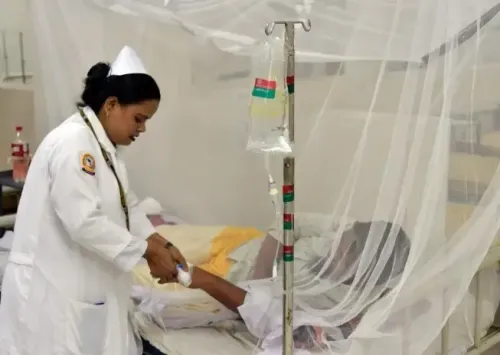
A senior West Bengal health department official confirmed that 10 dengue-related deaths were recorded in the state up to the end of August 2026. Of those, the department's death review committee determined that seven deaths were directly caused by dengue. In the remaining three cases, the patients had tested positive for dengue but died due to other underlying medical complications, according to the official.
October and November Flagged as High-Risk Period
Despite the relatively contained situation, the state administration has declared October and November as the 'high-risk period' for dengue infections. On Monday, West Bengal Chief Secretary Manoj Agarwal convened a virtual meeting with all district magistrates across the state, instructing them to maintain all existing precautionary measures.
'Although the situation is now under control, the possibility of a rise in infections cannot be ruled out. That is why all relevant departments, including health, municipal affairs and urban development, and panchayat affairs and rural development, have been directed to monitor the situation regularly,' the official said.
What District Administrations Have Been Directed to Do
Chief Secretary Agarwal stressed that gathering and submitting reports alone would not be adequate. He directed district administrations to take active, on-the-ground measures, including intensifying cleaning drives, ramping up larval destruction work, and strengthening public awareness programmes aimed at eliminating mosquito breeding grounds. The multi-department approach — spanning health, urban development, and rural development — reflects the administration's intent to avoid the spikes seen in prior years.
Context: Why the Numbers Matter
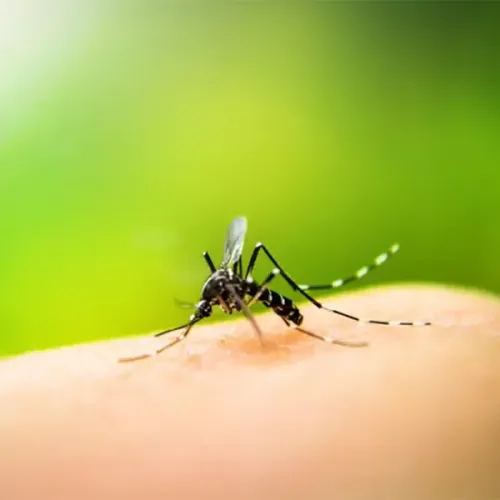
Dengue transmission in West Bengal typically peaks between September and November, driven by post-monsoon stagnant water that accelerates mosquito breeding. The fact that fatalities through August 2026 are lower than in both 2025 and 2024 suggests that early-season containment efforts have had some effect. However, health experts routinely caution that improved early figures can breed complacency precisely when vigilance is most needed. This comes amid a broader national pattern of dengue caseloads varying sharply from year to year, often determined by rainfall timing and vector-control consistency.
With the high-risk window now open, the administration's ability to sustain momentum — rather than ease up after a comparatively calm start — will be the real test of its public health machinery this season.
Point of View
But it is emphatically not a signal to stand down — and the West Bengal administration appears to understand that. The real public health risk now is the complacency trap: years where early figures look good often see the sharpest late-season spikes, precisely because ground-level vigilance relaxes. Chief Secretary Agarwal's insistence on direct district-level monitoring, rather than report-filing, is the right instinct. Whether that instruction translates into consistent larval destruction and awareness outreach in the most vulnerable rural and peri-urban pockets — not just urban centres — will determine whether the state actually closes 2026 better than it closed 2025.
NationPress
29 Sept 2026
Frequently Asked Questions
How many dengue deaths has West Bengal recorded in 2026?
West Bengal recorded 10 dengue-related deaths through August 2026, according to the state health department. Of those, 7 were confirmed as directly caused by dengue, while 3 involved patients who were dengue-positive but died from other medical complications.
How does the 2026 dengue situation in West Bengal compare with previous years?
The number of dengue-related deaths through August 2026 is significantly lower than the figures recorded during the same period in both 2025 and 2024, according to state health department data. Officials, however, caution that the high-risk months of October and November are still ahead.
Why are October and November considered high-risk months for dengue in West Bengal?
Post-monsoon conditions — including stagnant water from receding rains — create ideal mosquito breeding environments, typically driving a spike in dengue cases between September and November. The state administration has officially designated October and November 2026 as the high-risk period and has put district administrations on heightened alert.
What steps has the West Bengal government taken to contain dengue?
Chief Secretary Manoj Agarwal held a virtual meeting with all district magistrates, directing them to intensify cleaning drives, larval destruction work, and public awareness programmes. Multiple departments — health, municipal affairs and urban development, and panchayat affairs and rural development — have been instructed to monitor the situation regularly and act on the ground rather than merely collect reports.
Who is overseeing the dengue response in West Bengal?
West Bengal Chief Secretary Manoj Agarwal is coordinating the state-level response, having chaired a virtual meeting with district magistrates on Monday. The state health department's death review committee is also reviewing fatalities to determine whether dengue was the primary cause of death.