ESIC health security now covers 25 crore Indians, says Minister Mandaviya
Synopsis
At a national conference on industrial relations, Labour Minister Mansukh Mandaviya revealed that ESIC now covers 25 crore Indians — a number that puts the spotlight on how far India's formal social-security net has stretched, even as questions linger about the quality of delivery and whether the Labour Codes are being implemented as intended at the state level.
Key Takeaways
Union Labour Minister Mansukh Mandaviya announced ESIC health security now covers 25 crore people in India.
The government provides free food grains to 80 crore people and direct transfers of ₹2,000 every four months to 10 crore farmers .
10 states are depositing monthly cash — ranging from ₹1,200 to ₹2,000 — directly into women's bank accounts.
Mandaviya urged states to review Labour Codes implementation after one year and assess cess fund utilisation for worker welfare.
The minister called for workshops and orientation programmes for labour law practitioners to ensure effective implementation of the Codes.
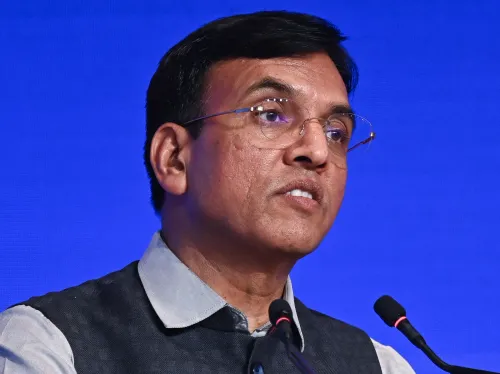
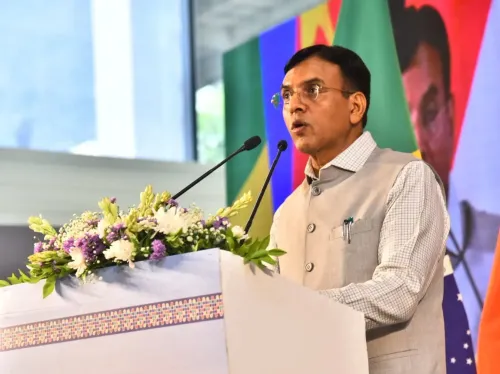
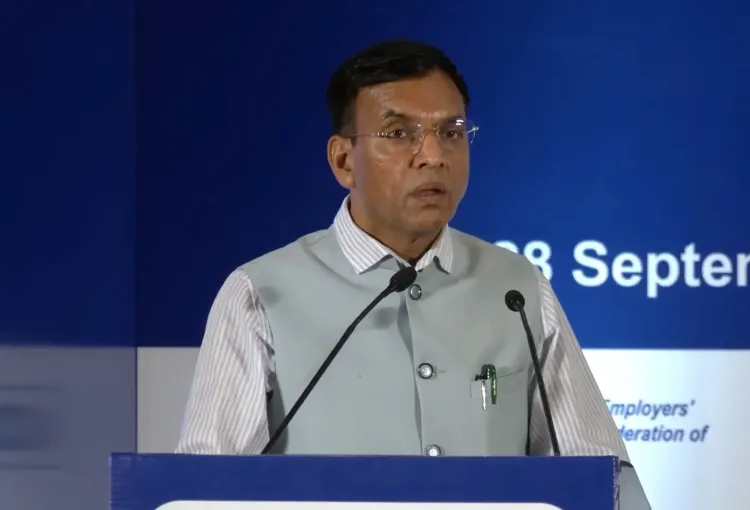
Union Labour and Employment Minister Mansukh Mandaviya on Monday, 28 September 2026, said India is extending health security through the Employees' State Insurance Corporation (ESIC) to 25 crore people, underlining the breadth of the government's social protection architecture. He was speaking at the CII-EFI National Conference on Industrial Relations and Labour & Awards 2026 in New Delhi.
Scale of Social Security Programmes
Mandaviya enumerated several flagship welfare schemes running in parallel. The government is supplying free food grains to 80 crore people, while 10 crore farmers receive ₹2,000 every four months via direct benefit transfers into their bank accounts — a reference to the PM-KISAN scheme.
The minister also highlighted women-centric cash transfer initiatives at the state level. 'Today, there are 10 states in the country that deposit amounts such as ₹2,000, ₹1,500 or ₹1,200 every month into the accounts of women,' he said, pointing to the growing convergence between Centre-run programmes and state-level social spending.
India's Approach to Industrial Relations
Mandaviya spoke at length on the tension between global labour norms and India's own industrial traditions. 'When we talk about industrial relations... on one hand ILO's international practices, international frameworks, and on the other hand India's own traditions and its relationships, it feels a bit different to me,' he said. Drawing on his decade-plus ministerial experience, the minister argued that any framework for industrial relations must account for India's distinct social and economic context rather than simply transplanting international models.
Labour Codes and Cess Fund Utilisation
This comes after Mandaviya, earlier in September 2026, urged state governments to conduct a detailed assessment of cess fund utilisation, identify gaps, and explore new avenues for deploying these resources for long-term worker welfare. He had called on states to undertake a comprehensive review of the Labour Codes after one year of implementation, flagging areas where execution could be strengthened.
Notably, the minister also stressed the need for workshops and orientation programmes for labour law practitioners, so that the Codes are implemented 'in letter and spirit' — signalling that awareness and capacity-building remain work in progress.
Why This Matters
The ESIC coverage figure of 25 crore is significant in the context of India's largely informal labour market, where social security penetration has historically been low. Expanding formal-sector health cover while simultaneously running large-scale food, cash-transfer, and women-centric schemes reflects a multi-pronged approach to social protection — but critics have noted that the quality of ESIC healthcare delivery and hospital infrastructure needs to keep pace with rising enrolment numbers. Whether expanded coverage translates into better health outcomes will be the real test of the programme's effectiveness.
With the Labour Codes implementation review now on the agenda, the coming months are likely to see closer scrutiny of how states are aligning their labour administration machinery with the new framework.
Point of View
But the harder question is whether enrolment growth has been matched by commensurate investment in ESIC hospital capacity and service quality — an area where past audits have flagged shortfalls. Mandaviya's simultaneous push to review Labour Codes implementation and cess fund usage suggests the ministry is aware that coverage numbers alone do not tell the full story. India's social security architecture is expanding in breadth; the challenge now is depth. Without a credible quality-of-delivery metric attached to these figures, large enrolment numbers risk becoming political talking points rather than welfare outcomes.
NationPress
29 Sept 2026
Frequently Asked Questions
How many people are covered under ESIC health security in India?
According to Labour Minister Mansukh Mandaviya, the Employees' State Insurance Corporation (ESIC) is currently providing health security to 25 crore people in India. He made the announcement at the CII-EFI National Conference on Industrial Relations and Labour & Awards 2026 in New Delhi on 28 September 2026.
What other welfare schemes did Minister Mandaviya highlight?
Mandaviya cited free food grains being provided to 80 crore people, direct cash transfers of ₹2,000 every four months to 10 crore farmers, and monthly cash deposits ranging from ₹1,200 to ₹2,000 into the bank accounts of women in 10 states.
What did Mandaviya say about India's approach to industrial relations?
The minister said India's industrial relations framework must balance ILO's international practices with India's own social and economic traditions. He noted that a straightforward adoption of international models feels 'a bit different' in the Indian context, given the country's unique labour and social landscape.
What is the status of Labour Codes implementation in India?
Mandaviya has urged states to conduct a comprehensive review of the Labour Codes after one year of implementation and to identify areas requiring stronger execution. He also called for workshops and orientation for labour law practitioners to ensure the Codes are followed in letter and spirit.
Why is ESIC coverage significant for India's workforce?
India's labour market is predominantly informal, making formal social security coverage historically low. Extending ESIC health cover to 25 crore people represents a significant expansion, though critics argue that quality of healthcare delivery and hospital infrastructure must improve alongside rising enrolment for the programme to deliver real welfare outcomes.