Mandaviya: ESIC beneficiaries doubled to 15 crore in 12 years
Synopsis
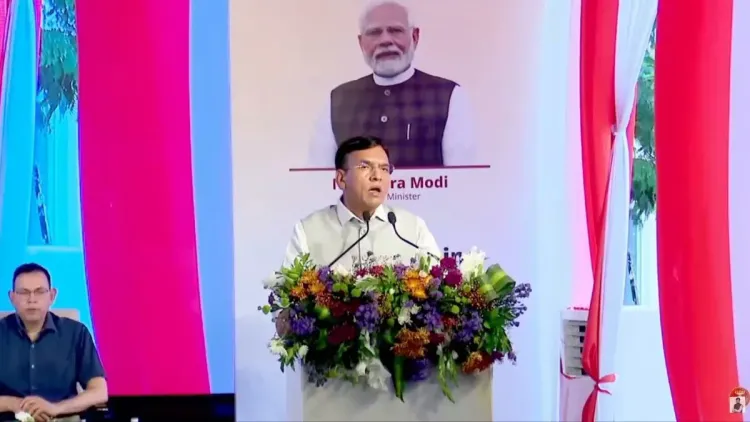
Union Labour Minister Mansukh Mandaviya says ESIC beneficiaries have doubled from 7.5 crore to over 15 crore in 12 years under PM Narendra Modi, citing digital enrolment and policy reforms as key drivers of the expansion.
Key Takeaways
Union Labour Minister Mansukh Mandaviya announced on 14 July 2026 that ESIC beneficiaries have grown from 7.5 crore to over 15 crore in 12 years.
The claim attributes the expansion to the leadership of Prime Minister Narendra Modi since 2014 .
ESIC , established under the Employees' State Insurance Act of 1948 , provides medical care, sickness, maternity, and disability benefits to organised-sector workers.
Digital registration, Aadhaar integration, and a revised wage ceiling are among the policy changes credited with accelerating enrolment.
The expansion runs parallel to the four Labour Codes (2019–2020) , which are yet to be fully implemented.
Sustaining service quality — hospitals, dispensaries, claim settlement — for a doubled beneficiary base remains the key challenge ahead.
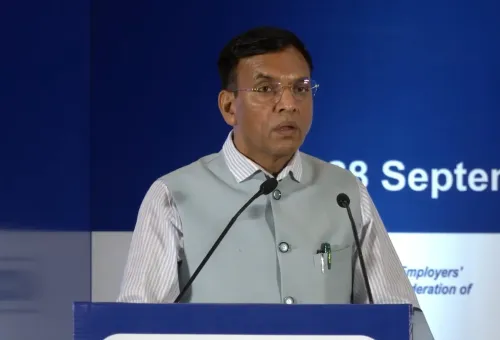
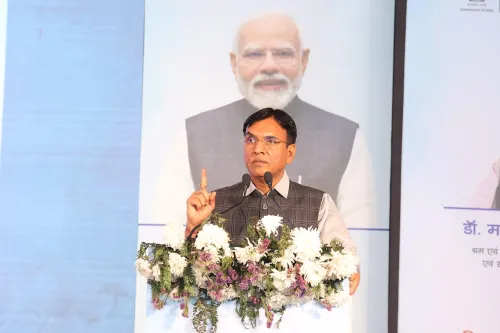
Union Labour and Sports Minister Mansukh Mandaviya on Tuesday, 14 July 2026, credited Prime Minister Narendra Modi's decade-plus tenure with doubling the beneficiary base of the Employees' State Insurance Corporation (ESIC), stating that enrolments have grown from 7.5 crore to over 15 crore over the last 12 years.
Context
Posting in Hindi on X, Mandaviya wrote: 'माननीय प्रधानमंत्री श्री @narendramodi जी के नेतृत्व में पिछले 12 सालों में ESIC के लाभार्थियों की संख्या 7.5 करोड़ से बढ़कर 15 करोड़ से अधिक हो गई है।' — translated: 'Under the leadership of the honourable Prime Minister Shri Narendra Modi, in the last 12 years, the number of ESIC beneficiaries has grown from 7.5 crore to more than 15 crore.' The statement positions the expansion as a signature achievement of the BJP-led government since 2014.
Policy Backdrop
The Employees' State Insurance Act, 1948 established ESIC as a statutory body under the Ministry of Labour and Employment, providing medical care, sickness benefits, maternity coverage, and disability compensation to workers in the organised sector. The scheme was operationalised in 1952 and for decades remained confined to notified industrial areas, limiting its reach.
From 2010 onwards, successive rule changes began extending ESIC coverage to new districts and categories of workers. Under the current government, digital registration, Aadhaar seeding, and a higher wage ceiling for eligibility have been cited as key drivers of enrolment growth. These reforms align with the broader push to integrate contributory social security — spanning both ESIC and the Employees' Provident Fund Organisation (EPFO) — with the four Labour Codes passed in 2019–2020.
Stakeholders and Impact
ESIC's beneficiary base covers workers in the formal, organised sector and their dependants, making it one of India's largest contributory health-and-welfare safety nets. A doubling of the insured population — if sustained — would represent a significant expansion of formal social security cover for industrial and service-sector employees across the country.
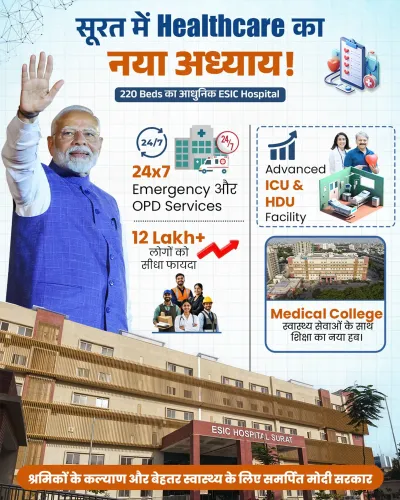
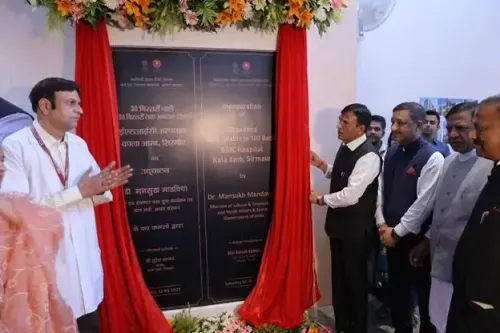
Employers contributing to ESIC and workers enrolled under the scheme stand to benefit from wider hospital networks, cashless medical facilities, and enhanced cash benefits during illness or injury. The Ministry of Labour has in recent years added ESIC hospitals and dispensaries in previously uncovered regions to support the expanded membership.
What's Next
Attention will now turn to the implementation timeline for the remaining Labour Codes, which are expected to further redefine ESIC eligibility thresholds and portability of benefits. Any fresh enrolment or coverage targets announced in the forthcoming Union Budget or through Ministry notifications will be closely watched by labour economists and worker unions alike. The government's ability to sustain quality of service — hospitals, dispensaries, and claim settlement — commensurate with a doubled beneficiary base will be the real test of the expansion's impact.
Point of View
Timed to reinforce the BJP government's social-security narrative as it approaches the next electoral cycle. The framing — attributing a decade of institutional growth directly to Prime Minister Modi — follows a well-established pattern of personalising welfare-scheme milestones for maximum political resonance. For the Labour Ministry, showcasing ESIC expansion also serves as a pre-emptive defence against criticism that formal-sector job growth has been sluggish; wider enrolment numbers signal formalisation even when net employment figures are contested. The real policy question that the post sidesteps is whether infrastructure — beds, doctors, dispensaries — has scaled proportionately to match the doubled beneficiary count.
NationPress
13 Oct 2026
Frequently Asked Questions
What is ESIC and who does it cover?
ESIC, or the Employees' State Insurance Corporation, is a statutory body under India's Ministry of Labour and Employment that provides medical care, sickness benefits, maternity coverage, and disability compensation to workers in the organised sector and their dependants.
How many ESIC beneficiaries are there in India in 2026?
According to Union Labour Minister Mansukh Mandaviya's post on 14 July 2026, ESIC beneficiaries have crossed 15 crore , up from 7.5 crore when the Modi government took office in 2014.
What reforms helped expand ESIC coverage over the last 12 years?
Key factors include extension of coverage to new districts, digital and Aadhaar-linked registration, a revised wage-ceiling for eligibility, and alignment with the four Labour Codes passed in 2019–2020.
What are the four Labour Codes and how do they relate to ESIC?
The four Labour Codes — on Wages, Industrial Relations, Social Security, and Occupational Safety — were passed between 2019 and 2020 and are expected to redefine ESIC eligibility thresholds and allow portability of benefits once fully implemented.
What challenges remain for ESIC despite the beneficiary increase?
The primary challenge is ensuring that hospital capacity, dispensaries, and claim-settlement infrastructure scale proportionately to serve a beneficiary base that has doubled, so that quality of care does not deteriorate with higher enrolment.