Free breast cancer screening launched in Srinagar for 10,000 women
Synopsis
India leads the world in breast cancer mortality — not because of case volume, but because most diagnoses come too late. J&K Chief Minister Omar Abdullah's launch of a doorstep screening programme for 10,000 women across 10 Srinagar villages is a direct strike at that detection gap, backed by an AAI-ITP partnership that takes the clinic to the community.
Key Takeaways
J&K Chief Minister Omar Abdullah inaugurated the Free Breast Cancer Screening Seva programme in Srinagar on 15 June 2025 .
The initiative targets 10,000 women across 10 villages in Srinagar district with free screening, awareness, and counselling.
The programme is a CSR initiative by the Airports Authority of India (AAI) in collaboration with India Turns Pink (ITP) .
India records nearly 2,00,000 new breast cancer cases and over 98,000 deaths annually, leading the world in breast cancer mortality.
Urban women face a 1 in 22 lifetime risk versus 1 in 60 for rural women; Indian women are diagnosed a decade earlier than Western counterparts.
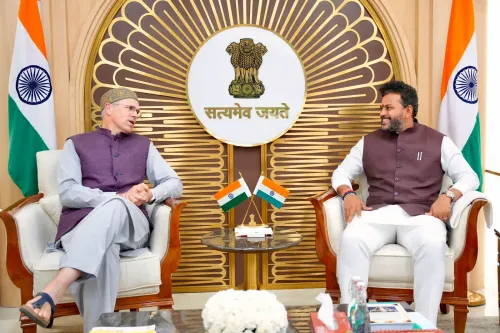
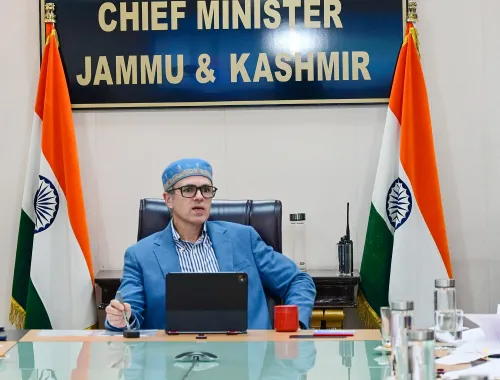
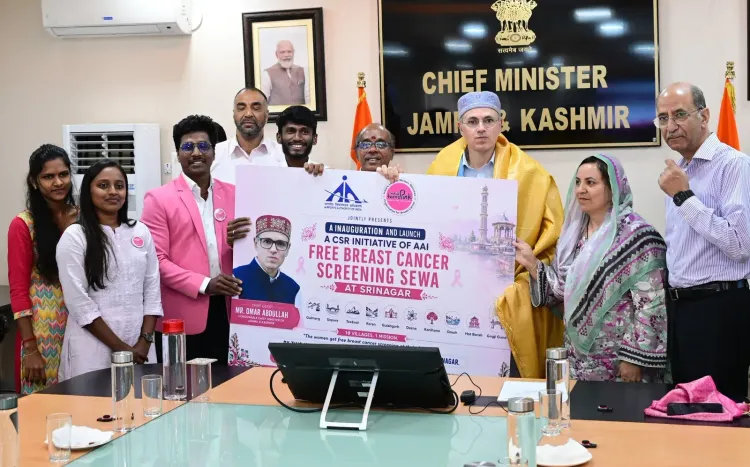
Jammu & Kashmir Chief Minister Omar Abdullah on Monday, 15 June inaugurated the Free Breast Cancer Screening Seva programme at the Civil Secretariat in Srinagar, underscoring the critical role of early detection and timely intervention in reducing cancer-related mortality among women. The initiative marks a significant step in bringing preventive healthcare directly to underserved communities across the district.
What the Programme Covers
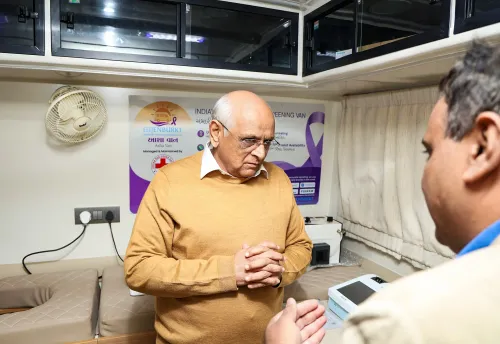
The scheme is a Corporate Social Responsibility (CSR) initiative launched by the Airports Authority of India (AAI) in partnership with India Turns Pink (ITP). It aims to provide free breast cancer screening, awareness sessions, and counselling at the doorstep of women across 10 villages in Srinagar district, with a target to benefit approximately 10,000 women.
Services will be delivered directly within communities rather than at hospital facilities, a model designed to overcome the access and stigma barriers that frequently delay diagnosis in semi-urban and rural settings.
What the Chief Minister Said
Addressing the gathering, Chief Minister Abdullah commended the AAI and ITP for undertaking a public health initiative centred on women's well-being. He stressed that early detection remains the single most effective tool in reducing breast cancer's burden, and that community-level outreach was essential to reaching women who would otherwise never access screening facilities.
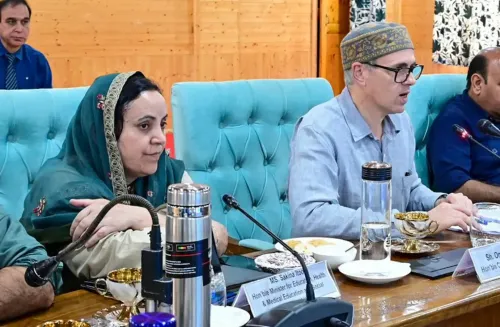
Health and Medical Education Minister Sakina Itoo and Advisor to the Chief Minister Nasir Aslam Wani were also present at the inauguration. ITP Founder President P.A. Anandakumar and several senior officials attended the event.
The Scale of the Crisis
Breast cancer is the most prevalent cancer among women in India, with nearly 2,00,000 new cases diagnosed annually and over 98,000 deaths reported each year. Statistically, 1 in 28 women in India will develop breast cancer in her lifetime — a figure that climbs to 1 in 22 for urban women, compared with 1 in 60 for those in rural areas.
Despite ranking third globally in total breast cancer cases, India leads the world in breast cancer mortality, a grim distinction attributed largely to late-stage diagnoses. Indian women are also typically diagnosed a decade earlier than their Western counterparts, with incidence peaking between the ages of 35 and 50 — a working-age cohort with significant family and economic responsibilities.
Why Srinagar and Why Now
The choice of Srinagar as the launch site reflects a broader push to extend preventive healthcare infrastructure to Jammu & Kashmir, a region where health access has historically lagged national averages. The AAI-ITP model of village-level doorstep screening addresses a structural gap: urban women are at higher risk partly due to sedentary lifestyles, dietary shifts, and delayed pregnancies, yet rural women face greater barriers to timely diagnosis.
This comes amid growing recognition that India's breast cancer mortality crisis is not a disease problem alone but a detection and access problem — one that community-based programmes are uniquely positioned to address.
What Happens Next
Screening camps are expected to roll out across the 10 identified villages in Srinagar district in the coming weeks. Officials indicated the programme will integrate awareness generation and counselling alongside clinical screening, aiming to build lasting health literacy rather than deliver one-time interventions. Expansion to additional districts will depend on the outcomes of this pilot phase.
Point of View
At its core, a detection failure — and no amount of treatment infrastructure fixes a problem rooted in late presentation. The AAI-ITP doorstep model is promising precisely because it removes the two biggest barriers: physical access and social stigma. The real question is whether a 10-village pilot in Srinagar can be designed with enough rigour to generate replicable data. If it cannot demonstrate screening uptake rates, referral completion, and follow-through to treatment, it risks becoming another well-intentioned CSR event rather than a scalable public health intervention. J&K's health indicators make the stakes high — and the need for a credible evaluation framework even higher.
NationPress
24 Sept 2026
Frequently Asked Questions
What is the Free Breast Cancer Screening Seva programme launched in Srinagar?
It is a free community-level breast cancer screening initiative launched on 15 June 2025 by the Airports Authority of India (AAI) in partnership with India Turns Pink (ITP), inaugurated by J&K Chief Minister Omar Abdullah. The programme targets 10,000 women across 10 villages in Srinagar district, offering screening, awareness sessions, and counselling at the doorstep.
Why does India have such high breast cancer mortality despite being third globally in cases?
India leads the world in breast cancer mortality primarily because most cases are diagnosed at a late stage, when treatment outcomes are significantly worse. Limited access to screening, social stigma, and low awareness — particularly in semi-urban and rural areas — contribute to delayed detection.
Who is at higher risk of breast cancer in India — urban or rural women?
Urban women face a higher lifetime risk of 1 in 22, compared with 1 in 60 for rural women. Factors such as sedentary lifestyles, dietary shifts, and delayed pregnancies are cited as key contributors to elevated urban incidence.
Which organisations are implementing the breast cancer screening programme in Srinagar?
The programme is a CSR initiative of the Airports Authority of India (AAI), implemented in collaboration with India Turns Pink (ITP), a non-profit focused on breast cancer awareness. ITP Founder President P.A. Anandakumar attended the inauguration.
What age group is most affected by breast cancer in India?
Indian women are typically diagnosed with breast cancer between the ages of 35 and 50 — roughly a decade earlier than women in Western countries. This working-age peak makes early detection programmes particularly critical for India's demographic profile.