Ahmedabad Civil Hospital performs free hip replacement on ITP patient
Synopsis
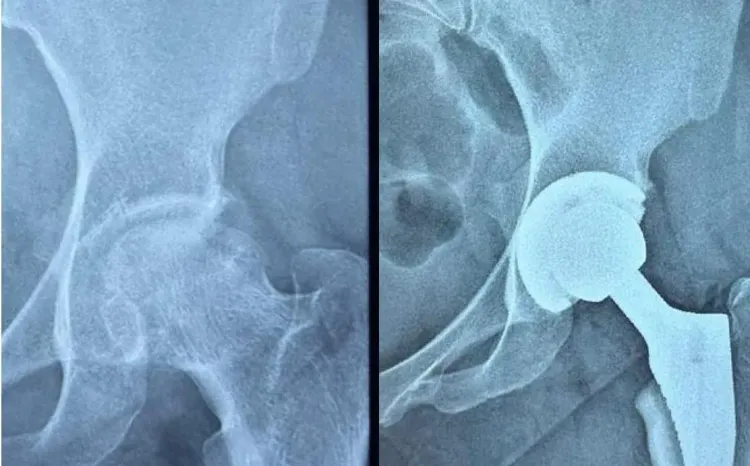
A woman with a rare blood disorder that private hospitals deemed too risky to treat — and quoted up to ₹5 lakh for — received a free, successful total hip replacement at Ahmedabad Civil Hospital. The case highlights what India's government tertiary care can deliver when multidisciplinary teams and blood bank resources are properly mobilised.
Key Takeaways
Ahmedabad Civil Hospital performed a high-risk total hip replacement on Sangeeta Trivedi , a Uttar Pradesh resident, on 1 August .
Trivedi suffers from Idiopathic Thrombocytopenic Purpura (ITP) , which causes critically low platelet counts and severe surgical bleeding risk.
Long-term steroid therapy for ITP led to Avascular Necrosis (AVN) of the hip, making replacement the only viable option.
Private hospitals had quoted between ₹3 lakh and ₹5 lakh and reportedly declined due to the high risk; the government hospital performed the surgery free of cost .
The surgical team administered 5 units of platelets , 1 unit of FFP , and 1 unit of PCV to manage bleeding during the procedure.
Trivedi is in stable condition post-surgery and can now walk independently.
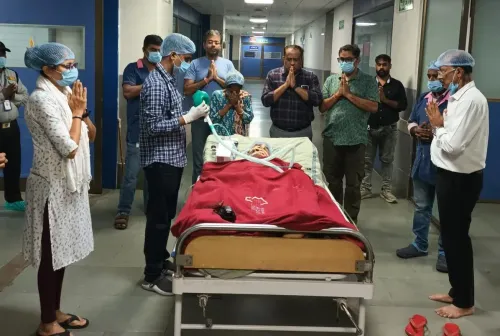
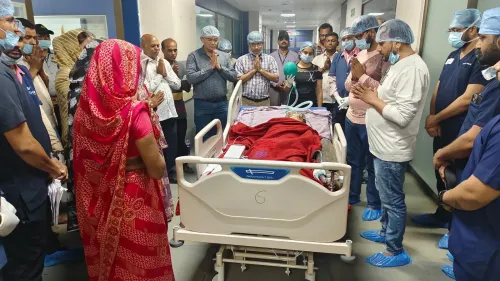
Ahmedabad Civil Hospital successfully performed a high-risk total hip replacement on Sangeeta Trivedi, a Uttar Pradesh resident living with Idiopathic Thrombocytopenic Purpura (ITP), a serious blood disorder that sharply elevates the risk of uncontrolled bleeding during surgery. The procedure, conducted free of cost at the government-run facility, was completed safely on 1 August, hospital officials confirmed.
Why This Case Was High-Risk
ITP causes a critically low platelet count, leaving patients highly vulnerable to severe bleeding during any surgical intervention, since platelets are essential to the body's clotting mechanism. According to Professor Dr Piyush Mittal of the Department of Orthopaedics, Trivedi had been living with ITP for an extended period.
Prolonged steroid therapy used to manage her ITP led to a secondary complication: Avascular Necrosis (AVN), which severely damaged her hip joint over time. As her condition deteriorated, a total hip replacement became the only clinically viable option to restore her mobility.
Why She Turned to a Government Hospital
Before arriving at Ahmedabad Civil Hospital, Trivedi had approached several private hospitals, where the estimated cost of the surgery ranged between ₹3 lakh and ₹5 lakh. Multiple private facilities reportedly declined or expressed serious reservations about proceeding, citing the life-threatening bleeding risk posed by her ITP.
She subsequently sought treatment at the government hospital, where doctors agreed to take on the case after a thorough evaluation.
Multidisciplinary Approach and Surgical Execution
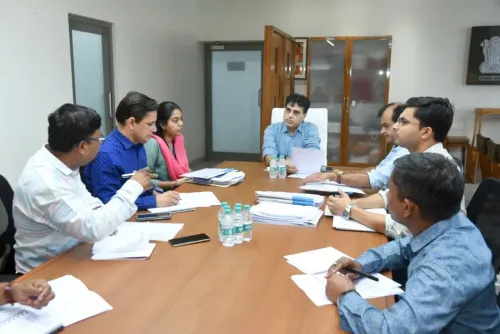
Before proceeding, the hospital assembled a multidisciplinary team spanning the Departments of Orthopaedics, Haematology, Anaesthesia, and the Blood Bank. A comprehensive pre-operative assessment and coordinated treatment plan were put in place to manage the bleeding risk.
During the operation, Professor Dr Shakuntala and the anaesthesia team played a central role in stabilising the patient. To control bleeding, Trivedi received five units of platelets, one unit of Fresh Frozen Plasma (FFP), and one unit of Packed Cell Volume (PCV). The planned blood component support allowed the surgical team to complete the procedure safely.
Patient Condition and Hospital Response
Medical Superintendent Dr Rakesh Joshi said the outcome underscored what government hospitals are capable of delivering. 'The Department of Orthopaedics has successfully performed a Total Hip Replacement on a patient suffering from Idiopathic Thrombocytopenic Purpura. This achievement once again demonstrates that government hospitals are capable of delivering world-class, highly complex medical treatment successfully,' he said.
Hospital officials confirmed that Trivedi is in stable condition following the surgery. She has been relieved of severe hip pain and is now able to walk independently and carry out daily activities — a significant improvement after prolonged illness and restricted mobility.
The case is being cited by hospital administration as evidence that specialised, high-risk surgical care need not be the exclusive preserve of private healthcare. Whether it prompts broader policy attention to capacity-building at government tertiary centres remains to be seen.
Point of View
Assembled a multidisciplinary team, and succeeded. The question that goes unasked in most coverage is why such capability exists in pockets rather than as a system-wide standard. India's public tertiary hospitals have the clinical talent; what they routinely lack is consistent blood bank infrastructure, haematology depth, and anaesthesia capacity working in concert. When those elements align, as they did here, outcomes rival private care at zero cost to the patient. The policy challenge is making that the rule, not the exception.
NationPress
16 Sept 2026
Frequently Asked Questions
What is Idiopathic Thrombocytopenic Purpura (ITP) and why does it complicate surgery?
ITP is a blood disorder that causes a critically low platelet count, making it difficult for the body to clot blood normally. This significantly raises the risk of severe, uncontrolled bleeding during surgical procedures, which is why many hospitals consider ITP patients high-risk surgical candidates.
Why did Sangeeta Trivedi need a hip replacement?
Trivedi's long-term steroid therapy — used to manage her ITP — caused Avascular Necrosis (AVN), a condition where reduced blood supply damages bone tissue, severely deteriorating her hip joint. A total hip replacement was determined to be the only viable option to restore her mobility.
Why did Trivedi choose Ahmedabad Civil Hospital over private hospitals?
Several private hospitals had quoted between ₹3 lakh and ₹5 lakh for the surgery and reportedly raised concerns about the life-threatening bleeding risk posed by her ITP. Ahmedabad Civil Hospital agreed to perform the procedure free of cost after a comprehensive multidisciplinary assessment.
How did doctors manage the bleeding risk during the surgery?
The surgical team administered five units of platelets, one unit of Fresh Frozen Plasma (FFP), and one unit of Packed Cell Volume (PCV) during the operation. A coordinated team from Orthopaedics, Haematology, Anaesthesia, and the Blood Bank worked together to control bleeding and complete the procedure safely.
What is Sangeeta Trivedi's condition after the surgery?
Trivedi is in stable condition following the surgery. Hospital officials stated she has been relieved of severe hip pain and is now able to walk independently and perform daily activities, marking a significant improvement in her quality of life.