Ahmedabad Civil Hospital saves two critical newborns in 84-day battle
Synopsis
A 26-week premature baby weighing just 1 kg and a full-term newborn battling a multidrug-resistant brain infection both survived after up to 84 days of free NICU care at Ahmedabad Civil Hospital — a quiet but remarkable demonstration of what public neonatal infrastructure can achieve when it works.
Key Takeaways
Ahmedabad Civil Hospital discharged two critically ill newborns following intensive NICU treatment lasting up to 84 days .
The first infant was born at 26 weeks weighing just 1 kg ; it was discharged weighing 1.8 kg after achieving unassisted breathing by Day 81 .
The second infant, born at 39 weeks , developed a multidrug-resistant bacterial infection , a brain blood clot, and seizures, requiring 8 days on a ventilator.
The NICU team included paediatricians Charul Mehta , Anuya Chauhan , Mansi Shah , and Komal Chaudhary .
Both treatments were provided entirely free of charge ; comparable private-hospital care would involve substantial costs, according to the hospital.
The premature infant received Nirsevimab for RSV protection before discharge — one of the newer preventive interventions now entering government hospital protocols in Gujarat .
Ahmedabad Civil Hospital has successfully treated two critically ill newborns — a 26-week premature baby weighing just 1 kg at birth and a full-term infant diagnosed with a multidrug-resistant bacterial infection — following prolonged intensive care that lasted up to 84 days. Both infants were discharged in stable and healthy condition, with treatment provided entirely free of charge at the government facility.
The Premature Baby's 84-Day Journey
The first infant, born at just 26 weeks of gestation and weighing 1 kg, was transferred to the Neonatal Intensive Care Unit (NICU) immediately after birth after developing severe breathing difficulties attributed to immature lungs. The baby initially required respiratory support and intravenous nutrition, as it was unable to tolerate milk.
As the infant's condition gradually stabilised, the care team began spoon-feeding mother's milk. By Day 81 of treatment, the baby was breathing without supplemental oxygen. At the time of discharge — after 84 days of intensive care — the baby's weight had risen to 1.8 kg. Prior to discharge, the infant was administered Nirsevimab, a preventive drug against Respiratory Syncytial Virus (RSV), and underwent a mandatory hearing assessment.
Full-Term Newborn's Battle With Drug-Resistant Infection
The second infant was born at 39 weeks through a forceps-assisted delivery and was admitted to the NICU immediately due to breathing difficulties. The newborn subsequently developed a severe infection, a blood clot in the brain, and seizures — a constellation of complications that significantly raised the clinical stakes.
The baby required 8 days of ventilator support, 10 days of Continuous Positive Airway Pressure (CPAP), and 6 days of High-Flow Nasal Cannula (HFNC) therapy. Culture tests of the infant's blood and cerebrospinal fluid (CSF) confirmed a multidrug-resistant bacterial infection, requiring antibiotics administered in accordance with national clinical guidelines. Nutrition was provided intravenously before transitioning to a Ryle's tube and, eventually, breastfeeding.
The Medical Team Behind the Recovery
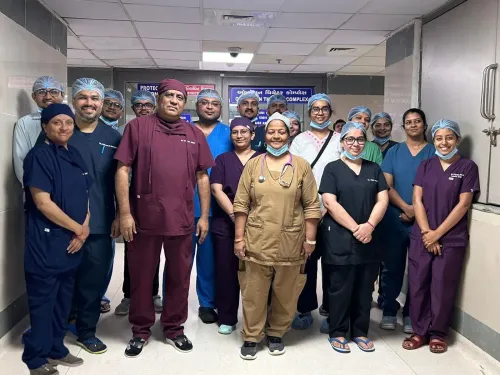
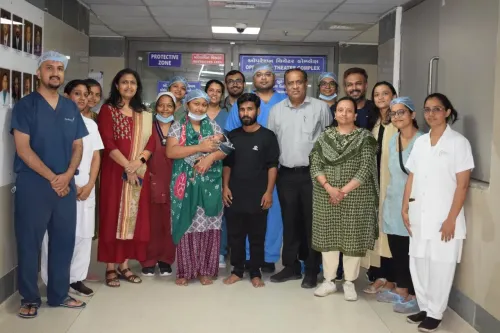
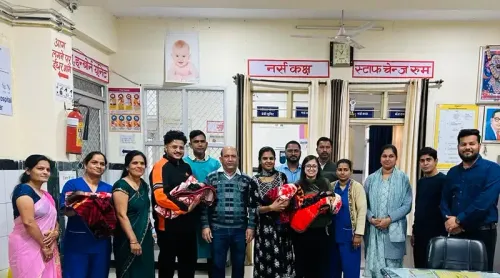
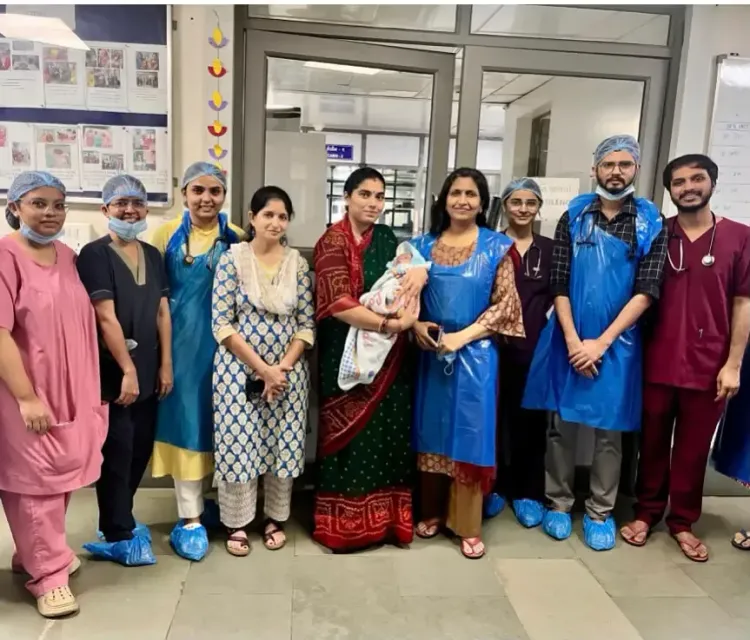
The NICU team — comprising paediatricians Charul Mehta, Anuya Chauhan, Mansi Shah, and Komal Chaudhary, supported by nursing staff — provided continuous monitoring and adjusted treatment at every stage based on clinical findings.
Civil Hospital paediatrician and NICU in-charge Charul Mehta noted that 'every moment is important in treating extremely low-birth-weight premature babies and newborns with severe infections,' adding that coordinated team efforts in respiratory and nutritional management were central to both recoveries.
Paediatrician Anuya Chauhan highlighted that selecting antibiotics based on culture sensitivity reports, maintaining respiratory stability, and ensuring adequate nutrition were critical components of care for the second infant.
What the Hospital Said
Ahmedabad Civil Hospital Medical Superintendent Rakesh Joshi attributed the outcomes to timely diagnosis, modern treatment protocols, and the sustained dedication of the medical teams. 'Both newborns had complex medical conditions,' Joshi said, adding that the children recovered fully and returned home after overcoming extremely critical conditions.
Notably, the treatment for both infants was provided at no cost to the families. According to the hospital, comparable prolonged intensive care at private hospitals could involve substantial expenses — underlining the role of public health infrastructure in delivering high-acuity neonatal care to families who may not otherwise afford it.
Significance for Neonatal Care in India
Extremely premature births at 26 weeks carry a high risk of mortality and long-term disability. Survival at this gestational age with no reported complications at discharge reflects both the advances in NICU technology and the importance of sustained, skilled nursing care. The use of Nirsevimab — a relatively recent monoclonal antibody targeting RSV — also signals that government hospitals in Gujarat are incorporating newer preventive interventions into their discharge protocols. The parents of both children expressed gratitude to the medical teams following their children's discharge.
Point of View
Alongside the successful management of a multidrug-resistant infection in a full-term newborn, challenges the widespread assumption that high-acuity neonatal care is exclusively the preserve of private hospitals. The use of Nirsevimab at discharge is also worth flagging: it suggests that at least some government tertiary centres in Gujarat are keeping pace with global preventive protocols. The bigger question is whether this represents a replicable model or an exceptional case — and whether India's district-level NICUs have the staffing and drug-access to match it.
NationPress
3 Oct 2026
Frequently Asked Questions
What happened at Ahmedabad Civil Hospital with the two newborns?
Two critically ill newborns — a 26-week premature baby weighing 1 kg and a full-term infant with a multidrug-resistant bacterial infection — were successfully treated at Ahmedabad Civil Hospital's NICU and discharged in healthy condition after up to 84 days of intensive care. Both treatments were provided free of charge.
How did the 26-week premature baby survive?
The baby was immediately admitted to the NICU after birth, received respiratory support and intravenous nutrition, and was gradually transitioned to mother's milk. By Day 81, the infant was breathing without supplemental oxygen and was discharged on Day 84 weighing 1.8 kg, having also received Nirsevimab for RSV protection.
What was the multidrug-resistant infection the second baby had?
Culture tests of the second baby's blood and cerebrospinal fluid confirmed a multidrug-resistant bacterial infection. The infant also developed a blood clot in the brain and seizures, requiring 8 days on a ventilator, 10 days of CPAP, and 6 days of High-Flow Nasal Cannula support before recovering.
Was the treatment at Ahmedabad Civil Hospital free?
Yes, both newborns received their entire course of treatment at no cost at Ahmedabad Civil Hospital. The hospital noted that comparable prolonged intensive neonatal care at private hospitals would typically involve substantial expenses.
Who led the NICU team that treated the newborns?
The NICU team was led by paediatrician and NICU in-charge Charul Mehta, along with Anuya Chauhan, Mansi Shah, and Komal Chaudhary, supported by nursing staff. Medical Superintendent Rakesh Joshi credited timely diagnosis and the dedicated efforts of the medical teams for the successful outcomes.