Kutch newborn survives bilateral choanal atresia after surgery at Ahmedabad Civil Hospital
Synopsis
A 2 kg newborn from Kutch — daughter of a daily-wage labourer — was born unable to breathe through her nose due to a blockage affecting roughly 1 in 5,000 births. Surgeons at Ahmedabad Civil Hospital performed a rare endoscopic procedure on a 12-day-old infant and saved her life, entirely free of cost. It is a story about what public healthcare can deliver when it works.
Key Takeaways
Baby Anmol , born on 1 May in Naliya, Kutch , was diagnosed with bilateral choanal atresia — both nasal passages blocked at birth.
She was transferred to Ahmedabad Civil Hospital's NICU on 8 May after treatment in Kutch and Bhuj failed to improve her condition.
Surgeons performed Endoscopic Transnasal Choanoplasty on 12 May , fully clearing the nasal airway through septatectomy.
The infant spent five days on ventilator support post-surgery before recovering fully; she is now breathing naturally and feeding on mother's milk.
Bilateral choanal atresia occurs in approximately 1 in 5,000 to 8,000 births and is more prevalent among female infants.
The entire treatment was provided free of cost at the government hospital, according to Minister of State for Health Praful Pansheriya .
A newborn girl from Kutch district who was born with bilateral choanal atresia — a rare congenital condition in which both nasal passages are blocked — has made a full recovery after a complex endoscopic surgery at Ahmedabad Civil Hospital, Gujarat health officials confirmed on Friday, 29 May. The infant, referred to as Baby Anmol, is now breathing naturally and feeding on mother's milk without any medical support.
How the Condition Was Discovered
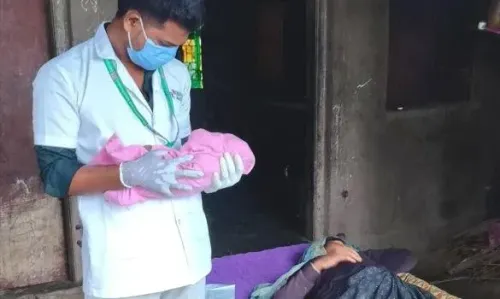
The baby was born on 1 May through normal delivery in Naliya town, Kutch, to the family of labourer Anmol Nod. She weighed 2 kg at birth and developed severe breathing difficulties almost immediately after delivery. After initial treatment at local hospitals, she was referred to Bhuj, where she received six days of intensive care without significant improvement.
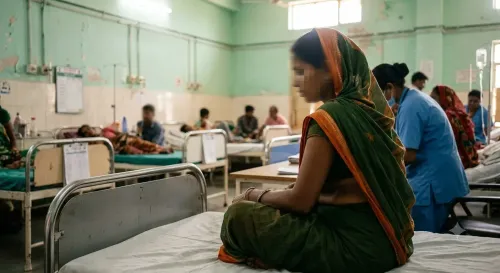
She was subsequently transferred to Ahmedabad Civil Hospital on 8 May and admitted to the Neonatal Intensive Care Unit (NICU) under Dr. Charul Mehta, Head of Unit of the Paediatric Department. Doctors grew suspicious of a nasal blockage when a Ryle's tube could not be passed through the infant's nose during examination.
'During examination, a Ryle's tube could not be passed through the nose, which raised suspicion of a blockage. A CT Scan-PNS (Paranasal Sinuses) later confirmed bilateral choanal atresia,' said Dr. Rakesh Joshi, Medical Superintendent of Civil Hospital and Head of the Paediatric Surgery Department. The baby was immediately placed on oxygen support through an oral tube following the diagnosis.
The Surgery and Post-Operative Care
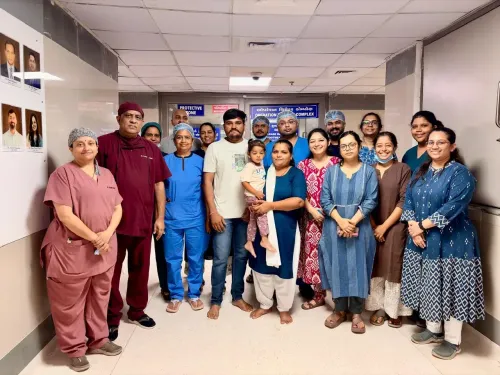
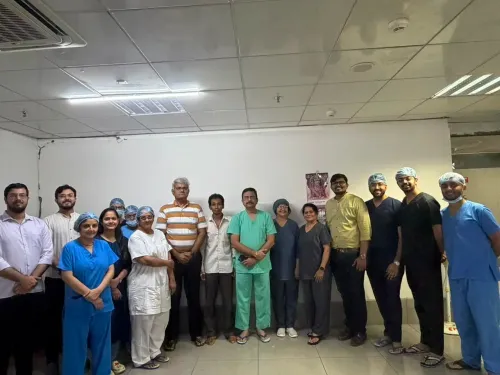
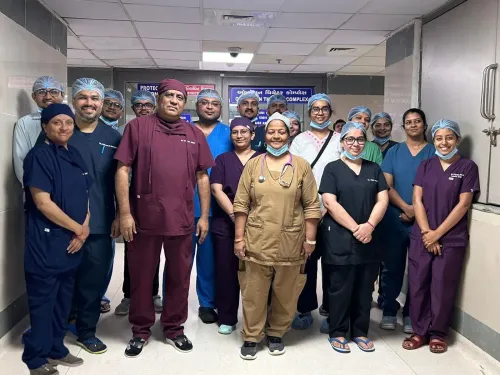
On 12 May, surgeons performed an Endoscopic Transnasal Choanoplasty — a highly delicate procedure in which the blocked nasal passage was cleared and the breathing pathway fully opened through septatectomy. Assistant Professor Dr. Mrunalini and her anaesthesia team managed the administration of anaesthesia, a particularly challenging task given the infant's age and fragile condition.
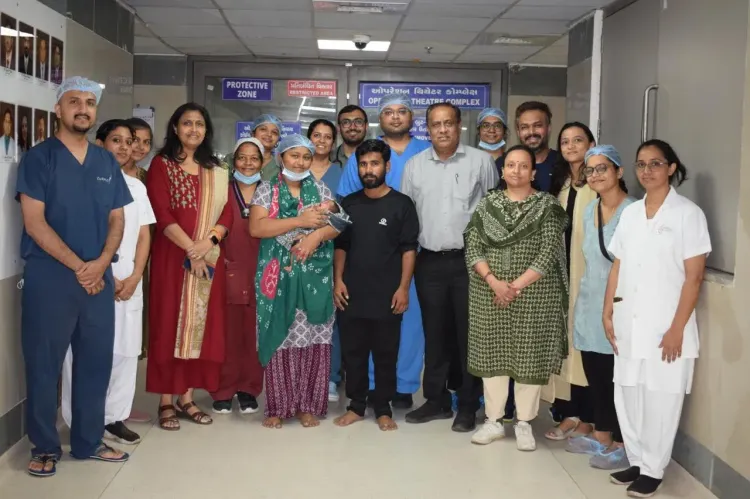
After surgery, Baby Anmol was moved back to the NICU, where she remained on ventilator support for five days. Dr. Charul Mehta, Dr. Komal Chaudhary, and Dr. Priyanka Gajjar closely monitored her recovery. On the fifth post-operative day, ventilator support was withdrawn and the nasal tubes were gradually removed. 'At present, Baby Anmol is completely healthy. She is breathing naturally through her nose without any support and is feeding properly on mother's milk,' Dr. Joshi confirmed.
What Is Bilateral Choanal Atresia
Bilateral choanal atresia is an extremely rare congenital defect, occurring in approximately one out of every 5,000 to 8,000 births, and is reportedly more common among female infants. Because newborns are obligate nasal breathers, a complete bilateral blockage constitutes a medical emergency — affected babies can take in only limited air through the mouth while crying, placing them at acute risk of severe oxygen deficiency.
This is the condition's particular danger: unlike older children or adults, newborns instinctively breathe through the nose and cannot easily compensate through the mouth, making early diagnosis and rapid surgical intervention critical to survival.
Government Response and Broader Significance
Minister of State for Health Praful Pansheriya said the case demonstrated that Gujarat's government-run civil hospitals are equipped to deliver advanced tertiary care at no cost to economically weaker patients. 'Such highly complex and sensitive surgeries, which cost lakhs of rupees in private hospitals, have been performed completely free of cost at Ahmedabad Civil Hospital,' Pansheriya said.
The minister credited the outcome to the hospital's advanced technology, skilled medical staff, and multidisciplinary coordination. The case is notable because the family of a daily-wage labourer accessed a level of specialised neonatal surgical care that would otherwise have been financially out of reach. As Gujarat's public health infrastructure faces ongoing scrutiny over capacity and quality, this outcome offers a rare data point in its favour.
Point of View
At no cost to a labourer's family, is the story mainstream coverage will underplay. Gujarat's civil hospitals have faced persistent criticism over overcrowding and infrastructure gaps; this case does not resolve those concerns, but it does show that specialised neonatal surgical capability exists within the public system. The harder question is whether such outcomes are replicable and systematic, or whether they depend on the presence of a particular set of skilled individuals on a given day.
NationPress
26 Sept 2026
Frequently Asked Questions
What is bilateral choanal atresia?
Bilateral choanal atresia is a rare congenital condition in which both nasal passages are blocked from the back, preventing a newborn from breathing through the nose. It occurs in approximately 1 in 5,000 to 8,000 births and is considered a medical emergency because newborns are instinctive nasal breathers and cannot easily compensate through the mouth.
What surgery was performed on the Kutch newborn?
Surgeons at Ahmedabad Civil Hospital performed an Endoscopic Transnasal Choanoplasty on 12 May, clearing the blocked nasal passages and fully opening the breathing pathway through a procedure called septatectomy. The surgery was conducted when the infant was approximately 12 days old.
How is Baby Anmol doing now?
Baby Anmol has made a full recovery. After five days on ventilator support following surgery, she was weaned off the ventilator and nasal tubes were gradually removed. She is currently breathing naturally through her nose and feeding on mother's milk without any medical support, according to Dr. Rakesh Joshi.
Was the treatment free of cost?
Yes. Minister of State for Health Praful Pansheriya confirmed that the entire treatment, including the complex surgery, was provided free of cost at Ahmedabad Civil Hospital. He noted that comparable procedures at private hospitals would cost lakhs of rupees.
Why is this condition particularly dangerous in newborns?
Newborns are obligate nasal breathers, meaning they instinctively breathe through the nose rather than the mouth. When both nasal passages are blocked, as in bilateral choanal atresia, the infant can only take in limited air while crying, creating an immediate risk of severe oxygen deficiency and making rapid diagnosis and surgical intervention essential.