Haryana to pilot ICMR Verbal Autopsy project in Rohtak, covering 5,000 deaths
Synopsis
Haryana is launching a first-of-its-kind Verbal Autopsy pilot in Rohtak — an ICMR and AIIMS-backed project that will systematically track the causes of 5,000 deaths over eight months using mobile-based interviews. In a country where a large share of deaths never receive a medically verified cause, this pilot could become the template for closing one of India's most consequential data gaps in public health.
Key Takeaways
Haryana will pilot an ICMR-funded Verbal Autopsy project in Rohtak district , announced on 6 October 2026 .
The pilot will cover approximately 5,000 deaths over an eight-month implementation period.
The initiative is led by AIIMS, New Delhi in collaboration with the Haryana Health Department .
Community Health Officers and Medical Officers will conduct and review interviews via a mobile-based application .
An honorarium of ₹100 per completed Verbal Autopsy has been earmarked for each CHO and MO involved.
The project aims to generate reliable cause-of-death data to support evidence-based health planning at the district level.
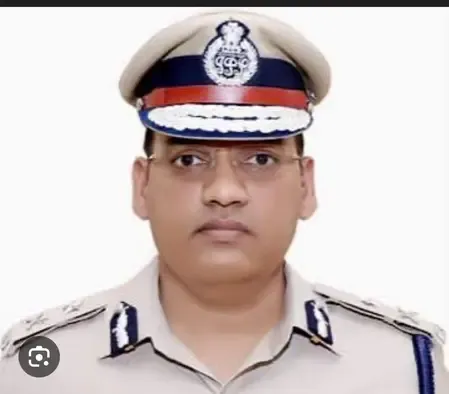
The Haryana government will launch a pilot of an Indian Council of Medical Research (ICMR)-funded Verbal Autopsy project in Rohtak district to strengthen the accuracy and availability of cause-of-death data, Additional Chief Secretary (Health and Family Welfare) Sumita Misra announced on Tuesday, 6 October 2026. The initiative is part of a broader national effort to plug critical gaps in mortality reporting at the district level.
Why Rohtak Was Selected
Rohtak has been designated as the pilot district under an AIIMS, New Delhi-led initiative implemented in collaboration with the state Health Department. The project falls under the ICMR programme titled 'Implementation and Scaling Up of a Model to Achieve Universal Coverage with Physician-Ascertained Cause of Death at the District Level in India'. The pilot is expected to run for approximately eight months through the existing health system, in coordination with the Rohtak district health administration.
How the Project Works
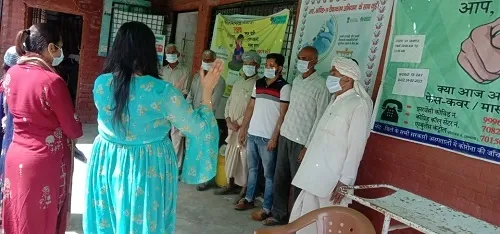
Designated health-system personnel — specifically Community Health Officers (CHOs) and Medical Officers (MOs) — will identify eligible deaths and conduct Verbal Autopsy interviews using a prescribed mobile-based application. The interviews systematically capture information on the circumstances and likely causes of death in cases where no formal medical certification exists. A Medical Officer will subsequently review the collected data and assign the official cause of death following a prescribed process.
The project will cover approximately 5,000 deaths during its implementation period. A fully digital workflow will be maintained throughout, with all personnel receiving training on both the methodology and the digital process before deployment.
Incentives for Health Workers
To encourage participation and quality documentation, the project has earmarked an honorarium of ₹100 per completed Verbal Autopsy for the Community Health Officer conducting the interview, and a separate ₹100 for the Medical Officer responsible for reviewing the information and assigning the cause of death. This incentive structure is designed to institutionalise accountability at each step of the data-capture process.
Why It Matters for Public Health
Reliable cause-of-death data is foundational to health planning, yet a significant proportion of deaths in India — particularly those occurring outside hospitals — go unregistered or are recorded without a medically verified cause. The Verbal Autopsy method, which uses structured interviews with family members or caregivers, is globally recognised as a validated tool for generating population-level mortality statistics in low- and middle-income settings.
According to Misra, more systematic cause-of-death information will support evidence-based prioritisation of public health interventions at the district level. The initiative also aims to build the long-term capacity of the health workforce in documenting and reporting mortality data. If the Rohtak pilot demonstrates scalable results, the model could inform a wider rollout across Haryana and other states participating in the ICMR-AIIMS programme.
Point of View
Rendering mortality-driven policymaking largely guesswork. The Rohtak pilot is modest in scale but significant in design: tying a structured mobile-based workflow to existing health personnel addresses both the data-capture gap and the workforce-capacity deficit simultaneously. The ₹100 honorarium is small, but the accountability architecture — CHO interview, MO review, digital audit trail — is more rigorous than most routine reporting. The real test will be whether the AIIMS-ICMR model can survive contact with district-level implementation realities, and whether Haryana's health administration follows through on using the data for actual planning rather than archiving it.
NationPress
7 Oct 2026
Frequently Asked Questions
What is the Verbal Autopsy project being launched in Rohtak?
It is an ICMR-funded pilot project led by AIIMS, New Delhi, in which health workers will conduct structured interviews to determine the likely causes of deaths that were not medically certified. The Rohtak pilot will cover approximately 5,000 deaths over eight months using a mobile-based application.
Why has Rohtak been selected for this pilot?
Rohtak has been chosen as the pilot district under the AIIMS-led ICMR initiative to test a scalable model for physician-ascertained cause-of-death reporting at the district level. The selection reflects Rohtak's existing health system infrastructure and its suitability for coordinated implementation with the state Health Department.
Who will carry out the Verbal Autopsy interviews in Haryana?
Community Health Officers will conduct the Verbal Autopsy interviews using a prescribed mobile application, while Medical Officers will review the collected information and officially assign the cause of death. Both categories of personnel will receive training before deployment.
What incentives are provided to health workers involved in the project?
An honorarium of ₹100 per completed Verbal Autopsy has been earmarked for the Community Health Officer conducting the interview, and a separate ₹100 for the Medical Officer who reviews the data and assigns the cause of death.
Why does cause-of-death data matter for public health planning?
Reliable cause-of-death information helps health authorities understand mortality patterns at the district level and direct resources toward the most prevalent health threats. In India, a significant share of deaths — particularly those outside hospitals — go unrecorded or lack a verified cause, limiting the evidence base for public health interventions.