Prof Arun Kumarendu Singh appointed West Bengal Health Advisor for maternal care
Synopsis
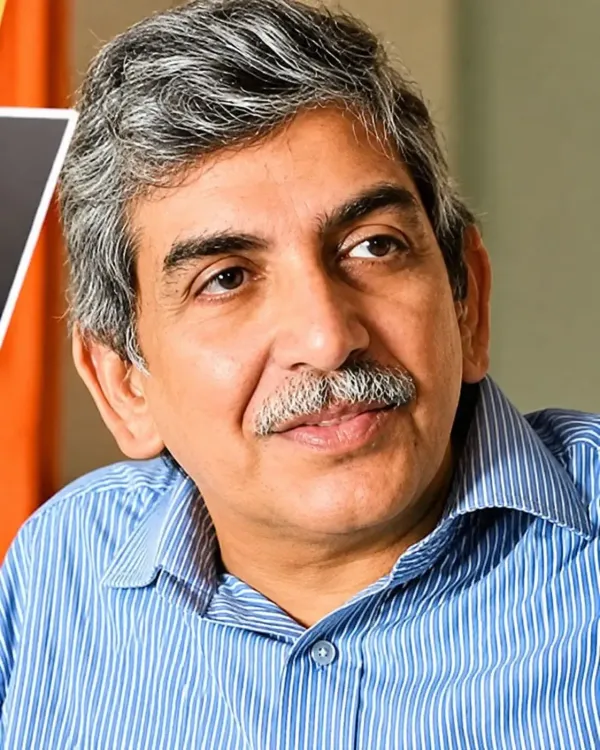
The 'Father of SNCUs in India' is now shaping West Bengal's maternal and child health policy. IIT Kharagpur paediatrics head Prof Arun Kumarendu Singh — architect of the Purulia Model and a key designer of the RBSK — has been appointed state health advisor for two years, in a move that also spotlights IIT Kharagpur's emerging Medical School as a serious clinical force.
Key Takeaways
Prof Arun Kumarendu Singh of IIT Kharagpur's School of Medicine appointed Advisor to the West Bengal Department of Health and Family Welfare for a two-year term .
Appointment focuses on strengthening maternal and child healthcare in West Bengal.
Prof Singh is widely recognised as the 'Father of Sick Newborn Care Units (SNCUs)' in India and architect of the Purulia Model of decentralised neonatal care.
He contributed to the design of the Rashtriya Bal Swasthya Karyakram (RBSK) and the Mother and Child Protection Card at the national level.
Appointed alongside obstetrics and gynaecology specialist Arup Kumar Maji , signalling a specialist-led advisory structure for the state.
IIT Kharagpur Director Prof Suman Chakraborty described the appointment as 'a fitting recognition' of Prof Singh's exceptional stature.
Professor Arun Kumarendu Singh, full-time Professor and Head of Paediatrics at IIT Kharagpur's School of Medicine, has been appointed Advisor to the Department of Health and Family Welfare, Government of West Bengal, for a two-year term. The appointment, announced on 10 November 2026, centres on strengthening maternal and child healthcare across the state.
Who Is Professor Singh
Widely recognised as the 'Father of Sick Newborn Care Units (SNCUs)' in India, Professor Singh is credited with architecting much of the country's modern neonatal healthcare infrastructure. His contributions span the development and scaling of specialised newborn care systems that have made life-saving neonatal services accessible to vulnerable infants in underserved communities.
His acclaimed Purulia Model demonstrated that high-quality neonatal care could be delivered through decentralised, affordable, and compassionate systems — a proof of concept that has influenced replication efforts across states. He also played a foundational role in establishing human milk banking and early intervention facilities in India.
Contributions to National Health Policy
Professor Singh's influence extends well beyond clinical practice. As a key technical leader associated with the Ministry of Health and Family Welfare, Government of India, he contributed to the design of the Rashtriya Bal Swasthya Karyakram (RBSK) — including its large-scale architecture for screening and early intervention covering childhood diseases, congenital conditions, nutritional deficiencies, and developmental delays.
He also contributed to the development of the Mother and Child Protection Card, a tool for maternal and child healthcare monitoring that reflects his commitment to preventive and inclusive health systems. Prior to IIT Kharagpur, he held senior academic and clinical leadership roles at IPGMER and SSKM Hospital, Kolkata, and AIIMS Jodhpur.
What the Appointment Signals for West Bengal
The Government of West Bengal has stated that the appointment of Professor Singh, alongside obstetrics and gynaecology specialist Arup Kumar Maji, reflects the importance of experienced clinical leadership in advancing the state's maternal and child healthcare priorities. The dual appointment suggests a deliberate effort to infuse specialist medical expertise directly into policy planning.
This comes amid persistent challenges in neonatal and maternal health outcomes in several districts of West Bengal, where the kind of decentralised care models Professor Singh pioneered could yield measurable improvements.
IIT Kharagpur's Medical School Ambitions
For IIT Kharagpur, the advisory role represents more than individual recognition — it validates the calibre of full-time clinical faculty the institute has assembled within its Medical School. The institution is being developed as an interdisciplinary model combining medical education and clinical services with established strengths in engineering, artificial intelligence, biomedical technologies, computational sciences, and translational research.
Professor Suman Chakraborty, Director of IIT Kharagpur, said: 'We are exceptionally proud that Prof Arun Kumarendu Singh, one of the pioneering architects of India's newborn healthcare revolution, is a full-time Professor and Head of Paediatrics at IIT Kharagpur's Medical School. His work has transformed the way neonatal healthcare reaches vulnerable communities, and his contributions to national child-health programmes have created an enduring legacy of clinical excellence and public service.'
Professor Chakraborty added that the advisory appointment was 'a fitting recognition of his exceptional stature' and 'a matter of great pride for IIT Kharagpur that a member of our full-time medical faculty has been entrusted with contributing to such an important public-health mission.'
The institute envisages leveraging Professor Singh's neonatal expertise to advance innovations in high-risk pregnancy monitoring, newborn intensive care, AI-enabled clinical decision support, remote healthcare delivery, and affordable diagnostic technologies. As his two-year advisory tenure gets under way, the convergence between IIT Kharagpur's technological capabilities and West Bengal's public health system will be closely watched.
Point of View
With no publicly stated deliverables, will translate into structural change in maternal and neonatal outcomes or remain a symbolic gesture. For IIT Kharagpur, the appointment is also a soft-power move — positioning its nascent Medical School as a credible partner in public health, not merely a teaching institution.
NationPress
11 Nov 2026
Frequently Asked Questions
Who is Prof Arun Kumarendu Singh and why is his appointment significant?
Prof Arun Kumarendu Singh is a senior paediatrician and full-time Head of Paediatrics at IIT Kharagpur's School of Medicine, widely recognised as the 'Father of Sick Newborn Care Units (SNCUs)' in India. His appointment as Advisor to the West Bengal Department of Health and Family Welfare brings nationally recognised neonatal and child health expertise directly into state health policy planning.
What is the Purulia Model associated with Prof Singh?
The Purulia Model is Prof Singh's acclaimed framework demonstrating that high-quality neonatal care can be delivered through decentralised, affordable, and compassionate healthcare systems. It served as a proof of concept for scaling specialised newborn care beyond large urban hospitals to underserved communities.
What is the Rashtriya Bal Swasthya Karyakram (RBSK) and what was Prof Singh's role?
The Rashtriya Bal Swasthya Karyakram (RBSK) is a national child health screening and early intervention programme run by the Ministry of Health and Family Welfare. Prof Singh was a key technical contributor to its large-scale architecture, covering screening for childhood diseases, congenital conditions, nutritional deficiencies, and developmental delays.
How long is Prof Singh's advisory tenure with the West Bengal government?
Prof Singh has been appointed for a two-year term as Advisor to the West Bengal Department of Health and Family Welfare, with a specific focus on maternal and child healthcare. He has been appointed alongside obstetrics and gynaecology specialist Arup Kumar Maji.
What does this appointment mean for IIT Kharagpur's Medical School?
IIT Kharagpur views the appointment as validation of the clinical expertise being assembled within its emerging Medical School, which combines medical education with the institute's strengths in AI, biomedical technology, and engineering. The advisory role is also expected to create pathways for collaboration between the institute's healthcare innovations and West Bengal's public health priorities.