India cuts TB deaths 38% since 2015, beats global average: WHO report
Synopsis
India has cut TB deaths by 38% since 2015 — outpacing the global average — and achieved a 94% treatment success rate, according to the WHO Global TB Report 2026. But the milestone comes with a stark asterisk: India still accounts for a quarter of all TB cases worldwide and remains among four countries driving more than half of global MDR-TB burden.
Key Takeaways
India reduced TB mortality by 38 per cent between 2015 and 2025 , surpassing the global average decline of 35 per cent , per the WHO Global Tuberculosis Report 2026 .
TB mortality rate fell from 280 deaths per million in 2015 to 180 deaths per million in 2025.
India's treatment success rate stands at 94 per cent .
Under the TB Mukt Bharat Abhiyaan , over 25 crore people screened, 48.64 lakh cases detected including nearly 15 lakh asymptomatic cases.
India still accounts for 25 per cent of global TB cases and remains among four countries driving over 50 per cent of global MDR-TB cases.
WHO will separately update India's TB profile after reviewing DLSS data with ICMR and India's Central TB Division .
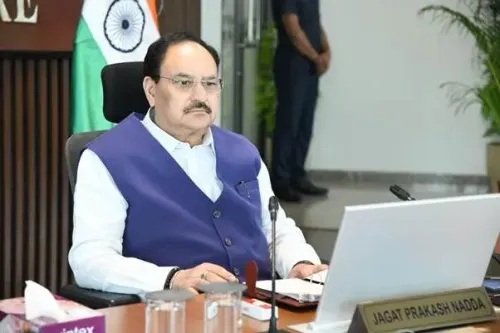
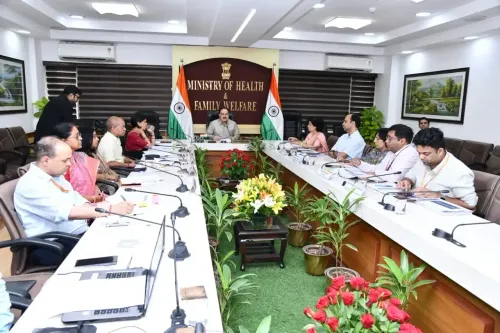
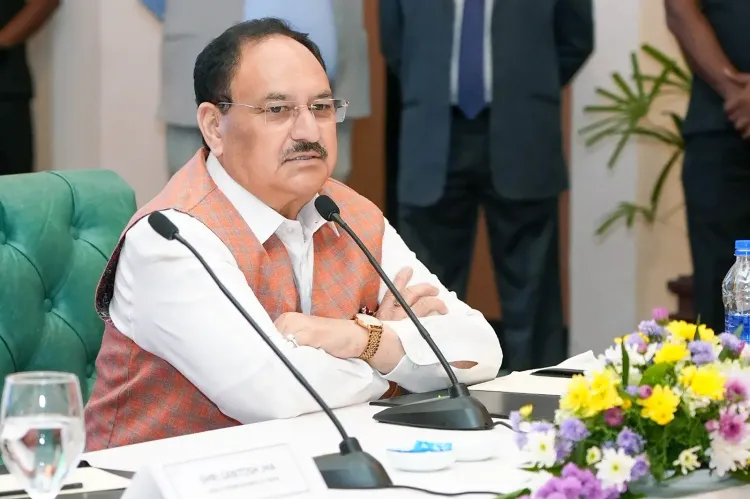
Union Health Minister JP Nadda on Friday, 13 November 2026, cited the WHO Global Tuberculosis Report 2026 to highlight that India has reduced tuberculosis-related deaths by 38 per cent since 2015, outpacing the global average decline of 35 per cent over the same period. The report also credited India with a 94 per cent treatment success rate — a figure that health officials say reflects a decade of intensified public health investment.
What the WHO Data Shows
According to the WHO Global Tuberculosis Report 2026, India's estimated TB mortality rate dropped from 280 deaths per million people in 2015 to 180 deaths per million in 2025. This decline is steeper than the global trajectory and comes amid a broader push to eliminate TB from India by 2025 — a target the government had set ahead of the UN Sustainable Development Goal deadline of 2030.
However, the same report flags a significant caveat: India still accounts for 25 per cent of all global TB cases in 2025, underscoring that while mortality is falling, the burden of disease remains disproportionately concentrated in the country. India also remains among four countries that together account for more than 50 per cent of global multidrug-resistant (MDR) TB cases — though the WHO and the Indian government both confirmed that MDR-TB incidence has been gradually declining.
Key Programmes Driving the Decline
Nadda, in a post on X, attributed the progress to the TB Mukt Bharat Abhiyaan and several technology-driven initiatives. Under the programme, more than 25 crore people have been covered under intensified screening, over 11 crore chest X-rays have been conducted, and more than 3 crore molecular tests carried out. A total of 48.64 lakh TB cases have been detected — including nearly 15 lakh asymptomatic cases — enabling early treatment before the disease progresses.
'From AI-enabled diagnostics to nutritional support under Ni-kshay Poshan Yojana and the dedicated efforts of Ni-kshay Mitras, we are strengthening every aspect of TB care,' Nadda said. He added that these achievements 'reinforce the government's resolve to ensure that no TB patient is left behind.'
What the Government Said
Nadda framed the gains as a product of collective effort under Prime Minister Narendra Modi's leadership, describing India's TB fight as a 'nationwide Jan Andolan, powered by technology, community participation and patient-centric care.' He said the government would continue moving towards a 'TB-Mukt Bharat' through what he termed 'Jan Bhagidari' — citizen participation — and institutional commitment.
Limitations and What Comes Next
The WHO noted that India's TB profile will be separately reviewed and updated after it analyses district-level sentinel surveillance (DLSS) data in collaboration with India's Central TB Division and the Indian Council of Medical Research (ICMR). That review could refine current estimates — in either direction. Critics and global health researchers have previously noted that case detection rates and notification data can understate true burden in countries with large informal healthcare sectors. The continuing MDR-TB challenge and India's outsized share of global cases suggest the road to elimination remains long, even as the mortality trend points in the right direction.
Point of View
Which means the hardest and most expensive cases remain unresolved. The WHO's pending DLSS review is worth watching: district-level data has historically surfaced under-counted cases in high-burden states. A government that leads with the success rate owes the public equal clarity on the MDR pipeline and the gap between detected and estimated cases.
NationPress
14 Nov 2026
Frequently Asked Questions
What does the WHO Global TB Report 2026 say about India?
The WHO Global Tuberculosis Report 2026 says India cut TB-related deaths by 38 per cent between 2015 and 2025, outpacing the global average decline of 35 per cent. India's TB mortality rate fell from 280 deaths per million people in 2015 to 180 deaths per million in 2025, with a 94 per cent treatment success rate.
What is the TB Mukt Bharat Abhiyaan?
TB Mukt Bharat Abhiyaan is India's national campaign to eliminate tuberculosis. Under this programme, over 25 crore people have been screened, more than 11 crore chest X-rays conducted, over 3 crore molecular tests carried out, and 48.64 lakh TB cases detected — including nearly 15 lakh asymptomatic cases.
Does India still have a high TB burden despite the decline?
Yes. Despite the mortality reduction, India accounted for 25 per cent of all global TB cases in 2025 and remains among four countries responsible for more than 50 per cent of global multidrug-resistant TB cases. Both the WHO and the government acknowledge that MDR-TB incidence has been gradually declining.
What is Ni-kshay Poshan Yojana?
Ni-kshay Poshan Yojana is a government scheme that provides nutritional support to TB patients in India. Health Minister JP Nadda cited it alongside AI-enabled diagnostics and community volunteers called Ni-kshay Mitras as key pillars of India's TB care strategy.
What happens next for India's TB data review?
The WHO will separately review and update India's TB profile after analysing district-level sentinel surveillance data in collaboration with India's Central TB Division and the Indian Council of Medical Research. This review could refine current case and mortality estimates.