Karnataka SIT grills fake pharma kingpin Veeresh Kumar Jain, uncovers ₹15 crore network

Synopsis
A ₹15 crore-a-year counterfeit medicine network allegedly run by Veeresh Kumar Jain supplied fake tablets, syrups, and drugs to over 80 medical shops and private hospitals across Karnataka — including in Bengaluru. With an international label-sourcing link, multi-state raids across six states, and patient safety at risk, Karnataka's SIT is now racing to map the full depth of the supply chain.
Key Takeaways
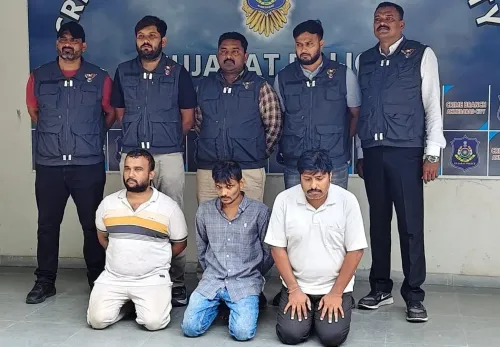
Veeresh Kumar Jain , alleged kingpin of a counterfeit pharmaceuticals racket, was taken into custody on Sunday, 14 September 2026 following raids on his properties.
The network allegedly supplied fake tablets, syrups, and other medicines to more than 80 medical shops and private hospitals across Karnataka.
Investigators estimate the racket's annual turnover at more than ₹15 crore .
The SIT and Drugs Control Department conducted raids at 10 locations across six states — Karnataka, Haryana, Maharashtra, Tamil Nadu, Himachal Pradesh, and Telangana — involving 80–100 officials .
The investigation reportedly uncovered an international connection , with counterfeit labels allegedly sourced from abroad.
The racket was first unearthed approximately two weeks ago in Dodderi, Ramanagara district , on the outskirts of Bengaluru.
The Karnataka Special Investigation Team (SIT) is questioning Veeresh Kumar Jain, the alleged kingpin of a counterfeit pharmaceuticals racket, and has established that he reportedly ran a network supplying fake tablets, syrups, and other medicines to more than 80 medical shops and private hospitals across the state. Jain was taken into custody on Sunday, 14 September 2026, following raids on his properties, and investigators estimate the racket generated an annual turnover of more than ₹15 crore.
How the Racket Allegedly Operated
According to investigators, Jain allegedly directed an associate identified as Prashant and others in managing day-to-day operations of the counterfeit medicine supply chain. The network reportedly sourced medicines, repackaged them, and distributed the spurious products to unsuspecting medical shops and private hospitals. Counterfeit medicines were allegedly supplied to several outlets in Bengaluru, raising serious concerns over patient safety — particularly for those who may have already consumed the spurious drugs.
The investigation traces the origin of the racket to a facility unearthed roughly two weeks ago in Dodderi on the outskirts of Bengaluru in Ramanagara district. One of the more alarming findings, according to investigators, is a reported international connection: counterfeit labels were allegedly sourced from foreign locations before being applied to the repackaged medicines.
Multi-State Raids Across Six States
In a coordinated operation, the SIT and the Drugs Control Department conducted raids at 10 locations spanning Karnataka, Haryana, Maharashtra, Tamil Nadu, Himachal Pradesh, and Telangana on Friday. Approximately 80 to 100 officials and staff members took part in the searches, targeting offices, premises, and properties linked to companies allegedly involved in manufacturing, repackaging, and supplying counterfeit medicines.
In Bengaluru, a pharmaceutical company's premises at Minerva Circle near Lalbagh was searched as part of the probe. Officials are currently examining medicines allegedly sourced from multiple locations and subsequently repackaged or routed through the distribution network.
Financial Trail and Wider Network Under Scrutiny
The SIT is pressing Jain for details on financial transactions and the identities of other individuals embedded in the racket. Investigators are working to identify additional participants based on disclosures made during his questioning. The probe is examining the full supply chain — covering the sources of counterfeit medicines, manufacturing and repackaging facilities, and the end-point distributors, including shops and hospitals that allegedly received the supplies.
This is a developing investigation, and the full scale of the network — including the role of private hospitals that may have knowingly or unknowingly stocked counterfeit medicines — is yet to be determined.
Implications for Public Health
The alleged distribution of fake medicines to more than 80 medical outlets across Karnataka raises acute public health concerns. Counterfeit pharmaceuticals can be ineffective at best and actively harmful at worst, particularly for patients managing chronic or acute conditions. Health officials have not yet issued a public recall or advisory, but the SIT's findings are expected to inform regulatory action by the Drugs Control Department. The case is being closely watched as a test of how swiftly the state's health and law enforcement apparatus can contain a supply-chain breach of this scale.
Point of View
And whether hospitals that dispensed these medicines exercised due diligence. The SIT's multi-state sweep is the right instinct, but accountability cannot stop at the kingpin — the licensed outlets that allegedly stocked counterfeit drugs without verification need to answer as well.
NationPress
14 Sept 2026
Frequently Asked Questions
Who is Veeresh Kumar Jain and what is he accused of?
Veeresh Kumar Jain is the alleged kingpin of a counterfeit pharmaceuticals racket in Karnataka, arrested on Sunday, 14 September 2026. He is accused of directing a network that manufactured, repackaged, and supplied fake tablets, syrups, and other medicines to over 80 medical shops and private hospitals across the state, with the racket reportedly turning over more than ₹15 crore annually.
How many medical outlets were allegedly supplied with fake medicines?
Investigators suspect counterfeit medicines were distributed to more than 80 medical shops and private hospitals across Karnataka, including several outlets in Bengaluru. The full extent of distribution is still being determined as the SIT continues questioning Jain.
Where were the SIT raids conducted and how large was the operation?
The SIT and Drugs Control Department conducted raids at 10 locations across six states — Karnataka, Haryana, Maharashtra, Tamil Nadu, Himachal Pradesh, and Telangana — on Friday. Around 80 to 100 officials participated in the searches targeting offices, properties, and premises linked to companies involved in the alleged counterfeit network.
Is there an international connection to the fake medicines racket?
Yes, according to investigators, the probe has reportedly revealed that counterfeit labels were allegedly sourced from foreign locations before being applied to repackaged medicines. The SIT is working to trace the international supply chain as part of the broader investigation.
Where did the fake pharmaceuticals racket originate?
The racket was first unearthed approximately two weeks before the current arrests at a facility in Dodderi, on the outskirts of Bengaluru in Ramanagara district. The current phase of the investigation — including multi-state raids and Jain's arrest — is a continuation of that initial discovery.