Kerala HC urges Centre to examine Section 100 patent powers for cancer drugs

Synopsis
A cancer patient's 2022 petition — filed before their death — has prompted the Kerala High Court to ask the Centre whether a rarely-used patent provision, Section 100, could be invoked to make life-saving cancer drugs like Ribociclib, priced at nearly ₹79,000 a month, accessible to ordinary patients. The court's push could set a precedent for government intervention in patented drug pricing across India.
Key Takeaways
The Kerala High Court on 28 September 2026 asked the Centre to examine invoking Section 100 of the Patents Act for affordable access to patented life-saving drugs.
Justice Harisankar V.
Menon noted that government intervention is a legitimate policy option where medicines are priced beyond patients' reach.
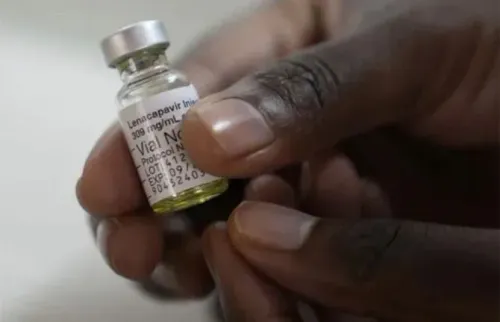
The case involved Ribociclib (made by Novartis ), a patented breast cancer drug priced at around ₹78,468.75 per month in 2022.
Experts, including the Drugs Controller General of India , confirmed that Ribociclib and the cheaper off-patent drug Palbociclib are not interchangeable.
The original petitioner, a cancer patient, died in September 2022 ; the court continued hearing the matter on grounds of broader public interest.
The Centre has been asked to collect affordability data and consider intervention across similar cases involving life-saving patented medicines.
The Kerala High Court on Monday, 28 September 2026, asked the Centre to examine whether its powers under Section 100 of the Patents Act could be invoked to improve patient access to costly patented life-saving medicines, particularly those priced beyond the reach of ordinary patients. The directive came from Justice Harisankar V. Menon, who observed that government intervention could be considered where medicines were being sold at exorbitant prices.
What Section 100 of the Patents Act Allows
Section 100 of the Patents Act empowers the Central government to authorise the use of a patented invention for government purposes without requiring the consent of the patent holder. Justice Menon acknowledged that invoking this provision is ultimately a policy matter, but noted it remains a legitimate tool where affordability is demonstrably absent.
The court stopped short of directing the Centre to invoke the provision in the immediate case. Instead, it asked the government to collect relevant data on drug affordability and consider intervention wherever necessary — both in the present matter and in future cases involving life-saving medicines.
The Drugs at the Centre of the Case
The proceedings centred on two breast cancer treatments: Ribociclib, a patented drug manufactured by Novartis, and Palbociclib, another breast cancer drug whose patent has expired and is available at a significantly lower price. Expert opinions from cancer treatment institutions and the Drugs Controller General of India (DCGI) confirmed that the two medicines cannot be treated as interchangeable, limiting patients' ability to simply switch to the cheaper option.
Origins of the Case and the Petitioner's Death
The case originated from a petition filed in 2022 by a cancer patient seeking affordable access to Ribociclib, which was then priced at approximately ₹78,468.75 per month. The petitioner passed away in September 2022, but the High Court chose to continue examining the broader legal and policy questions raised, recognising their significance for cancer patients across the country.
Broader Implications for Drug Access in India
The court's observations carry significant weight beyond this single case. India has a long-standing legal framework — including Section 3(d) of the Patents Act and compulsory licensing provisions — aimed at balancing intellectual property rights with public health imperatives. This comes amid ongoing debates about the affordability of patented oncology drugs, where monthly treatment costs frequently run into tens of thousands of rupees, placing them out of reach for most patients. Notably, Section 100, a government-use provision, has rarely been invoked in India, making the court's suggestion particularly pointed. The Centre's response to the court's direction is now awaited.
Point of View
Removing the usual escape valve of therapeutic substitution. If the Centre were to act on the court's direction, it would mark the first significant use of Section 100 in the oncology space and could trigger pushback from multinational pharmaceutical companies — and a broader renegotiation of how India balances its TRIPS obligations with its constitutional right to health.
NationPress
29 Sept 2026
Frequently Asked Questions
What is Section 100 of the Patents Act?
Section 100 of the Indian Patents Act empowers the Central government to authorise the use of a patented invention for government purposes without the patent holder's consent. It is a rarely invoked provision that could, in principle, be used to produce or procure patented medicines at lower cost for public health needs.
Which drugs are at the centre of the Kerala High Court case?
The case involves Ribociclib, a patented breast cancer drug manufactured by Novartis, and Palbociclib, an off-patent breast cancer drug available at a lower price. Experts confirmed the two are not interchangeable, meaning patients cannot simply switch to the cheaper alternative.
Why did the case continue after the petitioner died?
The original petitioner, a cancer patient seeking affordable access to Ribociclib, passed away in September 2022. The Kerala High Court chose to continue hearing the matter because the legal and policy questions it raised — about drug affordability and government patent powers — are of broader public interest.
Did the court order the Centre to invoke Section 100?
No. The court did not direct the Centre to invoke Section 100 in this specific case. It asked the government to collect data on drug affordability and consider invoking the provision wherever intervention is found necessary, both in this case and in future matters involving life-saving medicines.
What is the significance of this ruling for cancer patients in India?
The ruling signals judicial openness to government intervention in patented drug pricing, particularly for life-saving oncology treatments. If the Centre acts on the court's direction, it could reduce costs for patients paying tens of thousands of rupees per month for patented cancer drugs that have no affordable equivalent.