Kolkata air quality hits danger zone before Kali Puja, PM2.5 crosses 350
Synopsis
Even before the first firecracker of Kali Puja 2026 was officially lit, Kolkata and Howrah were already choking — PM2.5 at 350 in Ghusuri, red zones spreading across Salt Lake, Jadavpur, and Ballygunge. With humidity set to rise and rule violations already rampant, the festival night could push air quality to its worst levels of the year.
Key Takeaways
PM2.5 in Ghusuri, Howrah reached 350 on the eve of Kali Puja 2026 — the highest recorded in the monitoring window.
Other severely affected areas: Salt Lake (336), Jadavpur (326), Ballygunge (321), Belur (313).
Toxic firecracker smoke has been accumulating since Friday, 5 November , with levels rising sharply by Saturday night .
The West Bengal government has restricted firecracker use to 8 pm–10 pm , but compliance has reportedly been poor.
Environmentalist Somendra Mohan Ghosh attributed the spike to rule violations and unfavourable early-winter meteorology trapping pollutants near ground level.
Officials warn the situation may worsen if atmospheric moisture rises further on Kali Puja night .
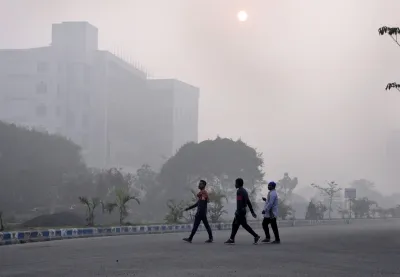
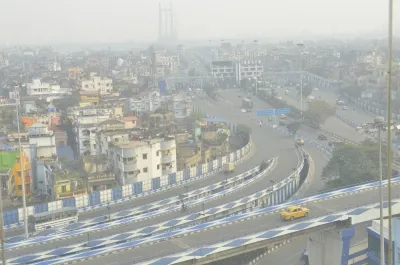
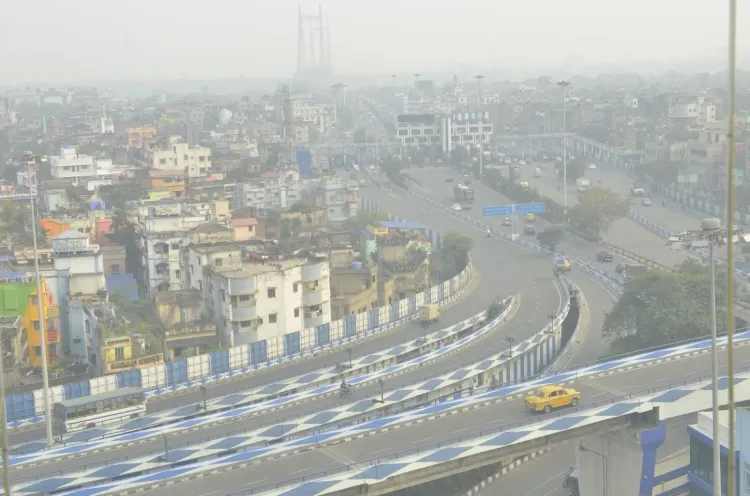
Air quality in Kolkata and Howrah has deteriorated to alarming levels on the eve of Kali Puja 2026, with PM2.5 readings breaching 350 in some areas and multiple localities turning 'red' on the pollution map, according to officials. The spike, driven by premature and unregulated firecracker use, has raised fears that air quality could worsen further on the night of the festival itself.
Key Pollution Readings
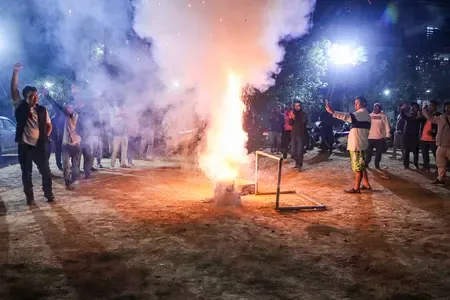
Monitoring stations across the two cities recorded severely elevated fine particulate matter levels over the 8 November weekend. Ghusuri in Howrah logged the highest PM2.5 reading at 350, followed by Salt Lake at 336, Jadavpur at 326, Ballygunge at 321, and Belur in Howrah district at 313. Officials noted that toxic smoke from firecrackers has been mixing into the air since Friday night, with levels climbing further from Saturday night onwards and several new areas being added to the high-pollution list.
What Went Wrong Despite Rules
The West Bengal state government had already issued strict regulations limiting firecracker bursting to a designated window of 8 pm to 10 pm, alongside conditions governing firecracker sales. However, according to reports, compliance has been patchy at best.
Prominent green technologist and environmentalist Somendra Mohan Ghosh said: 'The sharp deterioration in Kolkata's air quality in the 72-hour window following November 5 is a direct outcome of extensive rule violations surrounding firecracker usage coupled with unfavourable early-winter meteorology.'
Ghosh further explained that 'despite strict regulations restricting firecracker bursting to designated intervals (1 hour in the morning from 6:00 to 7:00 AM and 2 hours in the evening from 8:00 to 10:00 PM), unmonitored bursting outside these slots creates a continuous emission load without giving local air time to disperse contaminants.'
The Science Behind the Spike
According to Ghosh, the widespread use of banned, highly toxic traditional firecrackers releases heavy concentrations of PM2.5, PM10, sulphur dioxide (SO2), and heavy metal residues into the lower atmosphere. Early-winter meteorological conditions — characterised by lower wind speeds and rising moisture — trap these pollutants close to ground level, amplifying their concentration. Officials warned that if humidity levels rise further, the pollution situation could worsen significantly.
Growing Concern for Kali Puja Night
Environmentalists and health officials expressed mounting concern about what the numbers might look like on the actual night of the festival. If pollution was already at these levels before the peak burst window, a further deterioration on Kali Puja night appears likely, particularly in densely populated neighbourhoods of Kolkata and Howrah. This pattern mirrors trends seen in previous years, where post-celebration PM2.5 readings have spiked well beyond safe thresholds set by the World Health Organization (WHO) and India's own National Ambient Air Quality Standards (NAAQS).
Authorities and environmental groups are urging residents to minimise outdoor exposure, especially children, the elderly, and those with respiratory conditions, as the region braces for the festival night.
Point of View
PM2.5 readings breach safe limits well before the official burst window even opens, exposing a fundamental enforcement gap. Restricting firecracker hours on paper means little when ambient monitoring is thin and on-ground compliance is thinner. West Bengal's regulations are among the stricter ones in India, yet the numbers tell a different story. The real question is whether the state's pollution control apparatus has the real-time response capacity to enforce rules as they are broken, not just announce them before the festival begins.
NationPress
8 Nov 2026
Frequently Asked Questions
How bad is Kolkata's air quality before Kali Puja 2026?
Air quality has reached dangerous levels, with PM2.5 touching 350 in Ghusuri, Howrah — far above safe limits — and multiple areas including Salt Lake, Jadavpur, and Ballygunge showing red on the pollution map as of 8 November 2026.
What are the firecracker rules for Kali Puja in West Bengal?
The West Bengal government has restricted firecracker bursting to a window of 8 pm to 10 pm, with additional conditions on sale. Despite these rules, reports indicate widespread violations outside the designated slots since Friday night.
Why is Kolkata's pollution spiking before the festival even begins?
According to environmentalist Somendra Mohan Ghosh, the spike is a result of extensive rule violations on firecracker use combined with unfavourable early-winter meteorology that traps pollutants near ground level. Continuous bursting outside permitted hours prevents the air from dispersing contaminants.
Which pollutants are most dangerous during Kali Puja firecracker use?
The primary pollutants are PM2.5, PM10, sulphur dioxide (SO2), and heavy metal residues released by banned traditional firecrackers. Fine particulate matter at high concentrations poses acute risks to the respiratory system, particularly for children, the elderly, and those with pre-existing conditions.
Could Kolkata's air quality worsen further on Kali Puja night?
Yes, officials have warned that rising moisture levels in the atmosphere could trap pollutants more intensely, amplifying readings beyond what has already been recorded. If the trend continues through the peak burst window on the festival night, air quality could hit its worst levels of the year.