PM Modi hails Navsari BJP workers' TB and malnutrition drive in Gujarat
Synopsis
At a public meeting in Navsari, PM Modi told BJP workers that eliminating malnutrition and TB from a district earns blessings 'lakhs of times more powerful than votes' — framing grassroots health work as the highest form of political service, and backing India's TB-free push with a six-month treatment message.
Key Takeaways
PM Narendra Modi addressed a public meeting in Navsari, Gujarat on Tuesday, 8 September , praising local BJP workers for TB and malnutrition elimination campaigns.
Modi said community blessings from such work are 'lakhs of times more powerful than votes' , framing health service as a higher political good.
He stated that a TB patient receiving regular government medicines and adequate nutrition can recover within six months .
The Prime Minister acknowledged Navsari district workers' pledge to make the district TB-free , linking it to India's national TB elimination mission.
Modi urged workers to use the new BJP office in Navsari as a citizen grievance and assistance centre, calling party members 'servants' of every resident.
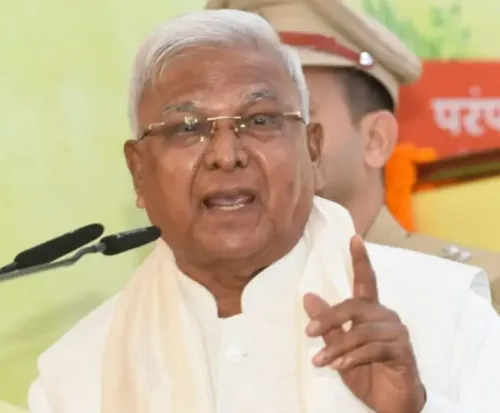
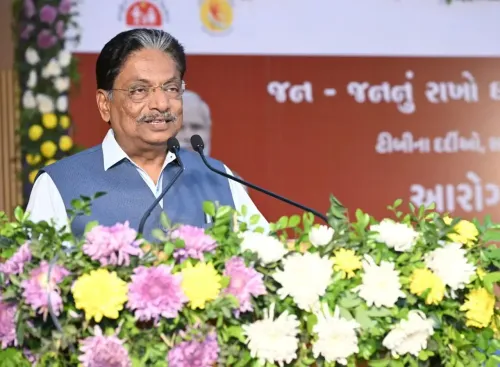
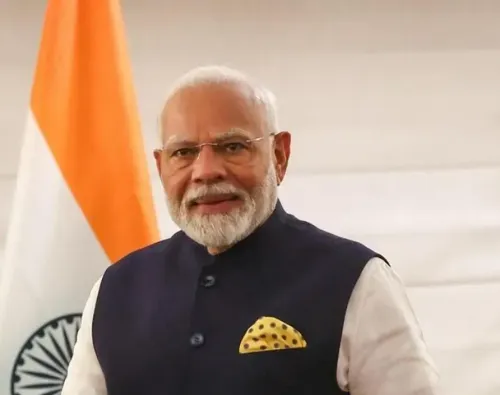
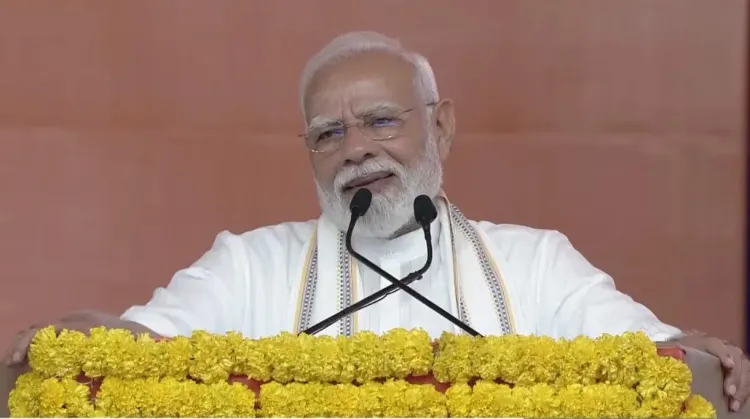
Prime Minister Narendra Modi on Tuesday praised Bharatiya Janata Party (BJP) workers in Navsari district, Gujarat, for launching grassroots campaigns to eliminate tuberculosis (TB) and malnutrition from the district, calling such community-level efforts more consequential than electoral gains. Speaking at a public meeting in Navsari, Modi said these drives carried the potential to shape the well-being of future generations.
Blessings Over Ballots
Drawing a pointed contrast between political capital and social goodwill, the Prime Minister said that freeing a district from malnutrition earned something far more enduring than votes. 'Making a district free of malnutrition means receiving the blessings of every family and every mother. It is something lakhs of times more powerful than votes,' he said.
Modi argued that the true measure of such campaigns lay not in political dividends but in whether families could genuinely say their children were no longer malnourished and that someone had taken responsibility for their welfare. He described the blessings of mothers and sisters from every household as 'something extraordinary' — a form of social recognition that he said motivated party workers to sustain their efforts.
TB Is Treatable: Modi's Message on the Six-Month Recovery Path
Addressing tuberculosis specifically, the Prime Minister sought to dispel fear around the disease by underlining the effectiveness of existing treatment protocols. 'Now TB is not such a frightening disease anymore. If a patient is taken care of properly for exactly six months, whatever medicines the government provides are given regularly, and if arrangements are made to provide food and that food is given, the patient can become free of TB within six months,' Modi said.
He underscored that nutritional support alongside medication was central to recovery — a point consistent with India's national TB elimination programme, which has long identified undernutrition as a key risk factor for TB incidence and treatment failure. Modi noted that India was already advancing toward its national TB-free goal, and that the Navsari workers' district-level pledge represented a concrete, ground-up contribution to that larger mission.
Navsari Workers' Pledge and Its National Significance
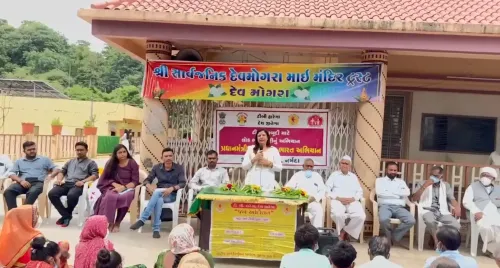
Modi specifically acknowledged the commitment made by Navsari district BJP workers to pursue TB- and malnutrition-free status at the local level. 'When my workers in Navsari district take a pledge that we will make Navsari district TB-free, it means that you are working for the welfare of future generations,' he said.
This comes amid India's broader push under the National TB Elimination Programme, which had set a target of eliminating TB by 2025 — five years ahead of the global Sustainable Development Goal deadline of 2030. While that target has proved challenging to meet in full, district-level mobilisation campaigns such as the one in Navsari have been cited by public health experts as critical to closing the last mile.
Party Office as a Public Service Hub
Beyond the health campaigns, Modi called upon BJP workers to transform the new party office in Navsari into a citizen-facing problem-solving centre. 'Every citizen has a right over us here, and we are their servants,' he said, urging workers to treat the entire district as one family and approach their responsibilities with renewed energy.
He also invoked a broader philosophy of grassroots service, saying that genuine public work is never wasted and that society invariably repays it — through blessings, trust, and continued engagement. 'Service never goes waste. And society is so generous that it never forgets to repay its debt. It repays that debt through its blessings,' he added.
What Comes Next
The Navsari campaigns are expected to intensify following the Prime Minister's public endorsement, with BJP district units likely to formalise timelines and outreach targets. Whether the district can translate political momentum into measurable health outcomes — reduced stunting rates and declining TB case loads — will be watched closely by state health officials and civil society groups working in Gujarat's tribal and semi-urban belts.
Point of View
He insulates district-level health campaigns from being read purely as political theatre. Yet the harder question is accountability. India missed its own 2025 TB elimination target, and malnutrition figures in Gujarat's tribal districts remain stubborn. A Prime Ministerial speech energises workers but does not substitute for the nutritional supplementation budgets, frontline health worker density, and case-notification infrastructure that will determine whether Navsari's pledge becomes a replicable model or a one-cycle headline.
NationPress
25 Oct 2026
Frequently Asked Questions
What did PM Modi say about TB and malnutrition in Navsari?
PM Modi praised BJP workers in Navsari, Gujarat, for pledging to make the district free of TB and malnutrition, calling such efforts 'lakhs of times more powerful than votes.' He spoke at a public meeting on Tuesday, 8 September, emphasising that genuine community service creates lasting social goodwill beyond electoral gains.
How did Modi describe the path to TB recovery?
Modi said TB is no longer a frightening disease if treated properly: a patient who receives regular government-prescribed medicines for six months and is provided adequate nutrition can become TB-free within that period. He stressed that nutritional support alongside medication is essential to recovery.
What is India's TB elimination target and how does Navsari fit in?
India set a national target to eliminate TB by 2025, five years ahead of the global SDG deadline of 2030. The Navsari district BJP workers' pledge to make their district TB-free represents a ground-up contribution to this national mission, which Modi publicly endorsed at the Navsari meeting.
What role did Modi ask BJP workers to play in Navsari?
Beyond health campaigns, Modi urged BJP workers to treat the new party office in Navsari as a citizen-facing problem-solving centre where residents can bring their grievances and seek help. He described party workers as 'servants' of every citizen in the district.
Why does Modi say community service matters more than votes?
Modi argued that the blessings of mothers and families whose children are freed from malnutrition represent a form of social goodwill that is more enduring and meaningful than electoral support. He said such blessings motivate workers to sustain their efforts and take up new initiatives.