Bangladesh bar polls: 16 rights groups condemn exclusion of Awami League lawyers
Synopsis
Sixteen international rights groups have jointly condemned Bangladesh's move to install an all-BNP-Jamaat ad hoc committee at the Bangladesh Bar Council while barring over 300 Awami League-linked lawyers from elections across 23 bar associations. The statement, coordinated from Paris, frames the exclusions not as political disputes but as a structural assault on judicial independence — a charge that puts the Tarique Rahman-led government under rare multilateral scrutiny.
Key Takeaways
16 international human rights organisations jointly condemned politically motivated exclusion of lawyers in Bangladesh on 7 July 2026 .
The Bangladesh government constituted a 15-member ad hoc committee on 30 June 2026 , comprising exclusively BNP and Jamaat-e-Islami -backed lawyers, to run the Bangladesh Bar Council until 30 June 2027 .
More than 300 lawyers have reportedly been barred from contesting elections across at least 23 bar associations , including the Bangladesh Supreme Court Bar Association .
The signatories demanded immediate revocation of the ad hoc committee order and reinstatement of all unlawfully cancelled candidatures.
The statement was coordinated in part by Justice Makers Bangladesh in France (JMBF) , a Paris -based human rights body.
At least 16 international human rights organisations, bar associations, and law societies issued a joint condemnation on Tuesday, 7 July 2026, denouncing the systematic obstruction, intimidation, and politically motivated exclusion of lawyers linked to the Awami League or standing as independent candidates from bar association elections across Bangladesh. The statement, coordinated in part by the Paris-based Justice Makers Bangladesh in France (JMBF), marks one of the broadest international rebukes yet of the legal profession's treatment under the current administration.
The Ad Hoc Committee at the Centre of the Controversy
The immediate trigger is a Bangladesh government decision on 30 June 2026 to constitute a 15-member ad hoc committee to administer the Bangladesh Bar Council — the statutory body regulating the country's legal profession — for the period 1 July 2026 to 30 June 2027. According to the joint statement, all members of the committee are drawn exclusively from lawyers backed by the Bangladesh Nationalist Party (BNP) and Jamaat-e-Islami.
The signatories described this as a decision that 'flagrantly violates the democratic principles governing professional bodies, undermines the independence and representative character of the legal profession, and perpetuates the same undemocratic practices adopted by the previous interim government.'
Scale of Exclusion: 300-Plus Lawyers, 23 Bar Associations
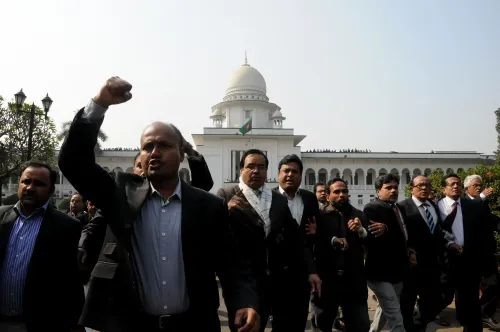
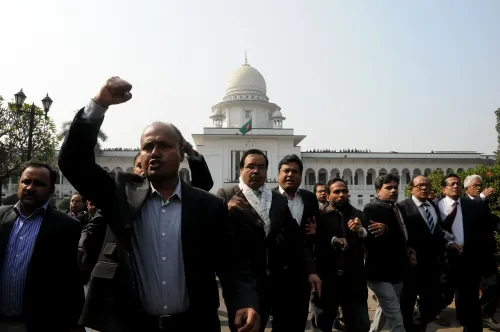
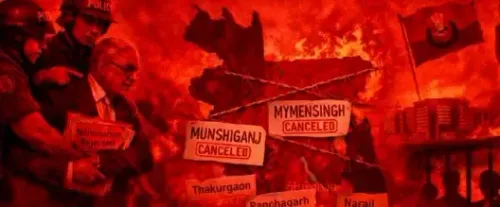
Citing media reports and JMBF findings, the organisations said more than 300 lawyers have been barred from contesting elections across at least 23 bar associations nationwide. The affected bodies include the Bangladesh Supreme Court Bar Association and the bar associations of Dhaka, Chattogram, Rajshahi, Mymensingh, Khulna, Gazipur, Barishal, Cumilla, Manikganj, Munshiganj, Dinajpur, Naogaon, Jhalokathi, Panchagarh, Chandpur, Shariatpur, Jamalpur, Sherpur, Tangail, Meherpur, Patuakhali, and Thakurgaon.
The organisations characterised these exclusions not as routine administrative disputes but as a 'systematic assault on the independence of the legal profession, the rule of law, freedom of association, and the constitutional principles upon which a democratic society depends.'
What the Rights Groups Are Demanding
The joint statement called on the Bangladesh government, the legal profession, and the international community to take immediate corrective action. Specific demands include the revocation of the order constituting the ad hoc Bangladesh Bar Council committee, the annulment of committees at the Supreme Court Bar Association and all district bar associations elected through what the groups called 'seriously flawed, irregular, and discriminatory electoral processes.'
The organisations further urged authorities to reinstate all 'unlawfully cancelled candidatures' and guarantee every eligible lawyer equal access to nomination and election procedures, regardless of political opinion, affiliation, or perceived political identity.
Broader Implications for Rule of Law
The statement situates the bar association crisis within a wider concern for judicial independence. 'The independence of the legal profession is one of the fundamental pillars of democracy, the rule of law, and the protection of human rights,' the organisations noted. 'Attempts to silence, intimidate, exclude, or politically discriminate against lawyers threaten not only the rights and safety of individual practitioners but also the integrity, impartiality, and credibility of the justice system itself.'
This comes amid ongoing scrutiny of Bangladesh's institutional landscape following the transition to a BNP-led government under Tarique Rahman. The allegations, if verified, would represent a significant rollback of professional autonomy in one of South Asia's most populous democracies. How Dhaka responds to this international pressure is likely to shape its standing with multilateral rights bodies in the months ahead.
Point of View
Who gets briefs, and ultimately who can mount legal challenges to the government itself. The pattern of excluding over 300 lawyers from 23 associations simultaneously suggests coordination, not coincidence. What is striking is the speed: the ad hoc committee was constituted the day before the new term began, leaving no window for legal challenge. International condemnation is meaningful pressure, but without domestic judicial mechanisms willing to act, the statement risks remaining symbolic. The real test is whether any Bangladesh court will entertain a challenge to the committee's legality — and whether the lawyers still permitted to practise will file one.
NationPress
6 Oct 2026
Frequently Asked Questions
Why are international rights groups condemning Bangladesh's bar association elections?
At least 16 international human rights organisations allege that more than 300 lawyers linked to the Awami League or standing as independents have been systematically barred from contesting bar association elections across Bangladesh. They also condemn the government's decision to install an all-BNP-Jamaat ad hoc committee to run the Bangladesh Bar Council, calling it a violation of democratic principles and professional independence.
What is the Bangladesh Bar Council ad hoc committee controversy?
On 30 June 2026, Bangladesh authorities constituted a 15-member ad hoc committee comprising exclusively pro-BNP and Jamaat-e-Islami-backed lawyers to administer the Bangladesh Bar Council from 1 July 2026 to 30 June 2027. Rights groups argue this bypasses democratic elections and entrenches political control over the statutory body that regulates the country's legal profession.
How many lawyers and bar associations are affected?
According to the joint statement, more than 300 lawyers have been prevented from contesting elections across at least 23 bar associations, including the Bangladesh Supreme Court Bar Association and district bar associations in Dhaka, Chattogram, Rajshahi, and 20 other districts.
What are the rights groups demanding from Bangladesh?
The organisations are calling for immediate revocation of the ad hoc Bangladesh Bar Council committee order, annulment of bar association committees elected through allegedly flawed processes, and the reinstatement of all unlawfully cancelled candidatures. They also demand that every eligible lawyer be guaranteed equal access to nomination and election procedures regardless of political affiliation.
Who is behind the joint international statement?
The statement was signed by at least 16 international human rights organisations, bar associations, and law societies. It was coordinated in part by Justice Makers Bangladesh in France (JMBF), a Paris-based human rights body whose findings on lawyer exclusions were cited as evidence in the statement.