20 nations adopt social media age limits for kids: Albanese at UNGA 2026
Synopsis
At the UN General Assembly, Australian PM Albanese revealed that over 20 nations are now acting on social media age limits — with Australia's under-16 ban credited as the tipping point. With France's Macron, the UK's Burnham, and South Korea's Lee all demanding tougher AI and platform rules, and Argentina's Milei standing nearly alone in opposing them, the global regulatory tide for children's digital safety appears to be turning fast.
Key Takeaways
Australian PM Anthony Albanese told the UN General Assembly on 28 September 2026 that more than 20 countries have introduced or are considering social media age restrictions for children.
Australia banned children under 16 from social media following a parent-led campaign; the law has since inspired wider international action.
French President Emmanuel Macron warned of declining learning capacity in young people and called for AI governance beyond the US, China, and private companies.
UK PM Andy Burnham accused hostile actors of using bots and fake news to deepen divisions, pledging global standards on AI transparency and safety.
South Korean President Lee Jae Myung announced a Global AI Hub platform to share technological benefits internationally.
Argentine President Javier Milei offered the strongest defence of light-touch regulation, warning against letting fear drive policy.
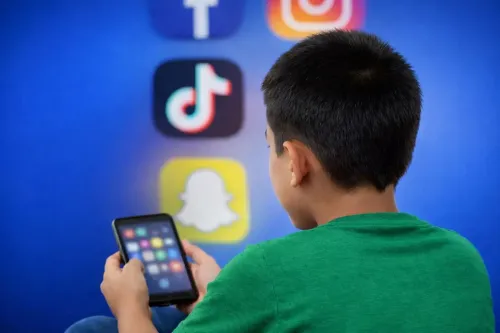
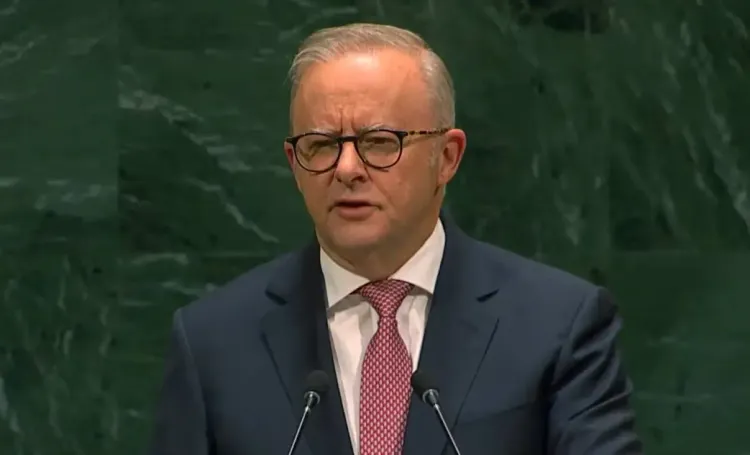
Australian Prime Minister Anthony Albanese told the UN General Assembly on 28 September 2026 that more than 20 countries have introduced or are actively considering age restrictions on social media, as world leaders gathered in New York to demand stronger protections for children from the risks posed by digital platforms and artificial intelligence.
Albanese cited Australia's own landmark decision to prohibit children under 16 from accessing social media as a catalyst for the broader international movement. 'Already, more than 20 countries are bringing in or have brought in age restrictions on social media,' he said, adding that with the European community also acting, 'there are many more to come.'
Australia's Ban and Its Global Ripple Effect
Australia's under-16 social media prohibition was adopted following a sustained campaign by parents who documented harm their children had suffered from platform exposure. Some of those parents had addressed the General Assembly during its previous session — an unusual and emotionally charged moment that amplified pressure on governments worldwide.
Albanese framed the measure as proof that countries could act collectively on problems generated by fast-moving technology. The UN's mission, he cautioned, could not be 'subcontracted to the world's richest companies or dictated by the pace of technology.'
France and the UK Echo the Warning
French President Emmanuel Macron backed the call for regulatory intervention, pointing to what he described as a measurable decline in the learning capacity of young people exposed to certain digital technologies. 'Let's not wait for the consequences to come raining down,' Macron said. He also warned that decisions over artificial intelligence could not be left solely to the United States, China, and a handful of private companies, given the technology's reach into governments, hospitals, and financial systems.
British Prime Minister Andy Burnham called AI a multiplier of existing threats in the information environment, accusing hostile actors of deploying bots, fabricated websites, and falsified news reports to exploit public fear and deepen social divisions. The United Kingdom pledged to work toward common global principles on AI transparency, preparedness, and safety, with Burnham arguing that fundamental AI decisions 'are too important to be left to chance' and must rest with elected governments.
Asia and Europe Weigh the Economic Stakes
South Korean President Lee Jae Myung warned that the AI revolution risked deepening economic inequality and heightening anxiety among young people about their futures. South Korea announced plans to establish a Global AI Hub platform to share the benefits of its technological advances with the international community.
Italian Deputy Prime Minister Antonio Tajani called for rules but cautioned against over-regulation, warning that new technologies risked creating fresh inequalities and dangerous concentrations of power. He called for a calibrated framework balancing transparency, oversight, security, and intellectual property protection — but insisted 'we do not need bureaucratic cages that only some would respect.'
Argentina Pushes Back on Regulation
Argentine President Javier Milei offered the sharpest dissent, arguing that historical fears surrounding technological revolutions had not produced the destruction of employment that critics predicted. Argentina, he said, would avoid premature regulation and instead offer incentives to companies developing AI. 'Fear should not transfer into obedience,' Milei said.
The contrasting stances at the General Assembly reflect a fundamental global disagreement: whether governments should restrict children's access to digital platforms directly, or compel companies to redesign services that can expose minors to harmful content, addictive algorithms, misinformation, and exploitation. With the European Union, the UK, and a growing bloc of nations leaning toward intervention, that debate is rapidly shifting from philosophical to legislative.
Point of View
Once dismissed as unenforceable, has become a reference point for at least 20 governments in under a year. What's missing from most coverage is the enforcement gap: age verification on social platforms remains technically porous, and without interoperability between national frameworks, determined minors and platforms alike can route around the rules. Milei's lone defence of deregulation also deserves scrutiny — Argentina's incentive-first approach may offer a useful countermodel, or simply invite regulatory arbitrage that undermines the broader coalition's goals.
NationPress
28 Sept 2026
Frequently Asked Questions
How many countries are introducing social media age restrictions for children?
More than 20 countries have introduced or are actively considering age restrictions on social media for children, according to Australian PM Anthony Albanese speaking at the UN General Assembly on 28 September 2026. The European Union is also taking action, with more nations expected to follow.
What is Australia's social media ban for children?
Australia prohibits children under the age of 16 from using social media platforms. The law was adopted following a campaign by parents who said their children had suffered harm linked to social media, and it has since been credited with spurring similar action in over 20 other countries.
What did France's Macron say about AI and children at UNGA?
French President Emmanuel Macron warned of a measurable decline in the learning capacity of young people exposed to certain digital technologies. He also argued that decisions over artificial intelligence cannot be left solely to the United States, China, and a small group of private companies, given the technology's impact on governments, hospitals, and financial systems.
What is the UK's position on AI regulation?
UK Prime Minister Andy Burnham said AI multiplies existing threats in the information environment and accused hostile actors of using bots, fake websites, and falsified news to exploit public fears and deepen divisions. The UK pledged to work toward global standards on AI transparency, preparedness, and safety.
Which country opposed heavy regulation of AI and social media at UNGA?
Argentina, represented by President Javier Milei, offered the strongest defence of a light regulatory approach. Milei argued that fears surrounding past technological revolutions had not resulted in the predicted employment destruction, and said Argentina would avoid premature regulation while offering incentives to AI developers.