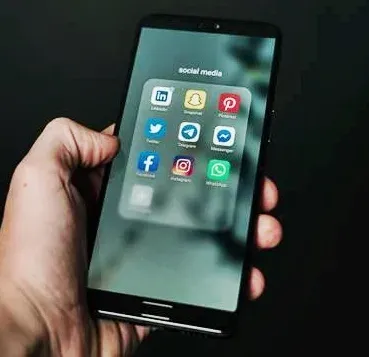
India weighs under-16 social media ban amid global push for child safety
Synopsis
India is inching toward an under-16 social media ban — and PM Modi's public praise of Australia's pioneering law during his recent visit there is the clearest signal yet of which direction the Centre is leaning. With Parliamentary committees, the EU, and now the Prime Minister himself flagging the same concern, the question is no longer whether India will act, but how.
Key Takeaways
The Centre is consulting stakeholders on restricting social media access for users under 16 , Electronics and IT Secretary S.
Krishnan confirmed on 19 July .
PM Modi publicly praised Australia's under-16 social media ban during his recent visit, calling it 'inspiring the world' — a strong signal of India's policy direction.
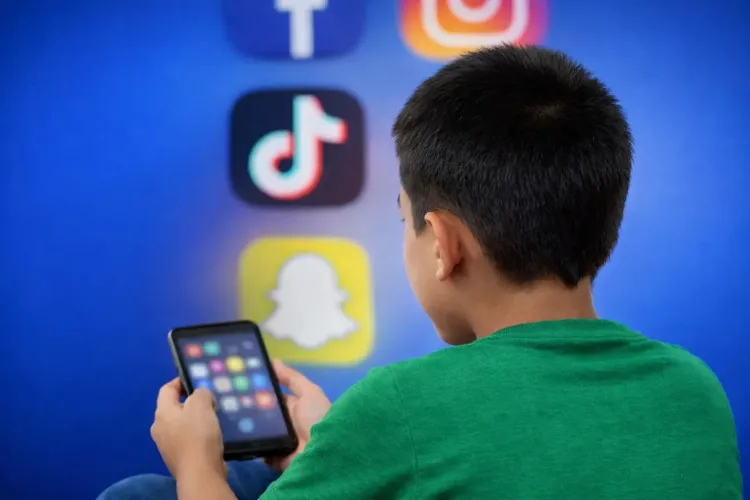
Australia is the first country with a nationwide under-16 ban; platforms like Facebook , Instagram , TikTok , and X face penalties for non-compliance, not children or parents.
No final decision has been taken; the government says it is 'in the process of discussing this with various stakeholders.' The proposal is part of a broader digital safety agenda covering online harms, intermediary accountability, and AI regulation.
The Centre is actively consulting stakeholders on potential safeguards for children on social media platforms, including a proposal to restrict access for users under 16, Electronics and Information Technology Secretary S. Krishnan said on 19 July. No final decision has been taken, but the deliberations signal the government's growing intent to act on digital child safety.
What the Government Said
Krishnan confirmed that India is carefully studying legislative steps taken by other countries before charting its own course. 'We need to study what other countries have done with social media. It is a matter of global concern,' he said. He added that concerns around social media risks have surfaced repeatedly in India's bilateral discussions with the European Union and other nations, and that Parliamentary Standing Committees have also flagged the issue domestically.
'In our discussions with the EU and other countries, concerns around the risks of social media have come up repeatedly. In India too, various stakeholders, including Parliamentary Standing Committees, have discussed these risks,' Krishnan noted. He emphasised that the process remains consultative: 'We're in the process of discussing this with various stakeholders.'
Modi's Australia Signal
The consultations follow a notable public endorsement by Prime Minister Narendra Modi of Australia's landmark legislation banning children under 16 from social media. During his recent visit to Australia's annual leaders' summit, Modi told Australian Prime Minister Anthony Albanese that Australia's legislative efforts to regulate IT and social media are 'inspiring the world' and that India is 'learning a lot' from the move. The remarks were widely read as a strong signal that similar restrictions are under active consideration in India.
The Global Context
Australia became the first country to enact a nationwide under-16 social media ban, requiring major platforms — including Facebook, Instagram, TikTok, and X — to deploy age-verification mechanisms. Under the Australian law, penalties for non-compliance fall on the platforms, not on children or parents. Several European nations are separately examining stricter parental consent and age-verification frameworks.
The debate is also intensifying in the United States, where major technology companies, particularly Meta, face escalating scrutiny over addictive algorithmic design, age-verification failures, cyberbullying, and exposure of minors to inappropriate content. This comes amid a broader global reckoning with the mental health impact of social media on adolescents.
Broader Digital Safety Agenda
The under-16 access question is expected to feed into India's wider digital safety framework, which encompasses online harms legislation, intermediary accountability norms, and emerging regulations around artificial intelligence. The Centre's multi-stakeholder consultation model suggests a measured, evidence-driven approach rather than an immediate legislative push — though the political direction, underscored by Modi's public remarks in Australia, appears increasingly clear.
How India ultimately frames its rules — and whether it places compliance obligations on platforms, parents, or both — will shape the contours of the country's digital governance for the next generation.
Point of View
And Krishnan's confirmation of active stakeholder consultations makes the direction unmistakable. The harder question is execution: India has no equivalent of Australia's age-verification infrastructure, and its data protection framework under the Digital Personal Data Protection Act is still being operationalised. Placing compliance obligations on platforms is the right instinct — penalising children or parents would be both unenforceable and counterproductive — but without a credible verification mechanism, an age-restriction rule risks becoming a checkbox law. The Centre's measured, consultative tone is prudent, but the window for deliberation is narrowing as adolescent mental health data grows harder to ignore.
NationPress
18 Oct 2026
Frequently Asked Questions
Is India planning to ban social media for children under 16?
India is currently consulting stakeholders on the possibility, including an under-16 access restriction, but no final decision has been taken. Electronics and IT Secretary S. Krishnan confirmed on 19 July that the government is studying global approaches before determining its own framework.
What did PM Modi say about Australia's social media ban?
During his recent visit to Australia's annual leaders' summit, PM Modi told Australian PM Anthony Albanese that Australia's legislative efforts to regulate social media are 'inspiring the world' and that India is 'learning a lot' from the move. The remarks were widely interpreted as a signal that India is seriously considering similar restrictions.
How does Australia's under-16 social media ban work?
Australia became the first country to enact a nationwide ban on social media for children under 16. Major platforms including Facebook, Instagram, TikTok, and X must implement age-verification measures; penalties for non-compliance are levied on the platforms, not on children or parents.
Which other countries are considering similar restrictions?
Several European nations are examining stricter parental consent and age-verification mechanisms. In the United States, major platforms like Meta face growing scrutiny over addictive algorithms, age verification, and exposure of minors to harmful content, though no federal ban is yet in place.
What is the broader context of India's digital safety push?
The under-16 social media proposal sits within a wider government agenda that includes online harms legislation, intermediary accountability norms, and emerging AI regulations. Parliamentary Standing Committees have also independently flagged the risks of social media for children in India.