UK bans social media for under-16s: Starmer targets Spring 2027 rollout
Synopsis
The UK is set to bar children under 16 from social media — Snapchat, TikTok, YouTube, Instagram, Facebook, and X — following a public consultation that drew over 116,000 responses. With nine in ten parents backing the move and Spring 2027 as the target date, Starmer is now on a collision course with some of the world's most powerful tech companies.
Key Takeaways
UK Prime Minister Keir Starmer announced a ban on social media access for children under 16 on 15 June .
Regulations are to be passed before Christmas , with protections taking effect in Spring 2027 .
Platforms in scope: Snapchat, TikTok, YouTube, Instagram, Facebook , and X ; messaging apps WhatsApp and Signal are excluded.
AI 'romantic companion' chatbots will require a minimum age of 18 ; similar restrictions apply to intimate AI chatbot features for under- 18 s.
Over 116,000 responses were submitted in the public consultation; nine in ten parents backed the ban.
The UK will model its approach on Australia's social media age-restriction framework.
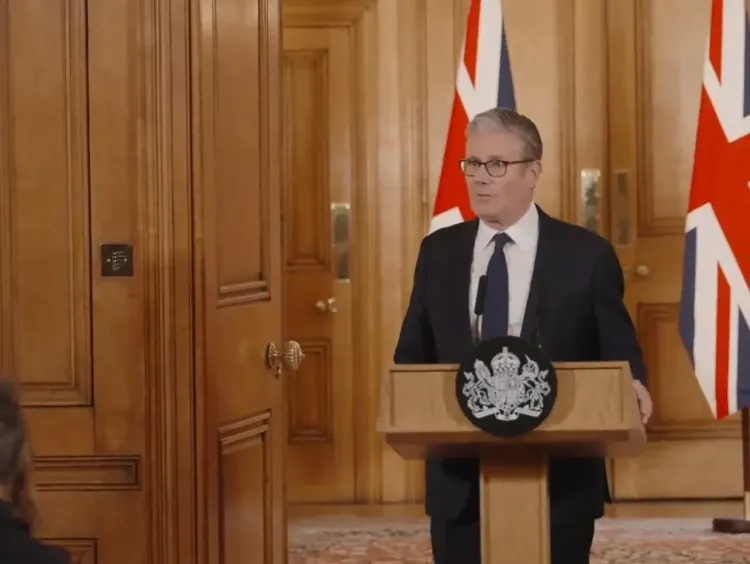
British Prime Minister Keir Starmer on Monday, 15 June announced a sweeping ban on social media access for children under 16 years in the United Kingdom, describing it as a 'big step' for the country. The government plans to pass the requisite regulations before Christmas, with protections expected to come into force in Spring 2027.
Why the Government Acted
Starmer framed the decision as one driven by evidence, not impulse. In a video posted on X, he said, 'We know that harms them... Thousands of parents say their children are addicted to social media. It can leave them trapped in a cycle of endless scrolling that displaces play, sleep, and time with the family.'
He added, 'Social media is making our children unhappy and unsafe. And as a parent as much as a Prime Minister, I just can't let that go on any more because our children deserve better.'
The announcement followed one of the largest public consultations in recent British political history, drawing over 116,000 responses from parents, children, and experts across the country.
What the Ban Covers
The UK intends to model its ban on the framework adopted by Australia. Platforms in scope include Snapchat, TikTok, YouTube, Instagram, Facebook, and X. Messaging services such as WhatsApp and Signal have been explicitly excluded from the restrictions.
The government also announced that AI 'romantic companion' chatbots — described as tools 'designed to simulate sexual relationships or roleplay with users' — will be required to enforce a minimum age of 18. Similar intimate functionalities on broader AI chatbots will be restricted for users under 18.
Public and Parental Support
The scale of public backing is notable. According to the government's own statement, nine in ten parents said they would support a social media ban for children under 16. Among young people themselves, two-thirds agreed that children below 16 should not be permitted to access at least some social media platforms.
This comes amid a growing international consensus on child online safety, with countries including Australia already having enacted similar restrictions. The UK move signals that major democracies are increasingly willing to take on the legal and technical complexity of age-gating social platforms.
Resistance Expected from Tech Giants
Starmer acknowledged the ban would face significant pushback. 'This decision has been resisted and it will face resistance from some of the most powerful companies in the world,' he said. 'But we will take them on and we will win because the need for action could not be any clearer.'
The government has indicated it will adapt its regulatory approach as technology evolves, and will continue to learn from other countries implementing similar measures. Industry observers expect legal challenges from platform operators ahead of the Spring 2027 implementation deadline.
Point of View
But the harder test is technical enforcement — age verification at scale remains an unsolved problem even in Australia, the model the UK says it will follow. The exclusion of WhatsApp and Signal creates an obvious workaround that older teenagers will exploit within days of any ban taking effect. More telling is the political economy: the government is openly declaring war on some of the world's most capitalised companies, and the legal battles ahead could push the Spring 2027 deadline well into the future. The 116,000-response consultation gives Starmer democratic cover, but cover alone does not write working code into platform back-ends.
NationPress
14 Sept 2026
Frequently Asked Questions
What is the UK social media ban for children under 16?
The UK government has announced a ban prohibiting children under 16 from accessing social media platforms including Snapchat, TikTok, YouTube, Instagram, Facebook, and X. Regulations are expected to be passed before Christmas, with the ban coming into force in Spring 2027.
Which platforms are included in and excluded from the UK ban?
The ban covers Snapchat, TikTok, YouTube, Instagram, Facebook, and X. Messaging services WhatsApp and Signal are explicitly excluded from the restrictions.
When will the UK social media ban for children take effect?
The UK government plans to pass the necessary regulations before Christmas, with protections expected to come into force in Spring 2027.
What did the public consultation reveal about support for the ban?
Over 116,000 responses were submitted by parents, children, and experts. Nine in ten parents said they supported a social media ban for under-16s, and two-thirds of young people agreed children below 16 should not access at least some social media platforms.
How does the UK ban compare to Australia's approach?
The UK government has stated it will use Australia's social media age-restriction model as its framework. Australia enacted similar legislation restricting social media access for children under 16, and the UK intends to learn from that implementation as it adapts its own approach over time.