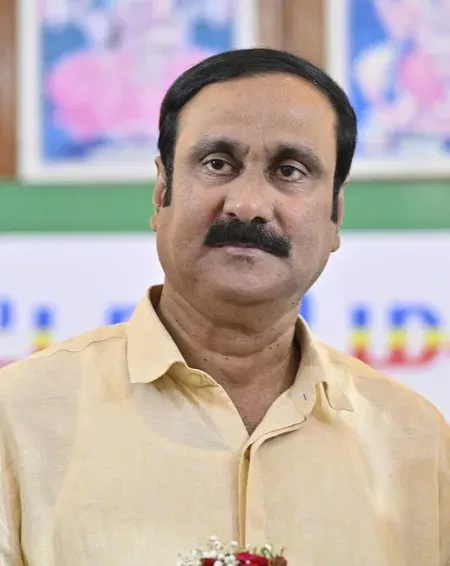
PMK chief Anbumani Ramadoss calls for social media ban on under-16s
Synopsis
PMK president Anbumani Ramadoss is pressing the Centre to ban social media for children under 16, backed by the 2025-26 Economic Survey and a fast-growing list of countries — France, Australia, Canada — that have already moved. He argues states cannot act because communication is a Union subject, making a central law the only legally durable solution.
Key Takeaways
PMK president Dr Anbumani Ramadoss on 26 July demanded a nationwide law banning social media access for children below 16 .
He cited France (EU's first, effective September ) and Australia (ban in force since December 2025 ) as models for India to follow.
More than 50 countries including the UK , Germany , and Denmark are reportedly considering similar restrictions.
The 2025–26 Economic Survey linked excessive social media use to anxiety, cyberbullying, and declining self-esteem, particularly among those aged 16–24 .
Anbumani argued that state-level bans by Karnataka , Andhra Pradesh , and Goa could face legal challenges since communication falls under the Union List .
He also flagged rising obesity and vitamin D deficiency among children shifting from outdoor sports to online gaming.
Pattali Makkal Katchi (PMK) president Dr Anbumani Ramadoss on 26 July urged the Union government to enact a nationwide law barring children below the age of 16 from accessing social media platforms, citing mounting evidence of harm to their physical health, mental well-being, and academic performance. The demand comes as a growing number of countries move to legislate similar restrictions.
What Prompted the Call
Anbumani welcomed a recent decision by the French Parliament to prohibit children under 15 from creating social media accounts, a measure that takes effect from September, with existing underage accounts to be suspended from January when the law comes into full force. He described France as the first country in the European Union to introduce such a restriction.
He also pointed to Australia, which became the first country globally to enforce a comparable nationwide ban, which came into force in December 2025. Countries including Canada, Brazil, and Indonesia have adopted similar measures, while more than 50 nations — among them the United Kingdom, Spain, Greece, Germany, and Denmark — are reportedly considering analogous legislation.
The Case for India
Citing the 2025–26 Economic Survey, Anbumani noted that prolonged social media exposure has been linked to anxiety, stress, declining self-esteem, and cyberbullying among young people. The survey specifically identified those aged between 16 and 24 as particularly vulnerable and recommended regulating children's online usage.
Educators and university administrators, he said, have flagged that social media addiction is eroding students' concentration, reading habits, and overall academic performance. He also highlighted research indicating that many young users lose interest in video content within eight seconds, pointing to a measurable decline in attention spans.
Beyond mental health, Anbumani raised concerns about the physical consequences of children replacing outdoor activities such as cricket and kabaddi with online gaming — a shift he said has contributed to rising obesity levels and vitamin D deficiency among children in India.
Why States Cannot Act Alone
While Karnataka, Andhra Pradesh, and Goa have announced plans to regulate children's social media use, Anbumani argued that state governments may lack the constitutional authority to enforce such restrictions. He pointed out that communication falls under the Union List of the Constitution, meaning any state-level ban could face legal challenges.
This constitutional constraint, he said, makes a central law not just preferable but necessary.
PMK's Demand
Calling for decisive action, the PMK chief urged the Centre to follow the legislative examples of France and Australia and introduce a law banning social media access for all children below 16 across India. He framed the measure as essential for protecting the health, education, and long-term development of the country's younger generation.
With India's digital user base among the youngest in the world, the pressure on the Centre to respond is likely to intensify as the global regulatory momentum builds.
Point of View
He effectively neutralises state-level announcements from Karnataka, Andhra Pradesh, and Goa as legally fragile, and shifts accountability squarely to the Centre. The 2025-26 Economic Survey citation gives the demand institutional weight, but the government has yet to act on its own survey's recommendations. With over 50 countries already legislating or deliberating, India's inaction is becoming an outlier — and that gap will be harder to defend the longer it persists.
NationPress
25 Oct 2026
Frequently Asked Questions
What has PMK's Anbumani Ramadoss demanded regarding social media?
Dr Anbumani Ramadoss has urged the Union government to enact a nationwide law banning children below the age of 16 from accessing social media platforms. He cited harm to mental health, academic performance, and physical well-being as the primary reasons for the demand.
Which countries have already banned social media for children?
Australia was the first country globally to enforce a nationwide social media ban for minors, which came into force in December 2025. France became the first EU country to do so, with its law barring under-15s from creating accounts taking effect from September, with full enforcement from January.
What does the 2025-26 Economic Survey say about children and social media?
The 2025-26 Economic Survey highlighted that prolonged social media exposure contributes to anxiety, stress, declining self-esteem, and cyberbullying among young people. It identified those aged 16 to 24 as particularly vulnerable and recommended regulating children's online usage.
Why can't Indian states impose their own social media bans?
Anbumani argued that communication falls under the Union List of the Constitution, meaning the Centre — not state governments — holds legislative authority over it. Any state-level restriction, he said, could face legal challenges, making a central law the only durable solution.
What health concerns did Anbumani raise beyond mental well-being?
Beyond mental health, Anbumani flagged that children are replacing outdoor sports like cricket and kabaddi with online gaming, contributing to rising obesity levels and vitamin D deficiency. He also noted that attention spans are shrinking, with studies showing many young users losing interest in videos within eight seconds.