Over 2,774 children detained in Bangladesh in one month: Rights report
Synopsis
A Paris-based rights body has documented the arrest or detention of over 2,774 children across Bangladesh in just one month — and says the real number is higher. With Cumilla alone accounting for 2,035 cases and minors reportedly picked up during school hours, the report raises urgent questions about the legal basis of mass juvenile detention and Bangladesh's compliance with international child rights norms.
Key Takeaways
2,774 children and adolescents were arrested or detained across Bangladesh between 23 September and 22 October 2026 , according to JMBF .
Cumilla district recorded the highest figure at 2,035 cases ; Chattogram division led at 2,418 cases .
16 school-going children were detained during class hours in Chandpur district .
The actual number is likely higher, as several incidents remain undocumented or unreported.
JMBF has called for an end to mass juvenile detention, release of those held without lawful grounds, and an independent investigation into arbitrary detentions.
At least 2,774 children and adolescents were arrested or detained across Bangladesh in a single month, according to a monitoring report published on Monday, 26 October 2026 by Justice Makers Bangladesh in France (JMBF), a Paris-based international human rights organisation. The body warned that the actual figure could be significantly higher, as several incidents remain undocumented or did not reach its monitoring network.
Key Findings of the Report
The JMBF report documented arrests and detentions across 12 incidents and a series of operations in four divisions and eight districts between 23 September and 22 October. Of the total, 2,173 children and adolescents were detained in the first phase between 23 and 30 September, with a further 601 recorded between 1 and 22 October.
Cumilla recorded the highest district-level figure, with 2,035 children and adolescents arrested or detained. At the divisional level, Chattogram accounted for 2,418 cases, followed by Sylhet with 300, Rajshahi with 50, and Barishal with six.
Nature of the Detentions
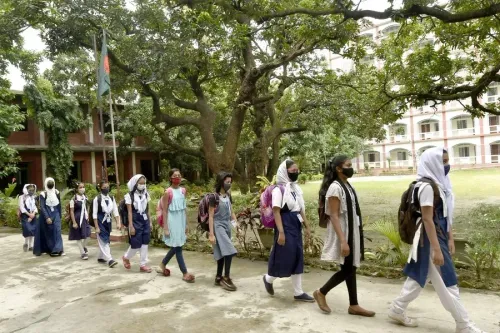
The report highlighted particularly troubling patterns in how and why children were taken into custody. In Shahrasti upazila of Chandpur district, 16 school-going children were detained during class hours before being released to their guardians. Mass operations were also documented in Cumilla, Sylhet, Natore, and Noakhali.
The JMBF expressed grave concern over the use of police custody to restrict children's movement, limit their participation in public gatherings, or penalise irregular school attendance. The organisation argued that detaining minors without a lawful, individual, and necessary basis constitutes a violation of their right to liberty — even when they are subsequently released to guardians.
What the Rights Body Said
Shahanur Islam, Founder President of JMBF, stated: 'Children and adolescents must not be taken into police custody simply because they gather in public places, miss classes or are presumed to be potential offenders. Police must establish an individual legal basis for each arrest and demonstrate why detention is necessary. Releasing children and adolescents later their guardians' undertakings, does not erase an earlier violation of their rights.'
The report also raised questions about whether Bangladeshi authorities adequately considered alternatives to detention before depriving minors of their liberty — a standard requirement under international child rights frameworks.
What JMBF Is Demanding
The rights body urged Bangladeshi authorities to immediately end the mass arrest and detention of children and adolescents, and to review the legal basis and necessity of every existing detention involving minors. It further called for the release of those held without lawful grounds, the prioritisation of diversion and community-based alternatives, and guaranteed access to lawyers, family contact, and probation support. An independent investigation into allegations of arbitrary detention was also demanded.
This comes amid growing international scrutiny of law enforcement practices involving minors in South Asia, with child rights advocates calling for structural reforms to juvenile justice frameworks. How Bangladeshi authorities respond to the JMBF findings — and whether they permit independent verification — will be closely watched in the weeks ahead.
Point of View
774 minors in a single month, with the actual figure reportedly higher — points to a systemic pattern rather than isolated incidents. The detention of children during school hours and in mass operations raises direct questions about whether Bangladeshi law enforcement is operating within its own legal framework, let alone international child rights standards. What the report does not yet establish is the political or operational impetus driving these sweeps; without that context, accountability is difficult to assign. The international community's response, and Bangladesh's willingness to permit independent verification, will determine whether this report changes anything on the ground.
NationPress
26 Oct 2026
Frequently Asked Questions
How many children were detained in Bangladesh according to the JMBF report?
At least 2,774 children and adolescents were arrested or detained across Bangladesh between 23 September and 22 October 2026, according to a monitoring report by Justice Makers Bangladesh in France (JMBF). The rights body cautioned that the actual figure is likely higher as several incidents went undocumented.
Which areas of Bangladesh recorded the most child detentions?
Cumilla district recorded the highest figure at 2,035 cases, making it the single largest hotspot. At the divisional level, Chattogram accounted for 2,418 detentions, followed by Sylhet (300), Rajshahi (50), and Barishal (6).
Why does JMBF consider the detentions a rights violation?
JMBF argues that detaining children without a lawful, individual, and necessary legal basis violates their right to liberty under international child rights frameworks, even if they are later released to guardians. The organisation specifically criticised the use of police custody to restrict children's movement, public participation, or school attendance.
What is JMBF demanding from Bangladeshi authorities?
JMBF has called on Bangladesh to end mass arrests of children, review the legal basis of every existing juvenile detention, release those held without lawful grounds, prioritise alternatives to detention, and allow an independent investigation into allegations of arbitrary detention.
Were any children detained during school hours?
Yes. The report documented the detention of 16 school-going children in Shahrasti upazila of Chandpur district during class hours; they were subsequently released to their guardians. JMBF noted that such release does not retroactively legitimise the initial detention.