Bhotekoshi floods: 279 rescued from Nepal hydropower sites, 894 still unaccounted
Synopsis
Nepal's Bhotekoshi floods have paralysed 11 hydropower projects along two major river corridors, with 894 workers still unaccounted for even as Nepali, Indian, and Chinese teams race to breach blocked tunnels. The crisis at the 216-MW Upper Trishuli-1 alone — where 573 people remain missing — signals a disaster that is far from over.
Key Takeaways
The Nepali Army has rescued 279 people from flood-hit hydropower projects along the Bhotekoshi and Trishuli corridors.
894 workers across 11 hydropower projects remain unaccounted for, according to IPPAN .
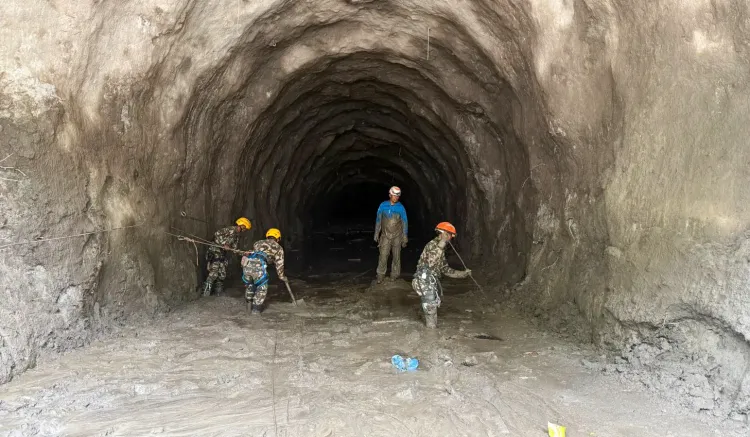
573 of those missing are from the 216-MW Upper Trishuli-1 project alone, where a trilateral Nepali-South Korean-Chinese rescue team is operating inside the tunnel.
The NDRRMA puts the overall flood death toll at 939 , with 3,925 people still out of contact as of Monday evening .
Tunnel technicians from India and China have arrived at Nepal's request to assist in evacuating trapped workers.
Rescue operations are active at multiple sites including Rasuwagadhi , Langtang Khola , Chilime , Upper Trishuli-3A , Upper Trishuli-3B , Trishuli , and Devighat hydropower projects.
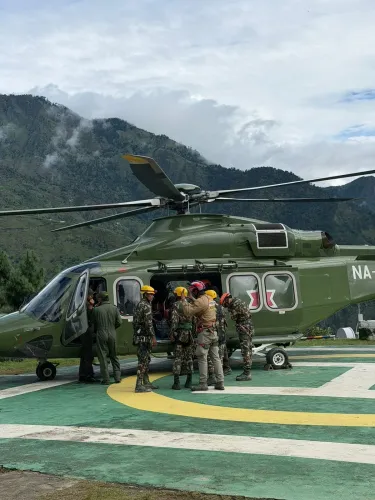
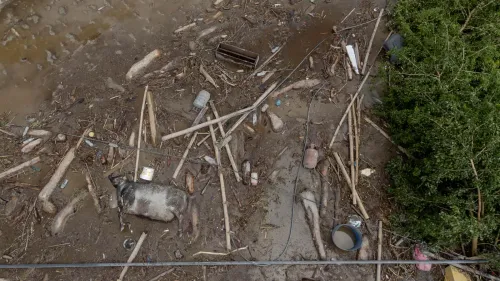
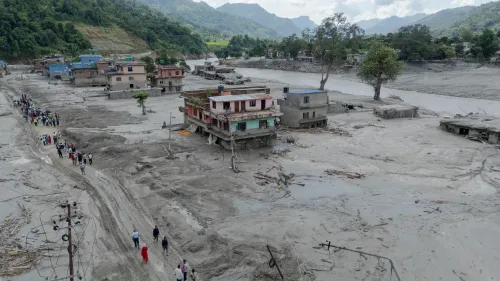
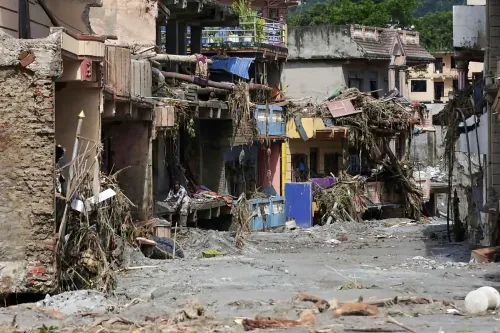
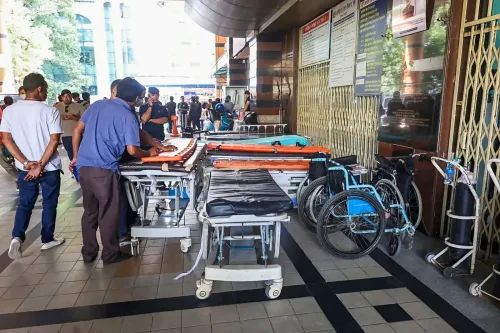
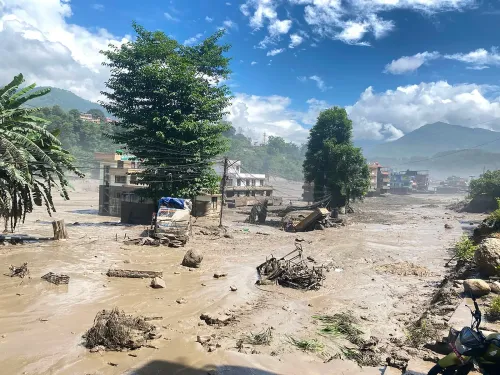
The Nepali Army has rescued 279 people from hydropower projects devastated by the Bhotekoshi floods, Nepali Prime Minister Balendra Shah confirmed, even as search and rescue teams pressed on inside tunnels across multiple project sites. The floods, which struck last week along the Bhotekoshi and Trishuli river corridors, have triggered one of Nepal's most complex multi-site rescue operations in recent memory.
Scale of the Crisis
The Independent Power Producers' Association Nepal (IPPAN), the umbrella body for private-sector power developers, said on Monday that the whereabouts of 894 workers across 11 flood-hit hydropower projects remain unknown. The sheer scale of unaccounted personnel underscores how severely the flooding disrupted operations along both river corridors.
According to the National Disaster Risk Reduction and Management Authority (NDRRMA), the overall death toll from the floods had climbed to 939, with 3,925 people still out of contact as of Monday evening.
Project-by-Project Rescue Update
The largest concentration of missing workers is at the 216-MW Upper Trishuli-1 Hydropower Project, where 573 people remain out of contact, according to IPPAN. Prime Minister Shah said 254 people have already been rescued from this site. 'Search and rescue operations are continuing inside the Upper Trishuli-1 tunnel with the involvement of Nepali, South Korean and Chinese teams,' he said. The project counts South Korean investors and the International Finance Corporation of the World Bank Group among its backers.
At the Rasuwagadhi Hydropower Project in Rasuwa, a joint Nepali-Chinese Army team conducted a thorough search of the 111-MW under-construction facility's tunnel after fears that workers may have been trapped at its far end following flooding in the Bhote Koshi River. 'The rescue team led by the Nepali Army has returned after searching the tunnel of the 111-MW flood-affected project in Rasuwa and finding no people inside,' the Prime Minister's Secretariat said. Two people were, however, rescued from the project area.
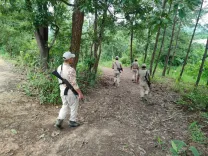
At the Langtang Khola (20 MW) and Chilime (22 MW) hydropower projects in Rasuwa, Nepali Army personnel alongside an Indian rescue team have been working since Monday morning to open blocked tunnel entrances. Meanwhile, a 90-member team drawn from the Nepali Army, Armed Police Force, and Nepal Police — supported by a Nepal Electricity Authority contingent — has been conducting operations inside the tunnel of the Upper Trishuli-3A (60 MW) project in Nuwakot.
At the Upper Trishuli-3B (37 MW) project, two people were rescued and the Army reinforced its presence with nine additional personnel, bringing the total deployment there to 31. The operation was launched after a Chinese rescue team completed a site reconnaissance. Separately, three people were pulled out from the Trishuli Hydropower Project in Nuwakot, four from a solar power project, and another four from the Devighat Hydropower Project. Nine people were also rescued from the Mailung Khola Hydropower Project (5 MW).
International Response
At the Nepali government's request, tunnel technicians from both India and China have arrived in Nepal and are actively engaged in rescue efforts. This marks a rare trilateral coordination involving Nepali, Indian, and Chinese teams working simultaneously across multiple sites — a reflection of both the urgency and the geopolitical stakes around hydropower investment in the region.
What Comes Next
With hundreds still unaccounted for and several tunnel interiors yet to be fully accessed, rescue teams face mounting challenges from unstable terrain and continued risk of secondary flooding. The fate of the 573 workers at Upper Trishuli-1 remains the most pressing concern. Authorities have not yet indicated a timeline for concluding operations, and the full human and economic toll on Nepal's hydropower sector is still being assessed.
Point of View
With nearly 900 workers unaccounted for, raises hard questions about whether safety and evacuation protocols kept pace with the breakneck expansion of run-of-river projects in geologically volatile Himalayan corridors. The trilateral rescue involving Nepal, India, and China is diplomatically significant, but it also highlights how deeply foreign capital and labour are embedded in Nepal's energy infrastructure — a vulnerability that regulators have largely avoided confronting. If the Upper Trishuli-1 death toll is severe, investor confidence in Himalayan hydro could take a lasting hit at a moment when Nepal needs it most.
NationPress
1 Sept 2026
Frequently Asked Questions
How many people have been rescued from Nepal's flood-hit hydropower projects?
The Nepali Army has rescued 279 people from various hydropower projects affected by the Bhotekoshi floods as of Monday, 31 August. The largest single rescue — 254 people — was at the 216-MW Upper Trishuli-1 Hydropower Project.
How many workers are still missing after the Bhotekoshi floods?
According to IPPAN, 894 workers across 11 flood-affected hydropower projects remain out of contact. Of these, 573 are from the Upper Trishuli-1 project alone, where rescue teams are still operating inside the tunnel.
What is the overall death toll from the Nepal floods?
The National Disaster Risk Reduction and Management Authority (NDRRMA) reported a death toll of 939 as of Monday evening, with 3,925 people still out of contact across all flood-affected areas.
Which countries are involved in the rescue operations inside Nepal's hydropower tunnels?
Nepal, India, China, and South Korea are all involved. Indian and Chinese tunnel technicians arrived at Nepal's request, while South Korean and Chinese teams are working alongside Nepali rescuers inside the Upper Trishuli-1 tunnel. A joint Nepali-Chinese Army team searched the Rasuwagadhi project tunnel.
Which hydropower projects are affected by the Bhotekoshi and Trishuli floods?
At least 11 projects are affected, including Upper Trishuli-1 (216 MW), Upper Trishuli-3A (60 MW), Upper Trishuli-3B (37 MW), Rasuwagadhi (111 MW), Langtang Khola (20 MW), Chilime (22 MW), Mailung Khola (5 MW), Trishuli, Devighat, and a solar power project, all along the Bhotekoshi and Trishuli river corridors.