PoK crackdown: Rights groups say 32+ civilians killed between June 8-16
Synopsis
More than 32 civilians are reportedly dead in Pakistan-occupied Kashmir after a crackdown on JAAC-linked protests — and the world largely cannot see it. With internet cut for 12 days, journalists barred, and a civil society group branded 'terrorist,' two major rights organisations are now demanding independent investigations and accountability for what they call a systemic pattern of state violence.
Key Takeaways
More than 32 civilians , including one woman, were reportedly killed in Pakistan-occupied Kashmir (PoK) between 8 June and 16 June .
The International Human Rights Foundation (IHRF) documented mass arrests of over 100 activists , paramilitary deployment, and travel restrictions barring outside access.
Pakistani authorities banned the Joint Awami Action Committee (JAAC) under anti-terrorism laws ahead of its planned protest on 9 June .
Amnesty International confirmed the internet shutdown had entered its 12th consecutive day as of Tuesday, with mobile services intermittently disrupted since 5 June .
Journalist Sohrab Barkat was arrested under Pakistan's Prevention of Electronic Crimes Act ; activist Shahzeb Habib was allegedly killed extrajudicially.
Both organisations demanded an independent investigation with full access for international observers and an immediate end to the communications blackout.
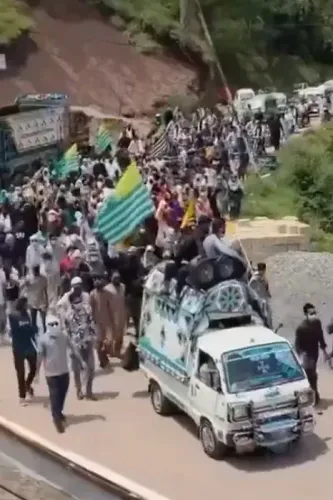
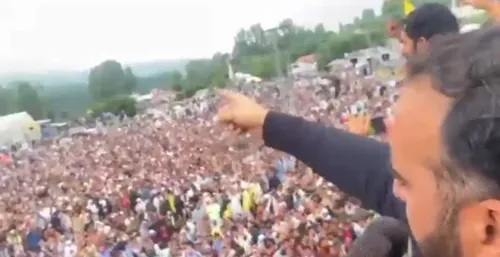
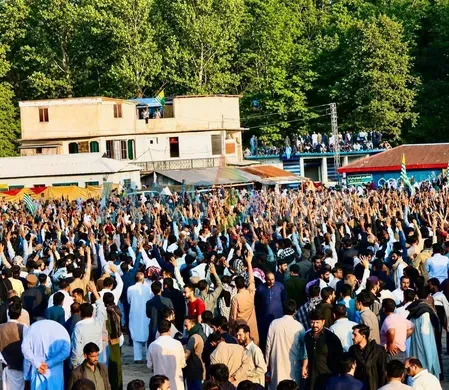
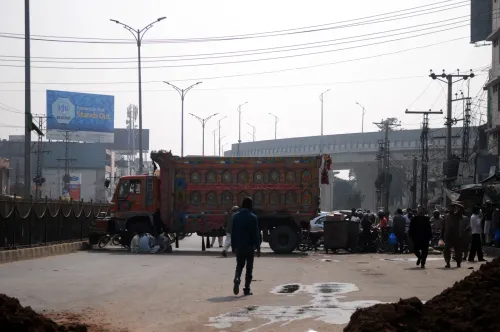
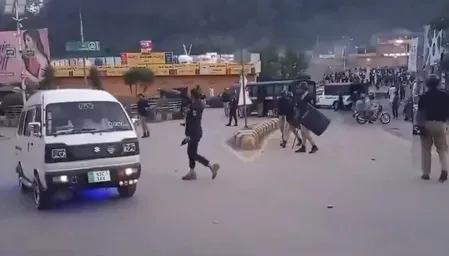
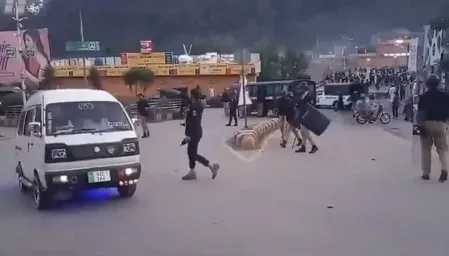
International human rights organisations have strongly condemned a violent crackdown on peaceful protesters in Pakistan-occupied Kashmir (PoK), which reportedly claimed the lives of more than 32 civilians — including one woman — between 8 June and 16 June. The condemnation comes amid an information blackout, with internet and mobile networks suspended across the region for over 12 consecutive days.
What the Rights Bodies Documented
The International Human Rights Foundation (IHRF) said Pakistani authorities responded to planned protests with a sweeping crackdown that included the deployment of federal paramilitary troops and the mass arbitrary arrest of more than 100 activists and leaders. Travel restrictions were also imposed, barring outsiders from entering the region. Journalist Sohrab Barkat was arrested under Pakistan's Prevention of Electronic Crimes Act.
The IHRF further documented the alleged extrajudicial killing of activist Shahzeb Habib and called for independent accountability for those responsible. According to the organisation, the crackdown is not an isolated event but part of a 'systemic pattern of human rights violations' in the region.
The JAAC Ban and Its Context
The unrest was triggered days after Pakistani authorities in the occupied territory declared the Joint Awami Action Committee (JAAC) a proscribed group under anti-terrorism laws, ahead of its planned protest on 9 June. The IHRF sharply criticised the move: 'Branding a civil society body as 'terrorist' on vague grounds, while simultaneously sealing the region from outside scrutiny, constitutes a disproportionate and unlawful violation of the right to freedom of association.'
Notably, the IHRF documented a recurring pattern of deadly crackdowns on JAAC-led protests, citing earlier episodes of violence in May 2024 and October 2025 that also claimed multiple lives.
Internet Shutdown and Blockade
Amnesty International separately criticised the internet shutdown in PoK, noting that restrictions had entered their twelfth consecutive day as of Tuesday, with mobile network services being intermittently disrupted. The shutdown was reportedly imposed from 5 June in response to the JAAC's call for protest.
Amnesty International stated: 'There are reports of a physical blockade, also imposed in response to the call for protest, of key entry points into the region that have disrupted the delivery of essential goods, including food supplies and medicine. Such restrictions are disproportionate and severely impact people's rights to life, access to healthcare, and freedom of movement.'
Demands from Rights Organisations
Both the IHRF and Amnesty International called on Pakistani authorities to immediately halt the use of deadly force against peaceful protesters, lift the internet and communications shutdown, release all arbitrarily detained individuals, and revoke the ban on the JAAC. They also urged that an independent and impartial investigation into all civilian deaths be conducted with full access for international observers.
With the information blackout still in place and access to the region restricted, the full scale of the crackdown remains difficult to independently verify.
Point of View
But as a recurring state playbook: ban the group, shut the internet, seal the border, arrest the journalists. What makes the June 2025 episode particularly alarming is the simultaneity of all four measures at once. The information blackout is itself a human rights violation — it prevents documentation, delays accountability, and ensures that whatever the death toll actually is, it will be contested for months. The branding of JAAC as a terrorist organisation deserves scrutiny: if the legal basis is as thin as the IHRF suggests, it sets a precedent that any civil protest movement in PoK can be neutralised before it begins. International pressure, if it comes at all, will arrive late.
NationPress
17 Sept 2026
Frequently Asked Questions
How many civilians were killed in the PoK crackdown?
According to the International Human Rights Foundation (IHRF), more than 32 civilians — including one woman — were reportedly killed in Pakistan-occupied Kashmir between 8 June and 16 June. The information blackout in the region makes independent verification difficult.
Why did the protests break out in Pakistan-occupied Kashmir?
The unrest followed Pakistani authorities declaring the Joint Awami Action Committee (JAAC) a proscribed group under anti-terrorism laws ahead of its planned protest on 9 June. The JAAC is a civil society body that has led multiple protest movements in PoK in recent years.
How long has the internet been shut down in PoK?
Amnesty International confirmed that the internet shutdown had entered its twelfth consecutive day as of Tuesday, with the restrictions reportedly imposed from 5 June. Mobile network services have also been intermittently disrupted during this period.
What are rights organisations demanding from Pakistan?
Both the IHRF and Amnesty International have called on Pakistani authorities to immediately halt deadly force against protesters, lift the internet and communications shutdown, release all arbitrarily detained individuals, revoke the ban on the JAAC, and allow an independent investigation into civilian deaths with full access for international observers.
Is this the first time such a crackdown has occurred in PoK?
No. The IHRF documented a recurring pattern of deadly crackdowns on JAAC-led protests, specifically citing earlier episodes of violence in May 2024 and October 2025 that also resulted in multiple deaths. The organisation characterised the June 2025 crackdown as part of a systemic pattern of human rights violations in the region.