PoK crackdown: Rights groups condemn Pakistan over killings, internet shutdown
Synopsis
International rights groups say Pakistan killed more than 25 people in Pakistan-occupied Kashmir while banning the JAAC protest group under anti-terror laws and shutting down the internet — a combination Amnesty International calls disproportionate, unlawful, and a direct violation of freedom of association. The pattern, critics note, has now repeated across at least three separate crackdowns since 2024.
Key Takeaways
International rights groups condemned Pakistani authorities on 10 June for a violent crackdown on protests in Pakistan-occupied Kashmir (PoK) .
The IHRF alleged more than 25 people , including a woman, were killed by security forces between 8 and 9 June .
Citing police figures, Amnesty International reported eight protesters and four police officers killed in clashes in Rawalakot .
JKJAAC activist Shahzeb Habib was shot during a police encounter on 5 June and later died; Amnesty said he posed no imminent threat.
Pakistan declared the Joint Awami Action Committee (JAAC) a proscribed organisation under anti-terrorism laws ahead of its planned protest on 9 June .
Rights groups cited a recurring crackdown pattern, referencing prior deadly incidents in May 2024 and October 2025 .
Several leading international human rights organisations have condemned Pakistani authorities for a violent crackdown on peaceful protests in Pakistan-occupied Kashmir (PoK), citing an internet shutdown, mass arbitrary arrests, and the deadly use of force. The condemnations, issued on 10 June, describe the situation as an alarming deterioration of human rights in the region.
What Triggered the Crisis
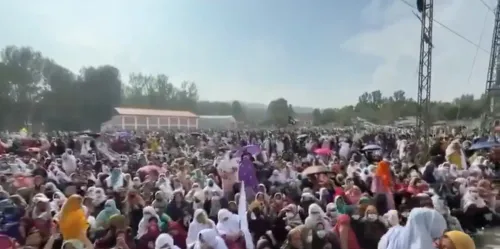
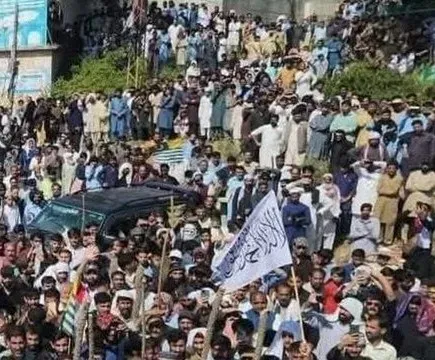
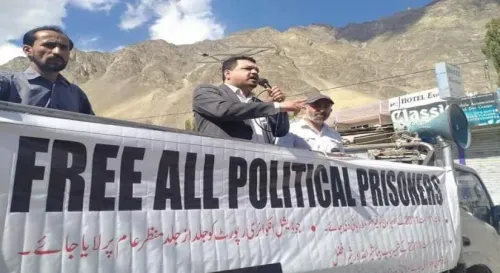
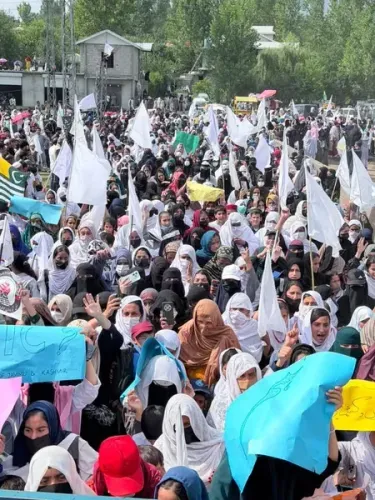
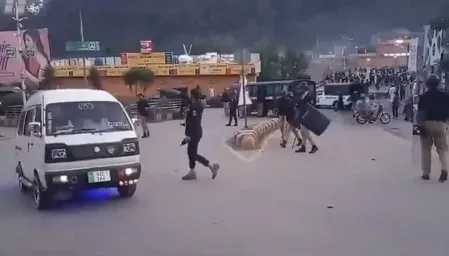
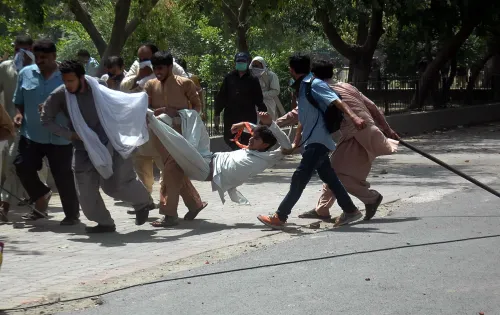
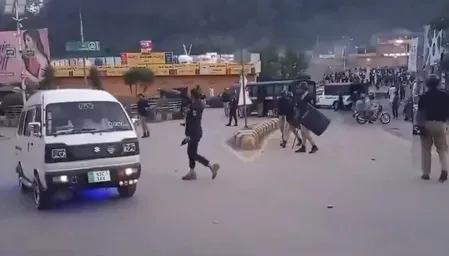
The unrest follows the Pakistani authorities' decision to declare the Joint Awami Action Committee (JAAC) a proscribed organisation under anti-terrorism laws, ahead of its planned protest on 9 June. Deadly clashes subsequently erupted between law enforcement personnel and protesters in Rawalakot city, with reports of several people killed and hundreds injured.
According to the International Human Rights Foundation (IHRF), more than 25 people — including a woman — were killed by Pakistani security forces in PoK between 8 and 9 June. The IHRF described the banning of a civil society body as 'terrorist' on vague grounds, while simultaneously sealing the region from outside scrutiny, as 'a disproportionate and unlawful violation of the right to freedom of association.'
Amnesty International's Findings
Amnesty International called on Pakistani authorities to immediately de-escalate the situation, exercise restraint, and adhere strictly to international standards on the use of force — stressing that force must be used only as a last resort, in line with the principles of necessity and proportionality.
Isabelle Lassee, Amnesty International's Deputy Regional Director for South Asia, said: 'Branding a grassroots organisation as "terrorist" on vague grounds, while simultaneously cutting the region off from the outside world, raises serious concerns regarding the Pakistani authorities' conduct and their disregard for human rights. The proscription of JKJAAC under anti-terror laws is disproportionate, unlawful and a violation of the right to freedom of association.'
Amnesty International separately documented the case of JKJAAC activist Shahzeb Habib, who was shot during a police encounter on the night of 5 June after officers stopped the vehicle in which he was travelling with JKJAAC member Umar Nazir Kashmiri. Habib subsequently succumbed to his injuries. Amnesty International stated he did not pose an imminent threat of death or serious injury to the officers at the time.
The Rawalakot Clashes
People gathered outside the Combined Military Hospital (CMH) in Rawalakot on 7 June, where Habib's body had been brought for a post-mortem. Clashes erupted later that day between law enforcement and protesters. Citing police figures, Amnesty International reported that as many as eight protesters and four police officers were killed in those clashes.
Lassee called for an independent inquiry into the alleged extrajudicial killing of Shahzeb Habib, a thorough investigation into the unlawful killings of protesters in Rawalakot, and accountability for those responsible in line with international human rights standards.
A Recurring Pattern
The IHRF expressed grave concern over what it described as a recurring pattern of crackdowns on JKJAAC-led protests, pointing to deadly violence in May 2024 and October 2025 as prior instances. 'Without prompt corrective action, the authorities risk further loss of life and a complete erosion of fundamental rights in the region,' the organisation warned.
With international scrutiny intensifying and the internet reportedly still restricted in parts of PoK, pressure on Islamabad to allow independent access and launch credible investigations is expected to mount in the days ahead.
Point of View
Shutting down the internet, and deploying lethal force — suggests a deliberate containment strategy rather than a proportionate law-enforcement response. What makes this episode harder to dismiss as an isolated incident is the pattern: Amnesty and the IHRF both point to near-identical crackdowns in May 2024 and October 2025. Pakistan's use of anti-terrorism statutes against a civil society group demanding economic rights sets a troubling precedent that could be applied to any organised dissent in the territory. The internet shutdown, in particular, is a classic information-suppression tactic that makes independent verification of casualty figures — including the contested death toll — structurally impossible, which is precisely the point.
NationPress
26 Oct 2026
Frequently Asked Questions
What sparked the protests in Pakistan-occupied Kashmir in June 2025?
The immediate trigger was Pakistan's decision to declare the Joint Awami Action Committee (JAAC) a proscribed organisation under anti-terrorism laws ahead of its planned protest on 9 June. The JAAC is a civil society body whose protests have repeatedly focused on economic grievances in PoK.
How many people were killed in the PoK crackdown?
The International Human Rights Foundation alleged more than 25 people, including a woman, were killed by Pakistani security forces between 8 and 9 June. Separately, Amnesty International, citing police figures, reported eight protesters and four police officers killed in clashes in Rawalakot on 7 June.
Who was Shahzeb Habib and why does his case matter?
Shahzeb Habib was a JKJAAC activist shot during a police encounter on the night of 5 June after officers stopped his vehicle. He later succumbed to his injuries. Amnesty International stated he posed no imminent threat to officers and has called for an independent inquiry into his killing as a potential extrajudicial execution.
What have international rights groups demanded from Pakistan?
Amnesty International has called for immediate de-escalation, restraint, and strict adherence to international use-of-force standards. Both Amnesty and the IHRF have demanded independent investigations into the killings of protesters and the death of Shahzeb Habib, and accountability for those responsible.
Is this the first time Pakistan has cracked down on JAAC protests?
No. The IHRF cited a recurring pattern, pointing to deadly crackdowns on JKJAAC protests in May 2024 and October 2025 as prior instances. Rights groups say the June 2025 crackdown represents a further escalation of that pattern.