Bangladesh garment workers' protests turn violent: 50 hurt, 200+ factories shut in Savar
Synopsis
Tens of thousands of Bangladesh garment workers took to the streets demanding a wage hike from Tk 12,500 to Tk 30,000 — and the protests turned violent fast. With 50 people injured, 200+ factories shut, and BGB troops deployed across Savar and Ashulia, the unrest is a stark reminder of how fragile the country's export engine remains when labour grievances go unaddressed.
Key Takeaways
At least 50 people — including police, workers, and pedestrians — were injured as garment worker protests turned violent in Savar , Ashulia , Gazipur , and Narayanganj on 5 November 2026 .
More than 200 factories in Savar and Ashulia declared holidays amid the unrest.
Workers are demanding a minimum monthly wage of Tk 30,000 , up from the current Tk 12,500 .
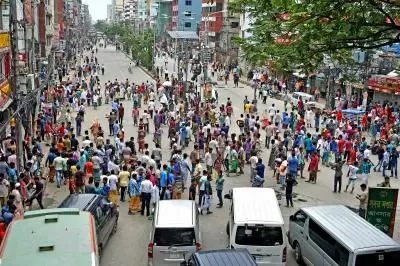
Between 30,000 and 40,000 workers assembled near Padma Mor; the Dhaka-Aricha highway was blocked in both directions.
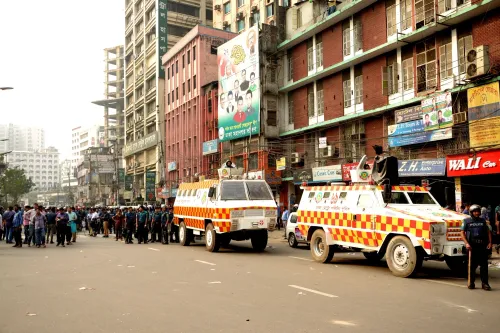
Three platoons of Border Guard Bangladesh (BGB) were deployed in the Savar-Ashulia industrial belt.
OC Saiful Alam of Savar Model Police Station suffered serious injuries; a police vehicle was set ablaze.
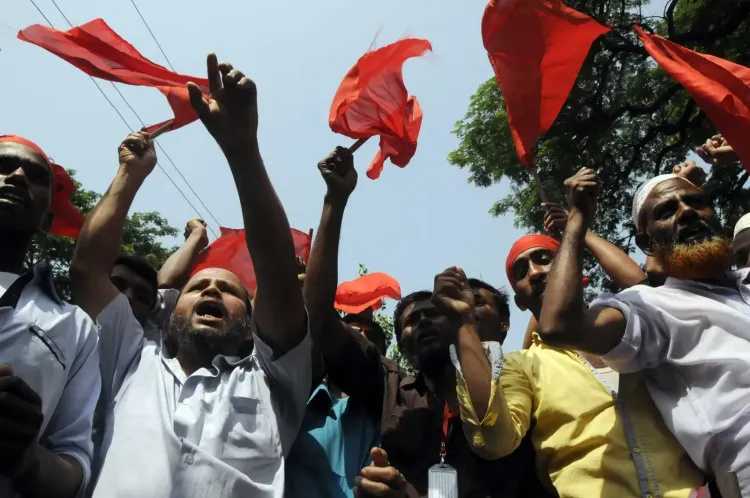
At least 50 people — including police officers, garment workers, and bystanders — were injured on Thursday, 5 November 2026, as protests by Bangladesh's garment workers turned violent across industrial zones in Savar, Ashulia, Gazipur, and Narayanganj, local media reported. More than 200 factories in Savar and Ashulia were forced to declare holidays as the unrest disrupted one of the country's most critical export sectors.
How the Violence Unfolded
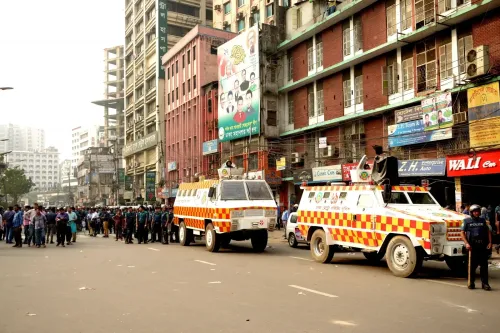
The clashes originated near Padma Mor in Savar's Hemayetpur area, where thousands of workers had assembled to press for wage hikes. When police moved to clear protesters blocking the road, confrontations broke out and quickly spread to Ulail, where workers clashed with officers outside the Al-Muslim Group factory.
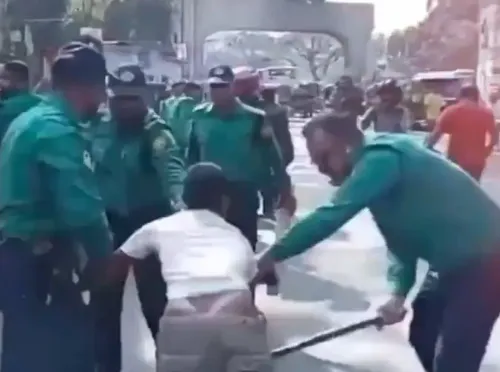
Workers pelted law enforcement personnel with bricks and stones. Police responded with tear gas shells, sound grenades, and rubber bullets to disperse the crowds. A vehicle belonging to the officer-in-charge of Savar Model Police Station was set ablaze, according to Bangladeshi daily Dhaka Tribune.
Dhaka District Superintendent of Police Shamima Parveen confirmed at least 50 injuries among police, workers, and pedestrians, adding that OC Saiful Alam sustained serious injuries during the unrest.
Scale of the Disruption
Between 30,000 and 40,000 workers, according to SP Parveen, had assembled around Padma Mor from both sides of the highway. Workers blocked the Dhaka-Aricha highway, bringing traffic to a complete standstill in both directions and triggering severe congestion across the arterial route.
Separately, in Gazipur, an estimated 2,000 to 4,000 workers blocked the Dhaka-Mymensingh highway near Signboard in the Gacha area on Wednesday morning, hurling bricks at police before being dispersed with tear gas and sound grenades.
Factories in Hemayetpur, Ulail, and surrounding areas subsequently announced closures. Three platoons of Border Guard Bangladesh (BGB) personnel were deployed across the Savar and Ashulia industrial belt to restore order.
Workers' Demands
At the heart of the unrest is a demand for a minimum monthly wage of Tk 30,000 — more than double the current minimum of Tk 12,500. Workers argue the existing wage is wholly inadequate given the rising cost of living in Dhaka and its satellite industrial zones.
Beyond the wage hike, protesters are calling for the introduction of rationing facilities in every garment factory, stronger trade union protections, an end to arbitrary dismissals and worker blacklisting, and justice for deceased workers. The breadth of demands signals that this is not a spontaneous outburst but a deepening structural grievance within the sector.
Context and What Comes Next
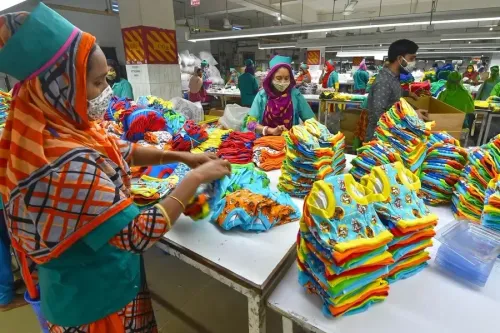
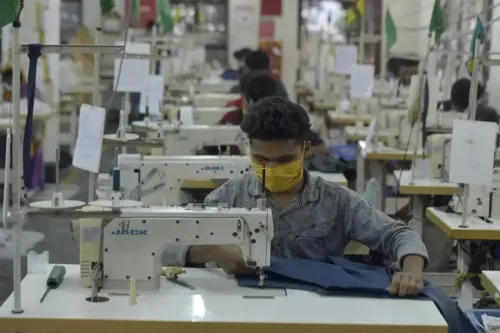
Bangladesh's ready-made garment (RMG) industry is the backbone of the national economy, accounting for roughly 84% of the country's export earnings. Disruptions of this scale carry direct implications not only for Bangladeshi factories but also for global apparel supply chains dependent on the region. This comes amid a broader wave of labour unrest in Dhaka's industrial corridors, where periodic wage protests have flared since the last minimum wage revision.
Notably, the deployment of BGB forces — typically reserved for border security — alongside regular police underscores the gravity of the situation. With wage negotiations stalled and worker grievances extending beyond pay to include union rights and job security, further escalation cannot be ruled out unless authorities and factory owners engage in substantive dialogue.
Point of View
Two major highways blocked, BGB deployment — points to a labour compact that has been fraying for years, not days. Bangladesh's garment sector has long subsidised its global price competitiveness on the back of suppressed wages; the gap between Tk 12,500 and the demanded Tk 30,000 is not a negotiating gambit but a reflection of real purchasing-power erosion. The deployment of border security forces in an industrial dispute also raises questions about the state's default response to labour unrest. For global buyers who have pledged supply-chain accountability, the images from Savar are a credibility problem that factory-gate audits alone will not resolve.
NationPress
5 Nov 2026
Frequently Asked Questions
Why are Bangladesh garment workers protesting in November 2026?
Workers are demanding a minimum monthly wage of Tk 30,000, arguing that the current minimum of Tk 12,500 is insufficient given rising living costs. They are also calling for rationing facilities, trade union protections, an end to arbitrary dismissals, and justice for deceased workers.
How many people were injured and how many factories were shut?
At least 50 people — including police officers, workers, and pedestrians — were injured, according to Dhaka District SP Shamima Parveen. More than 200 factories in Savar and Ashulia declared holidays as a result of the unrest.
Where did the violence take place?
Violence broke out primarily in Savar's Padma Mor area in Hemayetpur and spread to Ulail. Protests and road blockades were also reported in Gazipur and Narayanganj, disrupting major highways including the Dhaka-Aricha and Dhaka-Mymensingh routes.
What security forces were deployed to control the protests?
Three platoons of Border Guard Bangladesh (BGB) personnel were deployed across the Savar and Ashulia industrial belt in addition to regular police. Officers used tear gas, sound grenades, and rubber bullets to disperse crowds.
Why does the Bangladesh garment sector matter beyond the country?
Bangladesh's ready-made garment industry accounts for roughly 84% of the country's export earnings, making it a critical node in global apparel supply chains. Prolonged disruptions in Savar and Ashulia directly affect delivery timelines for major international clothing brands.