Adani Ports doubles Colombo West Terminal capacity to 3.2mn TEUs with $750mn push

Synopsis
Adani Ports has doubled the Colombo West International Terminal's capacity to 3.2 million TEUs with a $750 million investment — just 18 months after CWIT set a world record for fastest first-million TEU throughput. For India, it is not just a corporate milestone: a large slice of that cargo is EXIM trade, making Colombo's expansion a quietly strategic play in the Indian Ocean's busiest corridor.
Key Takeaways
APSEZ invested $750 million in Phase II of CWIT , doubling annual capacity from 1.6 million to 3.2 million TEUs .
Sri Lankan Prime Minister Dr Harini Amarasuriya inaugurated the expanded terminal on 1 October 2026 .
CWIT reached 2 million TEUs in just 18 months of operation — a historic first for the Port of Colombo.
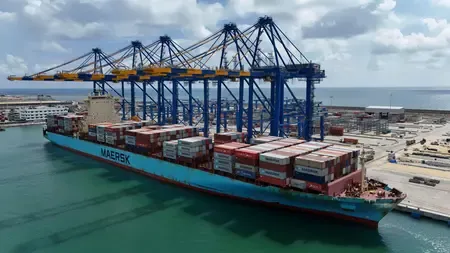
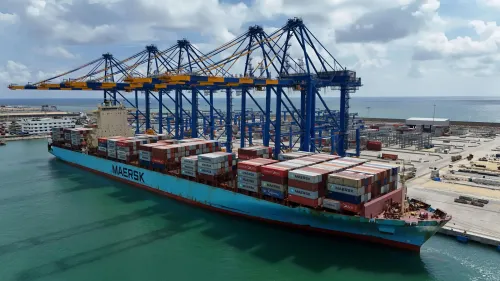
The terminal can now berth three ultra-large container vessels simultaneously, strengthening its position on the East-West trade route.
CWIT is targeting nearly 25 per cent of the Port of Colombo's 13 million TEU goal by 2028 .
Sri Lanka's first fully automated deep-water terminal operates on fully electrified infrastructure with zero tailpipe emissions.
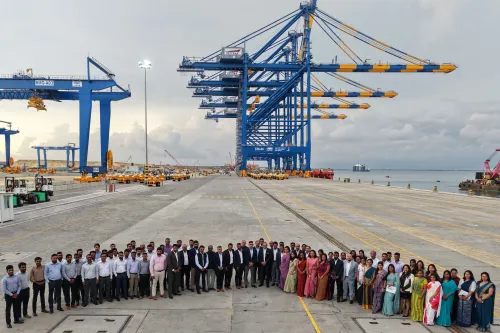
Adani Ports and Special Economic Zone (APSEZ) has doubled the capacity of its Colombo West International Terminal (CWIT) in Sri Lanka from 1.6 million to 3.2 million TEUs, backed by a $750 million Phase II investment. Sri Lankan Prime Minister Dr Harini Amarasuriya inaugurated the expanded terminal on 1 October 2026, marking a significant step in Colombo's ambition to become the Indian Ocean's pre-eminent transshipment hub.
Scale of the Expansion
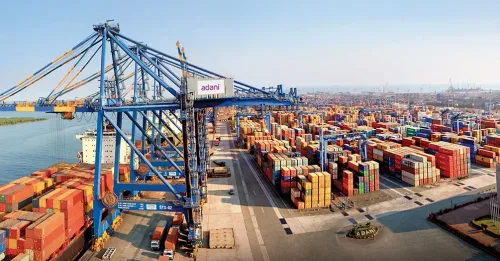
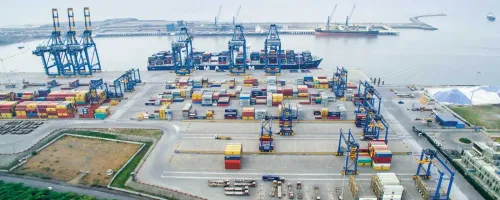
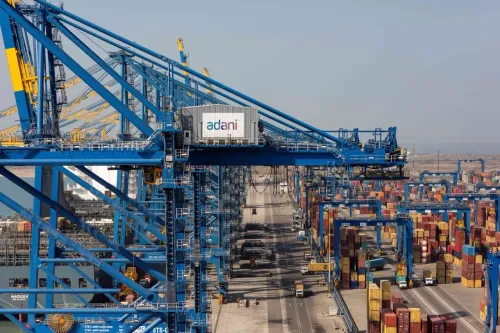
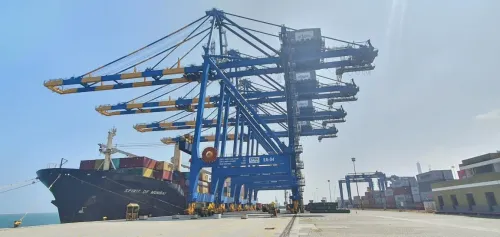
The Phase II upgrade brings CWIT's annual handling capacity to 3.2 million TEUs, positioning it to account for nearly 25 per cent of the Port of Colombo's stated target of 13 million TEUs by 2028. The expanded facility can now simultaneously berth three ultra-large container vessels, reinforcing Colombo's role on the East-West global trade corridor. CWIT remains Sri Lanka's first fully automated, deep-water container terminal, operating on fully electrified infrastructure with zero tailpipe emissions.
Record Operational Milestones
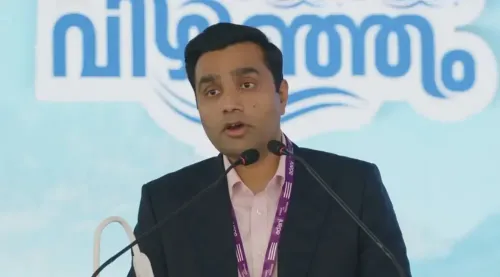
CWIT had already set a benchmark as the fastest terminal globally to handle 1 million TEUs within its inaugural year in 2024. Building on that, the terminal reached 2 million TEUs within its first 18 months of operation — another historic first for the Port of Colombo. Ashwani Gupta, Whole-Time Director and CEO of APSEZ, described the Phase II launch as 'a landmark for APSEZ's international portfolio' that 'sharpens our position across the Indian Ocean's key trade corridors.'
What the Government and Partners Said
Prime Minister Amarasuriya framed the milestone in national economic terms, saying the success of CWIT 'demonstrates what Sri Lanka can achieve when bold vision, trusted partnerships and modern infrastructure come together.' She added that investments of this scale are 'reinforcing our ambition to become the leading maritime and logistics hub of the Indian Ocean.' Krishan Balendra, Chairperson of John Keells Group — a key local partner alongside the Sri Lanka Ports Authority — said the expansion opens 'an even greater opportunity to strengthen Colombo's position as a key transshipment hub.' This comes as Sri Lanka actively courts foreign investment to rebuild its economy following the severe financial crisis of 2022.
Strategic Significance for India and the Region
For APSEZ, the Colombo expansion is central to its international portfolio strategy, extending its footprint beyond Indian shores into a high-volume transshipment corridor that links Europe, the Middle East, and Asia. Notably, a significant share of CWIT's cargo comprises India-origin and India-bound EXIM trade, meaning the terminal's growth has direct implications for Indian exporters and importers seeking competitive transshipment options. The investment also signals confidence from major global shipping lines at a time when Indian Ocean trade routes are gaining strategic importance amid broader geopolitical realignments.
What Comes Next
With Phase II now operational, attention turns to whether CWIT can sustain its record throughput pace and meet the 2028 capacity targets. Industry observers will also watch how the terminal's full automation model influences labour and operational norms across the region's ports. APSEZ has indicated that CWIT's expanded infrastructure is designed to accommodate further volume growth without additional capital phases in the near term.
Point of View
Or whether rival hubs in Singapore and Dubai erode Colombo's transshipment premium as East-West volumes moderate. For New Delhi, a privately owned but Indian-flagged terminal handling a quarter of Colombo's throughput is a geopolitical asset, even if it is never framed as one.
NationPress
1 Oct 2026
Frequently Asked Questions
What is the Colombo West International Terminal (CWIT) expansion?
CWIT's Phase II expansion, backed by a $750 million investment by APSEZ, doubles the terminal's annual capacity from 1.6 million to 3.2 million TEUs. The expanded terminal was inaugurated by Sri Lankan Prime Minister Dr Harini Amarasuriya on 1 October 2026.
Why is the CWIT expansion significant for Sri Lanka?
CWIT is Sri Lanka's first fully automated deep-water container terminal, and its expanded capacity positions Colombo to handle nearly 25 per cent of the port's 13 million TEU target by 2028. Prime Minister Amarasuriya described it as a milestone for 'Sri Lanka's economic future' and its ambition to lead Indian Ocean maritime trade.
What throughput records has CWIT already set?
CWIT became the fastest terminal in the world to handle 1 million TEUs within its inaugural year in 2024, and then reached 2 million TEUs within its first 18 months of operation — both historic firsts for the Port of Colombo.
Who are the key stakeholders behind CWIT?
CWIT is led by APSEZ, in partnership with John Keells Group — represented by Chairperson Krishan Balendra — and the Sri Lanka Ports Authority. APSEZ CEO Ashwani Gupta described the Phase II launch as a landmark for the company's international portfolio.
How does the CWIT expansion affect India's trade?
A significant portion of CWIT's cargo comprises India-origin and India-bound EXIM trade, meaning the terminal's expanded capacity offers Indian exporters and importers more competitive transshipment options on the East-West corridor linking Europe, the Middle East, and Asia.